

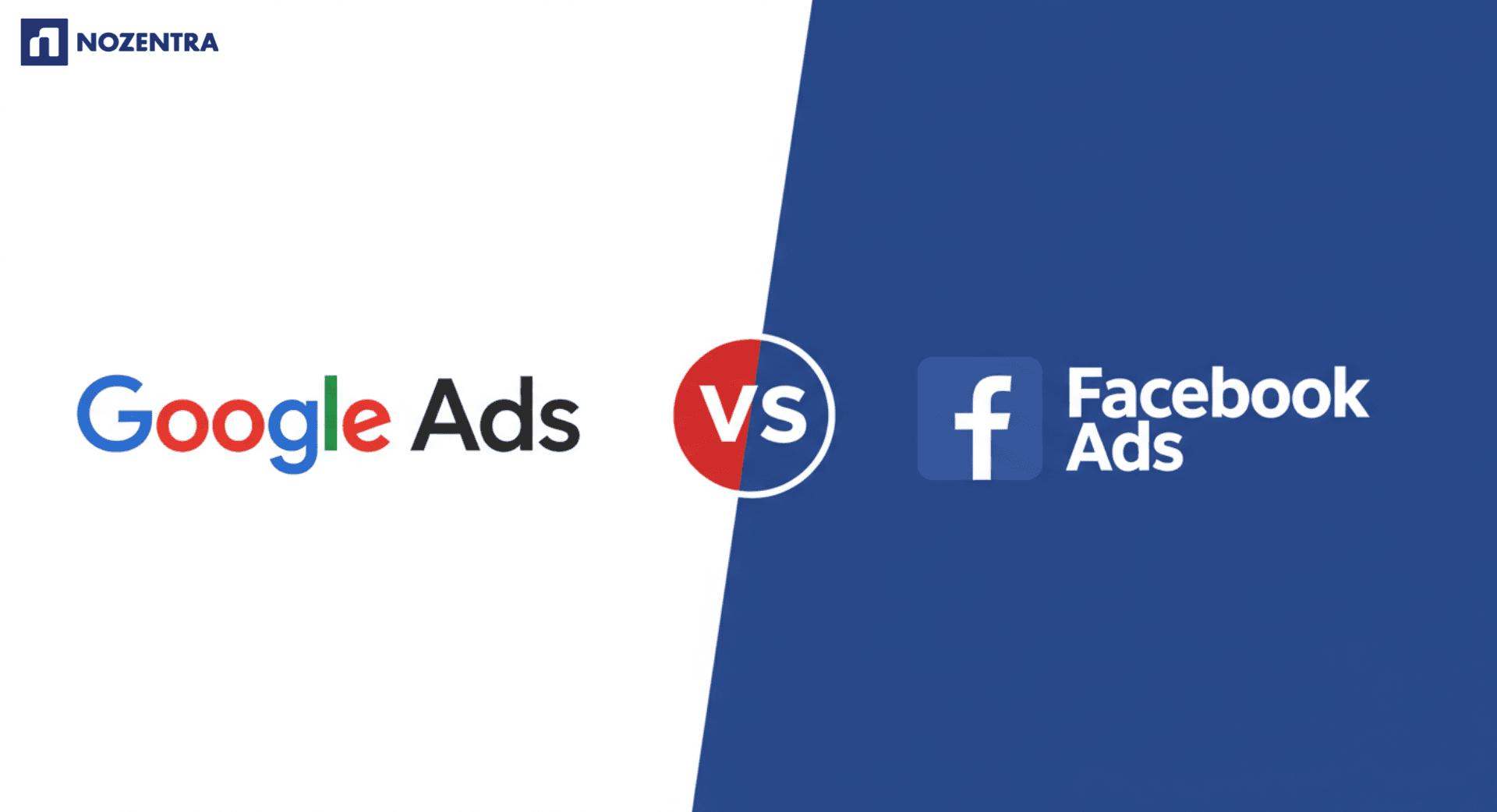
Across the digital marketing world, two platforms dominate the paid advertising world: Google Ads and Facebook Ads. Both offer unique advantages and serve distinct roles in the customer journey. But if you’re a business owner or marketer with a limited budget and big goals, which one should you prioritize? Here’s a closer look into each platform’s strengths, differences, and ROI potential to help you make the most informed decision for your business.
Understanding the Platforms
What Are Google Ads?
Google Ads is a pay-per-click (PPC) platform that displays your ads to users actively searching for products, services, or information. It spans across Search, Display Network, YouTube, Shopping, and more. For example, when someone types “best running shoes for men” on Google, your ad can appear at the top of the results.
Main ad formats:
- Search ads (text-based, keyword-targeted)
- Shopping ads (product-focused)
- Display ads (visual banners)
- YouTube ads (video-based)
What Are Facebook Ads?
Facebook Ads, part of Meta’s ecosystem, allow businesses to target users based on demographics, interests, and behaviors. These ads are shown across Facebook, Instagram, Messenger, and the Audience Network. Unlike Google, where users seek out products, Facebook helps users discover brands.
Main ad formats:
- Image and video ads
- Carousel ads
- Stories and Reels
- Lead form ads
Key Differences Between Google Ads and Facebook Ads
Keywords vs. Behaviors
Google Ads:
Google shows your ads when people search for something using specific words—called keywords. For example, if someone types “best budget smartphone,” your ad can appear right in the results. You can also choose who sees your ad based on their location, device (like mobile or desktop), and even time of day. It’s a smart way to reach people who already know what they want.
Facebook Ads:
Facebook works differently—it doesn’t wait for someone to search. Instead, it shows your ads to people based on their interests, habits, or life events (like getting engaged or starting a new job). You can even find new people similar to your current customers using “lookalike audiences.” This helps you get noticed by users who might not be actively searching but could be interested.
Text vs. Visual
Google Ads:
Most Google ads—especially Search ads—use text. These show up when people are looking for something specific, like a service or product. Google does offer some image-based ads through Shopping or Display, but overall, it’s more focused on giving helpful text results fast. Great for people who are already close to making a decision.
Facebook Ads:
Facebook is made for visuals. Ads appear as images, videos, carousels, and even short stories that feel like regular posts in someone’s feed. These ads are eye-catching and made to stand out while users scroll. It’s perfect for showing products, sharing brand personality, or catching attention even when people aren’t searching.
Cost Per Click and ROI
According to AgencyAnalytics (2025):
- Google Ads average cost per click (CPC): $1.66 (can go over $5 in competitive industries)
- Facebook Ads average CPC: $0.29
Even though Facebook ads usually cost less per click, Google often delivers better conversion results, especially when users already know what they’re looking for. That’s because Google targets people with clear intent, while Facebook is more about discovery.
Cost Comparison & ROI Insights
Industry Benchmarks: CPC by Platform
| Industry | Google Ads CPC (Search) | Google Ads CPC (Display) | Facebook Ads CPC | Facebook Ads Conversion Rate |
| Advocacy | $1.43 | $0.62 | $0.61 | 4.41% |
| Auto | $2.46 | $0.58 | $2.24 | 5.11% |
| B2B | $3.33 | $0.79 | $2.52 | 10.63% |
| Ecommerce | $1.16 | $0.45 | $0.70 | 1.85% |
| Education | $2.40 | $0.47 | $1.06 | 13.58% |
| Industrial Services | $2.56 | $0.54 | $2.14 | 0.71% |
| Legal | $6.75 | $0.72 | $1.32 | 5.60% |
| Real Estate | $2.37 | $0.75 | $1.81 | 10.68% |
| Travel & Hospitality | $1.53 | $0.44 | $0.63 | 2.82% |
CPC and conversion rates vary by industry, with Google Ads generally costing more but converting higher in intent-driven sectors, while Facebook offers lower CPCs with strong returns in visual and social-focused niches.
ROI Considerations for Small vs. Large Budgets
- Small budgets: Facebook provides more reach and flexibility for early-stage brands.
- Larger budgets: Google’s reach and targeting justify higher CPC if your goal is lead generation or direct sales.
“Advertisers typically spend 40% more on Google than Facebook due to higher ROI in bottom-funnel stages.” – AgencyAnalytics
Key Strengths of Google Ads and Facebook Ads That Drive Real Results
Why Google Ads Stand Out?
1. High-Intent Traffic
Google Ads reaches users who are actively searching for specific solutions.
Example:
When someone types a query like “emergency plumber near me” or “best running shoes,” they’re already motivated to act. This makes Google ideal for capturing bottom-of-funnel leads ready to convert.
2. Massive Reach Across Multiple Formats
From Google Search to YouTube, Display Network to Shopping ads, the platform offers unmatched diversity.
Example:
A retailer might run Search ads for people looking for “buy gaming laptop”, YouTube pre-roll ads to build brand awareness, and Display ads to retarget users who visited their product page but didn’t purchase.
3. Superior Analytics and Retargeting Tools
Google’s native integration with tools like Google Analytics, Tag Manager, and Search Console means advertisers can deeply understand performance and behavior.
Example:
An e-commerce brand can use Google Analytics to track how long visitors stay on product pages, then create remarketing lists to serve Display Ads to users who viewed a product but didn’t check out.
Why Facebook Ads Deliver Results
1. Laser-Focused Audience Targeting
Facebook shines in how precisely it can target users—by interests, behaviors, and life events.
Example:
A travel company can target users interested in “beach vacations” who recently searched for “honeymoon destinations,” or create a Lookalike Audience from their best-paying customers to expand their reach efficiently.
2. Affordable & Scalable for All Budgets
With a lower average cost-per-click than Google Ads, Facebook is highly cost-effective—great for brands at any stage.
Example:
A new skincare startup can test ads with just $10/day, then increase spend gradually based on which creatives and audiences convert best—making growth both manageable and data-driven.
3. Visually Rich Ad Formats
Facebook is a visually driven platform where ads blend seamlessly into users’ feeds.
Example:
A fashion brand can showcase a new clothing line using a carousel ad to highlight multiple products or use a Reels ad with influencer content to drive deeper engagement and brand recall.
How to Choose the Right Platform Based on Business Goals and Buyer Journey
Choosing between Google Ads and Facebook Ads starts with understanding your business goals and where your customers are in the buying journey. Each platform plays a unique role in helping you attract, engage, and convert users.
1. Match the Platform to Your Business Type
- Product-Based, Local Services, or B2B? → Google Ads
If your business thrives on high-intent searches—like local services, urgent needs, or niche B2B solutions—Google Ads is ideal. - Example: A plumbing company or a SaaS platform benefits from users actively searching terms like “emergency plumber near me” or “best CRM for small businesses.”
- Lifestyle, Trend-Driven, or Visual B2C Brands? → Facebook Ads
If your brand relies on discovery, aesthetics, or emotional appeal—like fashion, fitness, or home décor—Facebook Ads offer the perfect space to connect. - Example: A DTC skincare brand can use visually rich carousel or video ads to showcase product benefits and drive interest among beauty lovers.
2. Build Awareness and Drive Discovery at the Top of the Funnel
- Use Facebook Ads for Broad Visibility and Brand Personality
Facebook excels at introducing your brand to new audiences with engaging formats like Stories, Reels, and video ads. - Example: A travel agency could use a video ad to highlight dream destinations, creating aspirational appeal for users just starting to consider their next trip.
- Leverage Google Display Ads for Visual Exposure
Google’s Display Network reaches over 90% of global internet users, making it powerful for wide-scale exposure and initial touchpoints. - Example: A new electronics brand can run banner ads on relevant sites to build recognition before users are ready to search or buy.
3. Drive Conversions During the Decision-Making Stage
- Capture Ready-to-Buy Users with Google Search & Shopping Ads
When users are searching with intent, like “buy trail running shoes” or “best noise-canceling headphones”—Google Ads puts your product directly in front of them at the perfect moment. - Example: An e-commerce store running Shopping ads can highlight product images, prices, and reviews right in the search results, increasing conversion potential.
- Retarget Effectively with Facebook and Google Display
Bring back users who visited your site, viewed products, or abandoned their carts with strategic retargeting campaigns. - Example: A furniture retailer could retarget a user with a carousel ad showing the exact sofa they viewed, while also running Display Ads across news or lifestyle websites they visit.
Struggling With Ads? Nozentra Makes It Simple
Running ads across Google, Facebook, and other platforms isn’t just time-consuming—it demands in-depth knowledge of audience behavior, algorithm updates, bidding systems, and multi-platform coordination. That’s why Nozentra offers end-to-end Paid Media Services, covering search, social, eCommerce, and analytics—so you get expert results without the learning curve.
Final Thoughts: Which One Should You Choose?
There’s no one-size-fits-all answer when it comes to choosing between Google Ads and Facebook Ads. Both platforms offer powerful ways to reach people—you just need to match the right tool to the right moment. Whether you’re trying to drive sales today or build brand awareness for tomorrow, the key is knowing your audience and setting clear goals. If you’re still unsure where to start or how to make your budget work smarter, getting experts’ help can save time, money, and a lot of trial and error.