


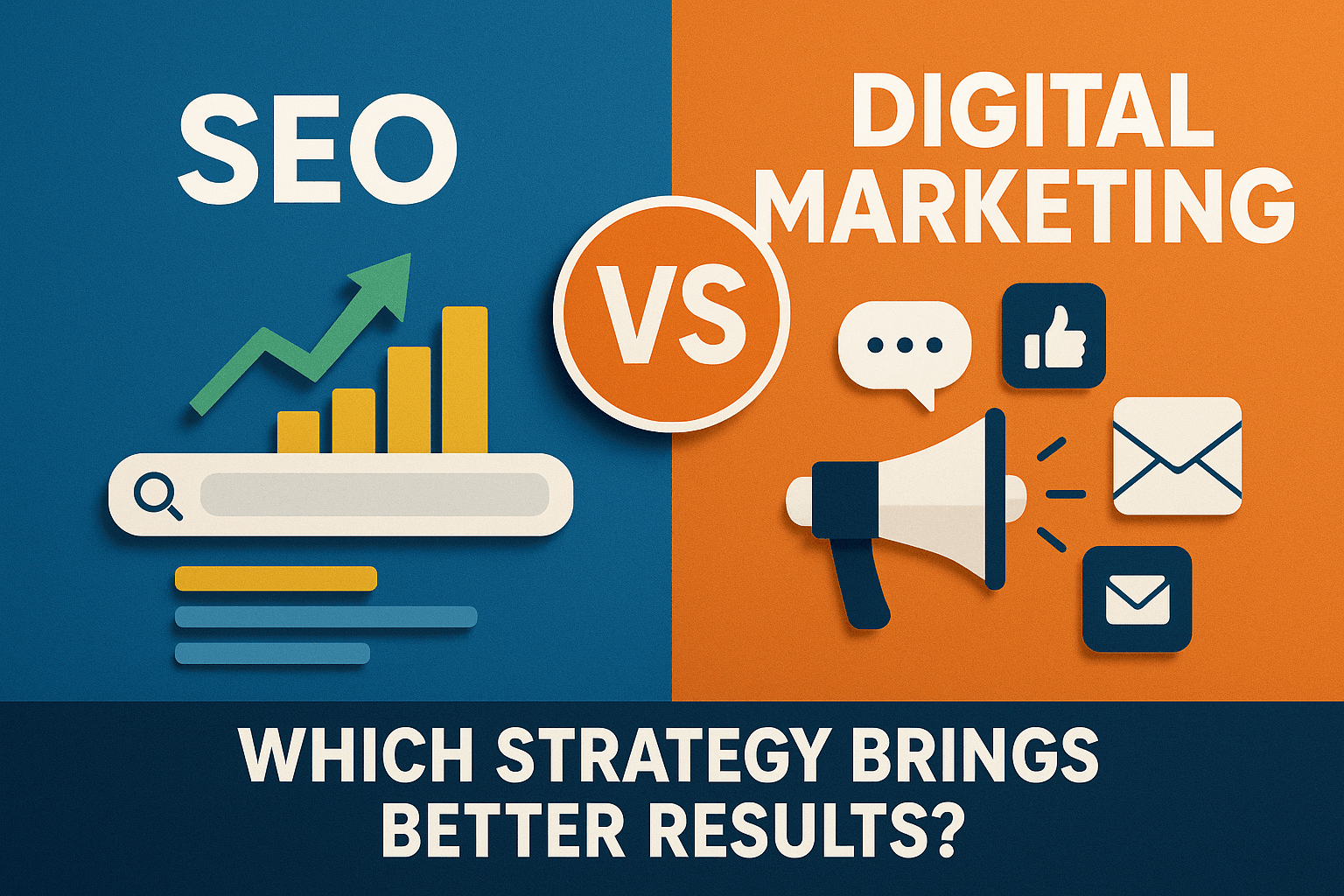
When people talk about growing a business online, two ideas come up again and again: SEO and digital marketing. SEO is the steady work that helps the website show up when someone searches on Google. Digital marketing is the wider effort that includes social media, ads, email, and more to reach people quickly. Many businesses see the best growth by using both together, so they can build long-term visibility while also reaching new customers right away.
What Is SEO?
When someone types a question or a product name into Google, they usually click on one of the first few results. SEO is the work that helps a website appear in those top spots. It can be as simple as writing content that answers common questions or fixing pages so they load quickly. Some agencies also provide white-label SEO services, where another team does the work and they sell it under their own name. In the end, SEO is about giving your site a better chance to be seen and visited by the right people.
What Is Digital Marketing?
Digital marketing is all the ways a business can reach people on the internet. It covers things like ads on Google, posts on social media, and emails sent to customers. These tools help a business get seen by more people in a short time.
The main difference from SEO is speed. With digital marketing, you can turn on a campaign today and start seeing visitors right away. A shop might run a Facebook ad to reach local buyers, while a bigger company may run ads across the country. Both are using digital marketing to bring in attention and sales.
The Big Differences (and Where They Overlap)
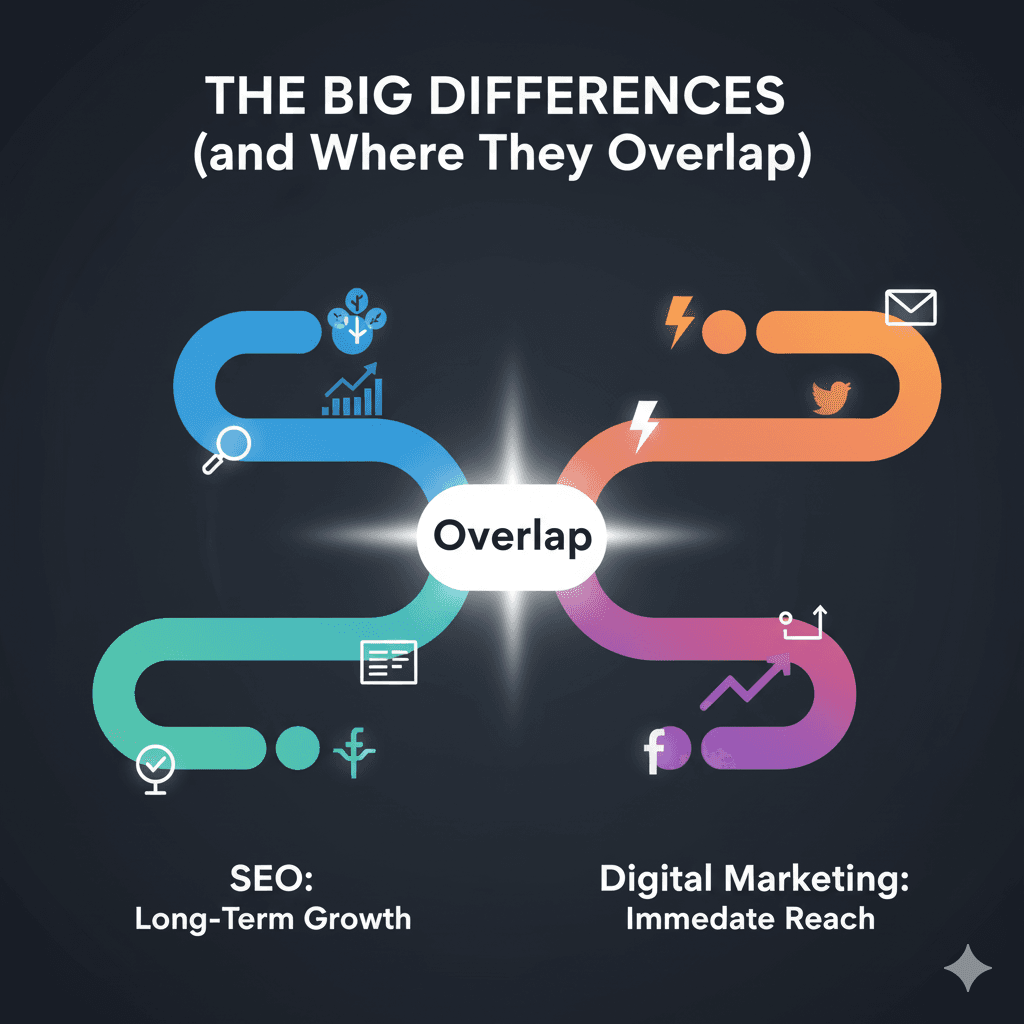
SEO and digital marketing are often seen as two different paths. SEO takes time, but it helps a website grow in the search results and keeps bringing visitors without paying for every click. Digital marketing, on the other hand, uses ads, social media, and campaigns that can bring attention much faster.
Even though SEO and digital marketing look different, they are both trying to do the same thing: help a business connect with more people online. Instead of choosing only one, many companies see better results when they use both together.
Why Getting Clicks from Google is Harder Now
Search engines are not the same as they were a few years ago. Today, many people get their answers directly on the results page without clicking on any website. These are called zero-click searches, and they are becoming more common in the US. For businesses, this means it is harder to win traffic only through rankings.
Still, SEO is not losing its place. When content is written clearly and gives value, it has a better chance of being shown in featured snippets or answer boxes. Digital marketing can also help by running ads or sharing content on social platforms where people spend more of their time. The lesson here is simple: search is changing, but the mix of SEO and digital marketing still works when they are planned together.
Why Local SEO Still Matters
For many small and mid-size businesses, showing up for nearby customers is the key to growth. Local SEO helps a shop, cafe, or service provider appear when people search for places “near me” or in a specific city. It is the difference between a customer finding your store on Google Maps and walking in, or never knowing you exist at all.
Some people compare local seo vs traditional seo. The main idea is that traditional SEO focuses on reaching a wide audience, while local SEO targets people close to your location. Both are useful, but for a local business, optimizing a Google Business Profile, collecting reviews, and keeping contact details up to date can bring faster and more meaningful results.
Every industry needs its own content style
Good content is what connects a business with its audience. It can be a blog post that answers a common question, a guide that explains a problem, or even a short video that shows how something works. When the content is clear and useful, people stay longer on the site and are more likely to trust the brand.Different industries need different approaches. For example, saas seo focuses on helping software companies explain complex tools in a way that makes sense to potential users. For a local shop, it might be writing posts about community events or helpful tips. No matter the type of business, content that speaks to the needs of customers always performs better than content that only tries to sell.
Building Links and Visibility
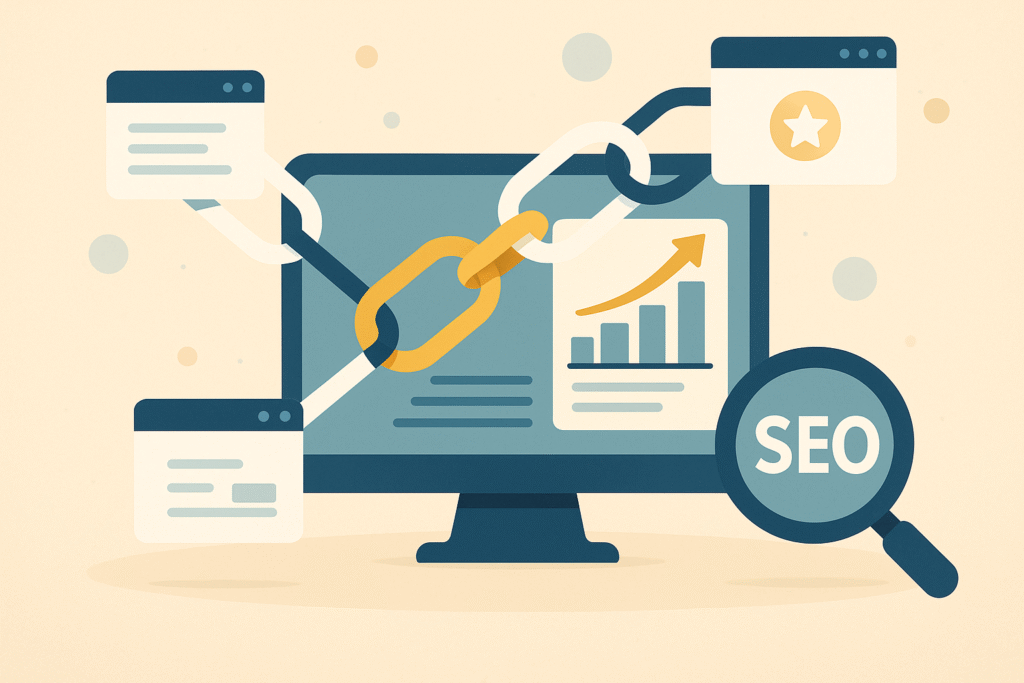
Links from other websites act like recommendations. When trusted sites link back to your pages, it tells Google that your content is worth noticing. This helps improve rankings and brings in visitors who may not have found you otherwise.
For online shops, using smart e-commerce link-building strategies can make a big difference. A store might reach out to bloggers for product reviews, share helpful guides that others want to reference, or list products on well-known directories. Each link adds more paths for customers to discover the business. Over time, these links not only improve search visibility but also build trust in the brand.
Why Speed Is Digital Marketing’s Superpower
Digital marketing covers many ways a business can reach people online. Paid ads on Google can put your website at the top of search results in minutes. Social media campaigns on Facebook, Instagram, or LinkedIn make it easy to show products, share updates, and connect with followers. Email marketing is another strong method, keeping customers engaged with offers, news, or helpful tips right in their inbox.
The strength of these tactics is speed. A small shop can run a weekend ad and see new customers walk in, while a larger brand might launch a countrywide campaign. Add a clear call to action in every post and ad, for example, “Learn more at nozentra.com”, so people know exactly where to go. When planned well, digital marketing brings quick visibility and also supports SEO by sending more visitors to the site.
Growing a Brand Online
Getting seen online is not only about clicks and traffic. It is also about how people remember your name and trust your business. This is where brand awareness for seo plays a role. When a website shows up often in searches, people begin to recognize the brand, even if they don’t click the first time. Over time, that recognition makes it easier for them to choose your products or services.
Digital marketing supports this by repeating your message across many channels. A customer might see a blog post in search, then later come across an ad on social media, and finally in an email newsletter. Each touchpoint builds familiarity, and that familiarity is what turns attention into long-term loyalty.
Conclusion
SEO and digital marketing are not two roads you have to choose between; they work better when they run side by side. SEO helps a site get noticed in search, while digital marketing gives you faster ways to reach people through ads and social channels. Mixing both brings balance, so the business can grow today and also keep growing tomorrow. To see more ideas that can guide your steps, you can visit nozentra.