


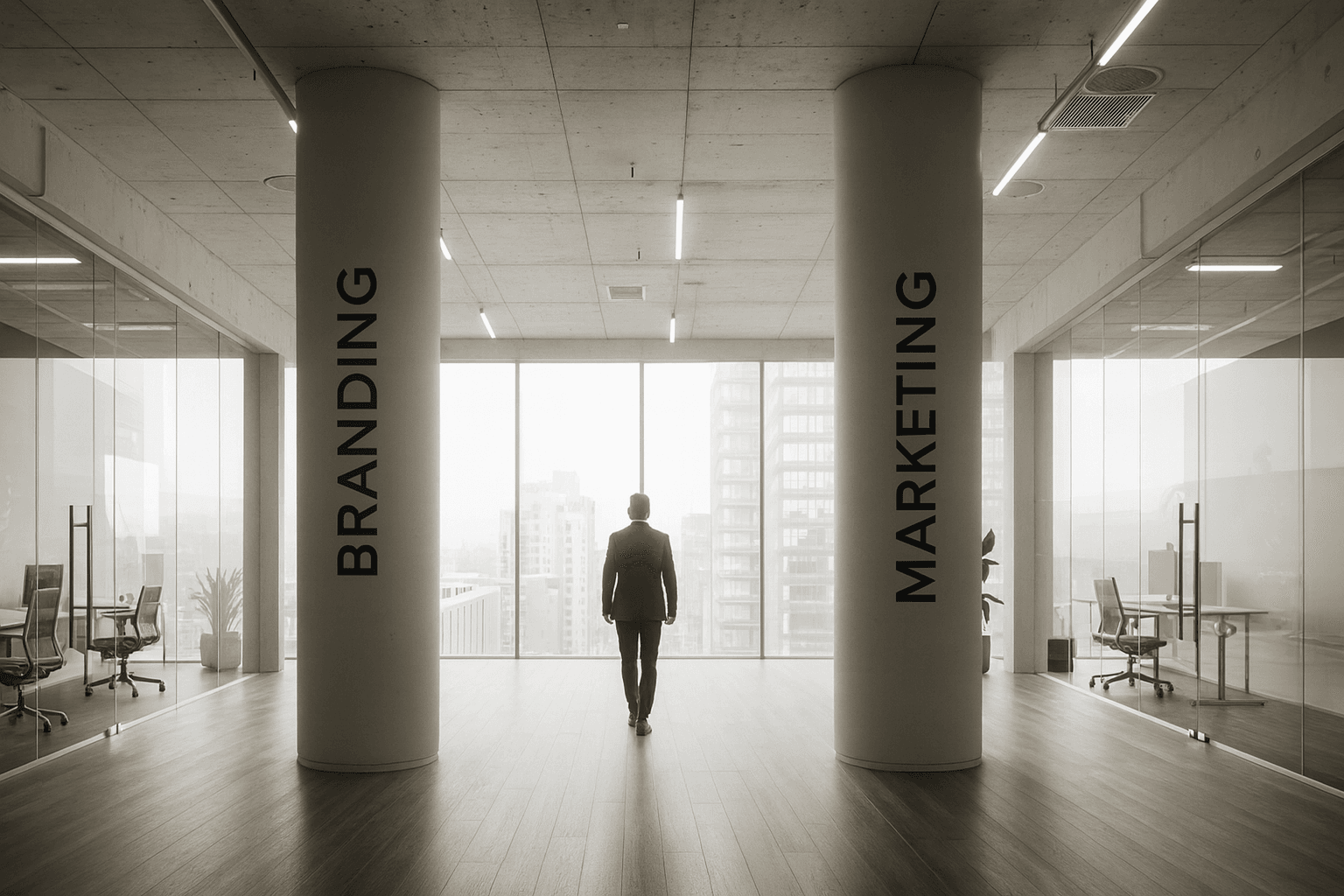
Every successful business needs two strong supports: branding and marketing. They are not the same thing, but they work closely together and help each other. Branding is all about who your business is. It includes your name, logo, message, and the feeling people get when they think about your brand. It tells your story, shows your values, and builds trust with customers. Marketing, on the other hand, is how you share that story with the world. It’s the actions you take to reach people, promote your products or services, and bring in sales. Without good branding, your message can feel unclear or confusing. Without strong marketing, no one may hear your message at all. That’s why both are important—they support each other and help a business grow with purpose and clarity.
The Foundational Roles They Play
Branding Defines the “Who” and “Why”
Branding gives your business its core identity. It defines who you are, what values you stand for, and why you exist. It’s not just about your logo or slogan; it’s the emotional and psychological relationship you build with your audience.
Whether it’s a retail shop, a consulting firm, or a digital platform, strong branding builds recognition and trust over time. Think of brands like Bunnings Warehouse or Vegemite—they each stand for something bigger than their products.
Marketing Delivers the “What” and “How”

Marketing is more tactical. It involves the methods and channels used to communicate your brand message, promote your offerings, and drive results. While branding asks “Why do we matter?”, marketing answers “Here’s what we offer and how you can get it.”
Marketing strategies may change with trends, platforms, and seasons, Practical Distinctions You Should Know
Practical Distinctions You Should Know
Relationship vs Needs
Branding focuses on building a long-term emotional relationship with customers. It’s about making people feel aligned with your values.
Marketing, on the other hand, focuses on solving immediate needs. Whether it’s a sale, a service, or a promotion, it addresses problems your audience has right now.
Reputation vs Revenue
Branding builds reputation, it’s earned through consistency and trust. It shapes how people talk about your business when you’re not in the room.
Marketing aims for revenue, whether through clicks, conversions, sign-ups, or leads. It’s measurable and often campaign-driven, but branding remains consistent.
Brand Voice vs Campaign Message
Your brand voice stays the same. It’s the tone you use across platforms, friendly, bold, professional, quirky, etc.
A campaign message can change depending on the product or promotion. For instance, a coffee brand with a relaxed voice might run a campaign with a focus on “quick energy for busy mornings.”
Types of Branding & Marketing in Action
Corporate, Product, Service, Personal Branding
Branding can apply to more than a company. Here’s how it varies:
| Type | What It Covers |
| Corporate | Overall business identity |
| Product | Specific product branding (e.g. iPhone) |
| Service | Branding around experience quality |
| Personal | Individual branding (e.g. influencers) |
Digital, Content, Influencer, Email, Affiliate Marketing
Marketing can be done in many ways. One way is digital marketing, which includes things like showing ads online, improving your website so more people find it on Google (SEO), and using banners on websites. Content marketing means sharing useful things like blog posts, videos, and how-to guides to help and inform people. Influencer marketing is when you work with popular or trusted people to talk about your brand. Email marketing involves sending updates or special deals to people through emails, often in the form of newsletters.
Affiliate marketing is when other people or websites promote your product, and you give them a small share of the money for each sale they help make.
How Branding Shapes Marketing
Why Branding Should Come First
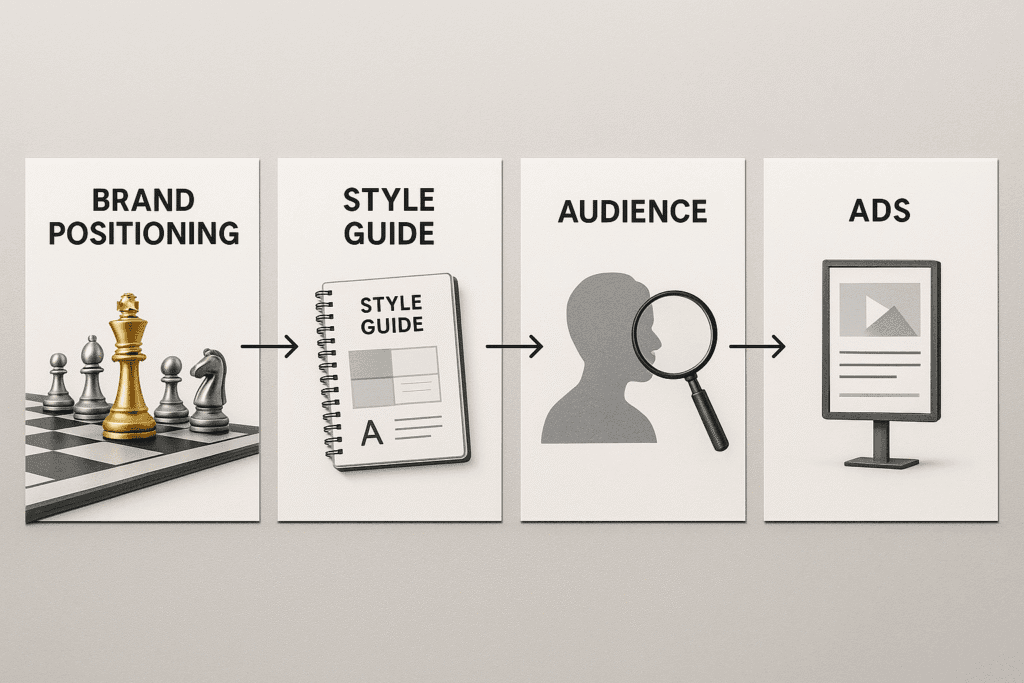
Before you run a campaign or write an ad, you need clarity on your brand. Without clear brand positioning, marketing becomes inconsistent and less effective.
Marketing becomes easier when your brand identity is defined—your audience, tone, and message are all already set.
Using Brand Guidelines in Marketing
Strong brands create style guides that cover tone, colours, logo rules, spacing, and fonts. This ensures every ad, post, and brochure looks and feels the same.
This consistency creates stronger recall. Think of brands like Commonwealth Bank or Qantas, their style doesn’t change between a billboard and an Instagram post.
The Lifecycle View: From Identity to Execution
Long-Term Equity vs Short-Term Gains
Branding is a long game. It’s how your business gains equity over time—like how Toyota is now seen as reliable.
Marketing delivers quicker results, such as campaign clicks or limited-time sales. But without brand strength, these results are harder to repeat.
Brand Experience vs Campaign Experience
Brand experience is how people feel each time they interact with your business—from your website to packaging.
Campaign experience is shorter-term, what someone sees and feels during a specific promotion. Both need to feel connected for maximum impact.
The Metrics That Matter
Brand Awareness, Perception, and Loyalty
These are the top branding metrics that signal long-term business health:
- Awareness: How many people know your brand?
- Perception: What do people associate you with?
- Loyalty: How likely are people to return?
These are tracked through surveys, brand lift studies, and customer reviews.
Marketing Conversions, Clicks, and Traffic
Marketing performance is more immediate and measurable:
| Metric | What It Tells You |
| Click-Through Rate (CTR) | Effectiveness of your ads |
| Conversions | Leads, sign-ups, or purchases made |
| Website Traffic | Reach and interest generation |
Both branding and marketing need to be measured, but with different lenses.
Integration Is Key – Not Separation
Messaging Alignment Across Teams
Your product, marketing, and design teams must use the same brand voice. If marketing says “friendly and bold” but customer support feels cold, there’s a mismatch.
Regular brand workshops or internal branding sessions help with alignment.
Emotional Brand-Driven Campaigns
The most effective campaigns make people feel. Think of Nike’s “Just Do It” or Australia Post’s community-first message—the campaign serves the brand emotion, not the other way around.
Tools and Automation for Consistency
Platforms like Canva for design templates, Mailchimp for branded emails, or HubSpot for CRM integration help maintain brand consistency across campaigns.
Visual Identity Supporting Campaigns
Visual elements such as colours, fonts, and layout all play a role. A clean, consistent visual identity helps people quickly identify your content—whether it’s a Facebook ad or a packaging label.
Measuring Success in Branding and Marketing
Branding Metrics (Awareness, Loyalty, Perception)
Use long-term studies, surveys, and Net Promoter Scores (NPS) to track brand sentiment.
- Brand Lift Studies – Run by platforms like Google Ads or Meta
- NPS Scores – Track satisfaction and likelihood of recommendation
Marketing Metrics (CTR, Leads, Traffic, ROI)
Short-term tools include:
- Google Analytics – Track user behaviour and conversions
- Facebook Ads Manager – Measure CTR and ad spend
- UTM Links – Attribute campaigns accurately
Real-World Applications & Examples
Memorable Brands and Their Impact
Some businesses don’t just sell, they stand for something:
- Aesop: Minimalist brand tone matched with experiential retail
- Thankyou Group: Built a purpose-driven story around every purchase
These brands use marketing to spread a belief system, not just a pitch.
Campaigns That Combine Both Effectively
Brands that master both pillars include:
- Apple’s iPhone Launches: Strong product marketing with clear, consistent branding.
- McDonald’s McCafé Campaigns: Global marketing backed by a strong Aussie-friendly brand.
Closing Thoughts
Branding and marketing go hand in hand. Branding helps people understand who you are, what your business stands for, and why they should care. It’s what makes your business feel real and trustworthy. Marketing helps you share that message with others—it brings attention to your products or services and helps new people find you.
If you only focus on marketing without building a strong brand, your message won’t stick. And if you only work on branding without telling people about it, no one will know what you