

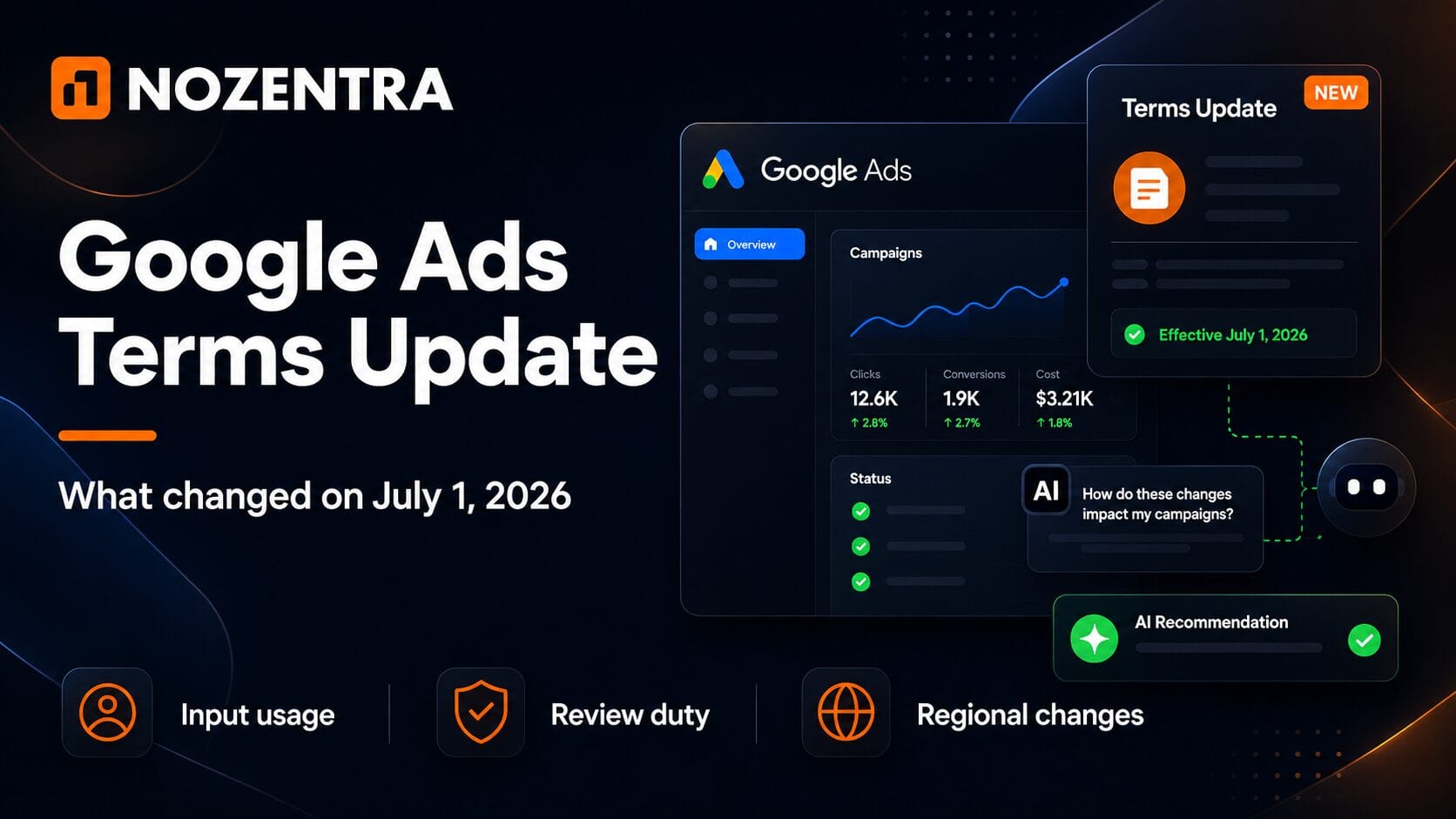
Google’s Advertising Program Terms changed on July 1, 2026, the first full rewrite since 2018. The update does not require any action to accept, but it changes how Google can use the data advertisers put into Ads tools, and it puts a firmer obligation on advertisers to review anything Google’s automation generates on their behalf. If you run Google Ads directly or manage accounts for clients, here is what changed and what to check this week.
Key takeaways
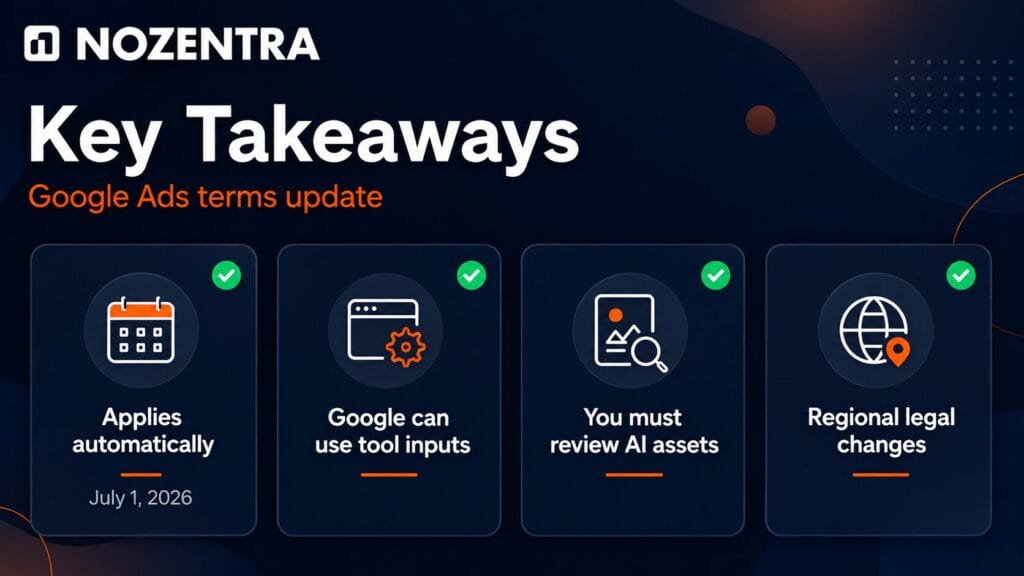
- The new terms took effect automatically on July 1, 2026. No sign-in or acceptance step is required.
- Google can now use information entered into conversational tools such as Ask Advisor, plus authorized website content, across Ads features to improve campaign performance.
- Advertisers keep explicit responsibility for reviewing, approving, or removing anything Performance Max or AI Max generates automatically.
- Regional changes touch arbitration language and add references to country-specific regulatory fees, with a Brazil-specific clarification naming Google BR as the operating entity there.
Why this update matters now
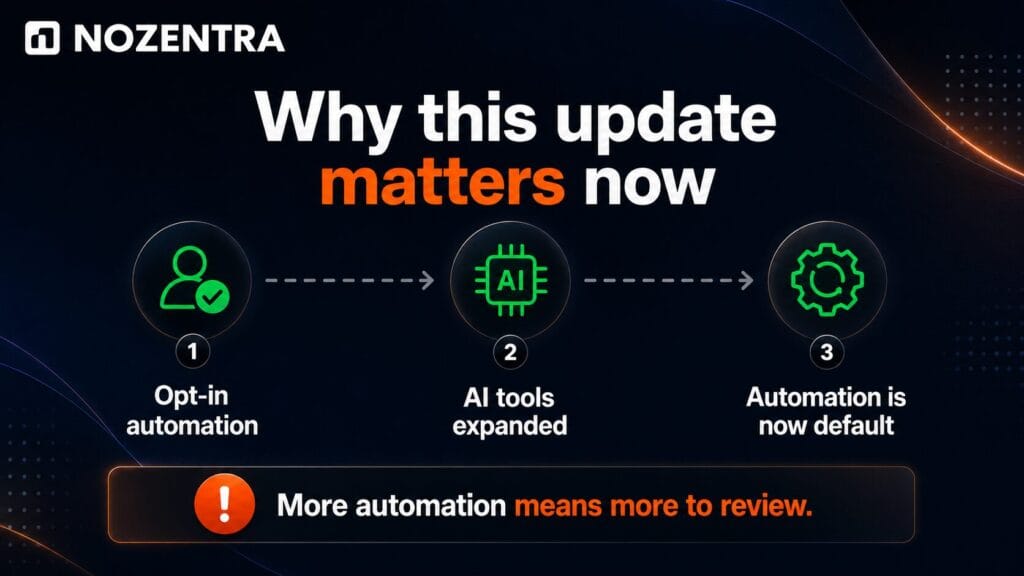
Google Ads has spent the past two years building out AI-driven account tools: Ask Advisor and Ads Advisor rolled out to English-language accounts by December 2025, AI Max extended to standard Shopping campaigns on April 30, 2026, and legacy tools like Dynamic Search Ads are scheduled to auto-upgrade into AI Max later this year. The 2018 terms described automation as something advertisers opted into. The 2026 terms describe it as the normal way the platform now works.
For an agency or in-house marketer, that shift matters less as a legal event and more as an account-hygiene one. The more decisions Google’s systems make on your behalf, the more that remains your responsibility to check.
What actually changed in the terms?
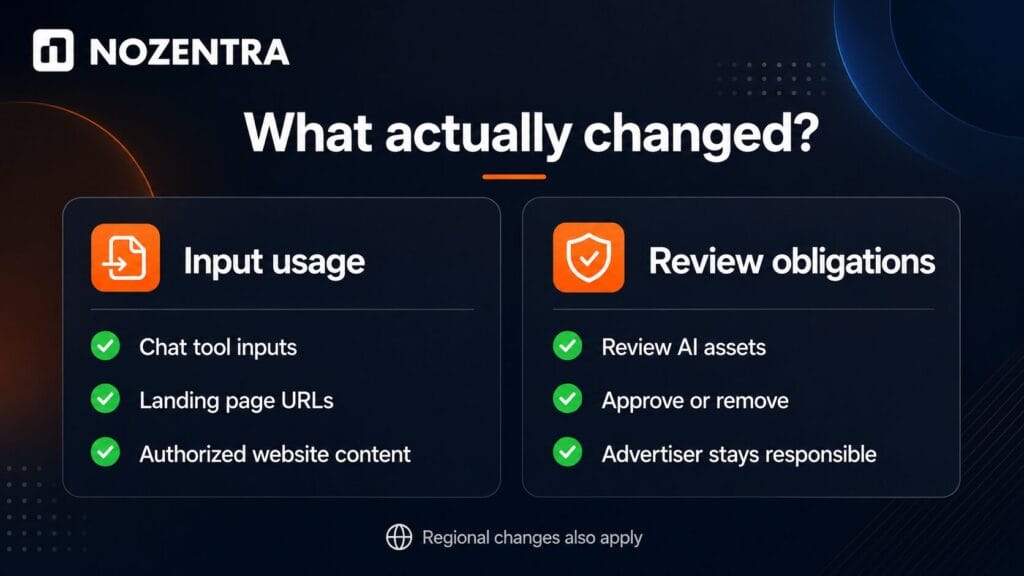
First, input usage. The updated terms explicitly cover text typed into conversational campaign tools, landing page URLs submitted for automated setup, and website content Google is authorized to crawl. Previously, this was implied through automated retrieval language; now it is named directly.
Second, review obligations. The terms state advertisers must have the rights to whatever inputs they provide and carry a continuing duty to review, approve, or remove auto-generated campaign elements. If an AI Max or Performance Max asset makes an inaccurate claim, responsibility sits with the advertiser, not the algorithm that produced it.
A smaller set of changes is regional: updated arbitration language in some markets, new mentions of country-specific regulatory operating fees, and a Brazil-specific clarification naming Google BR as the entity that commercially operates advertising inventory there.
How the terms compare with 2018
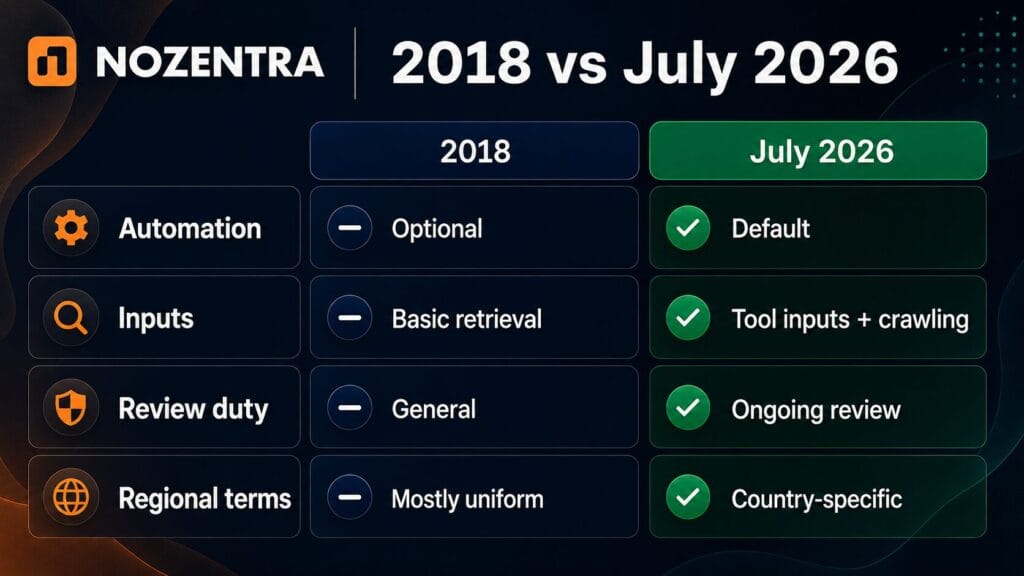
| Area | 2018 terms | July 2026 terms |
| Automation | Described as optional features | Described as the default operating model |
| Advertiser inputs | Covered basic automated retrieval | Explicitly covers conversational tool inputs and authorized crawling |
| Review duty | General responsibility for campaigns | Continuing duty to review and approve auto-generated assets |
| Regional terms | Largely uniform globally | Added country-specific fee and entity language |
Do you need to do anything before your next campaign?
Not to accept the terms, since they apply automatically. Three checks are worth doing this week, and they belong in a Google Ads audit anyway.
- Open any account running AI Max or Performance Max and pull the last 30 days of auto-generated headlines, descriptions, and images. Confirm none makes a claim you cannot support.
- Check which URLs and business information you have authorized Google to crawl for automated setup, and remove access for anything outdated, such as an expired promotion page.
- If your account operates in a region with updated arbitration language, note the opt-out window if one applies; this is a legal question specific to your contract, not something a marketing checklist can answer.
A Nozentra observation on this kind of change
Nozentra has found through account audits that the accounts adapting fastest to a terms-of-service change like this one are those already treating auto-generated assets as drafts, not finished ads. Teams that review Performance Max output weekly catch a stray claim or mismatched image before it runs at scale. Teams that only check in when performance dips tend to find the same problems much later, after the asset has already spent budget.
Implementation: what to check this quarter
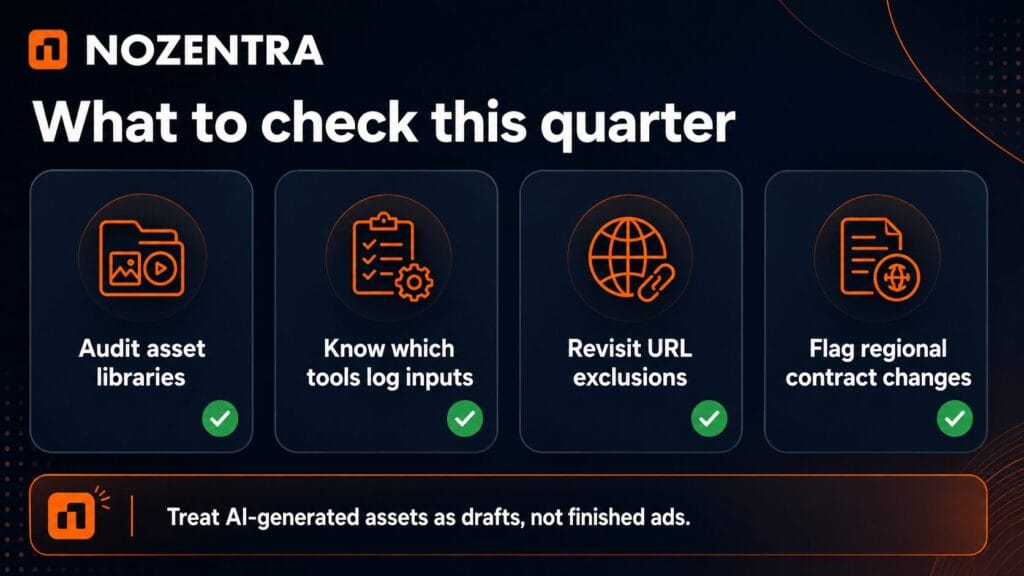
Steps:
- Audit AI Max and Performance Max asset libraries for accuracy and brand consistency.
- Confirm your team knows which tools are logging campaign inputs, and treat those inputs the same way you would treat a public brief.
- Revisit URL exclusions so outdated or non-customer-facing pages are not pulled into automated campaign generation.
- Flag any region-specific arbitration or fee changes to whoever manages your contract relationship with Google.
FAQs
Do I need to click anything to accept the new terms?
No. They apply automatically to all Google Ads accounts as of July 1, 2026.
Does this change how much I pay for ads?
The terms themselves do not set pricing. Some regions now reference country-specific regulatory operating fees, so check your account for any new line item.
Is this related to the March 2026 Core Update or other Google Search changes?
No. This is a Google Ads contract update, separate from Google Search’s organic ranking systems.
Work with Nozentra
If you want a second set of eyes on what your account is auto-generating under the new terms, Nozentra’s Paid Media services include a Google Ads account review that checks asset accuracy, input exposure, and campaign structure against current platform rules.
Conclusion
The July 2026 terms do not change what Google Ads costs, but they do formalize how much of the campaign-building work now happens automatically, and they keep the review burden on the advertiser. The practical response is a habit, not a legal one: check what the automation produced before it runs, not after.