


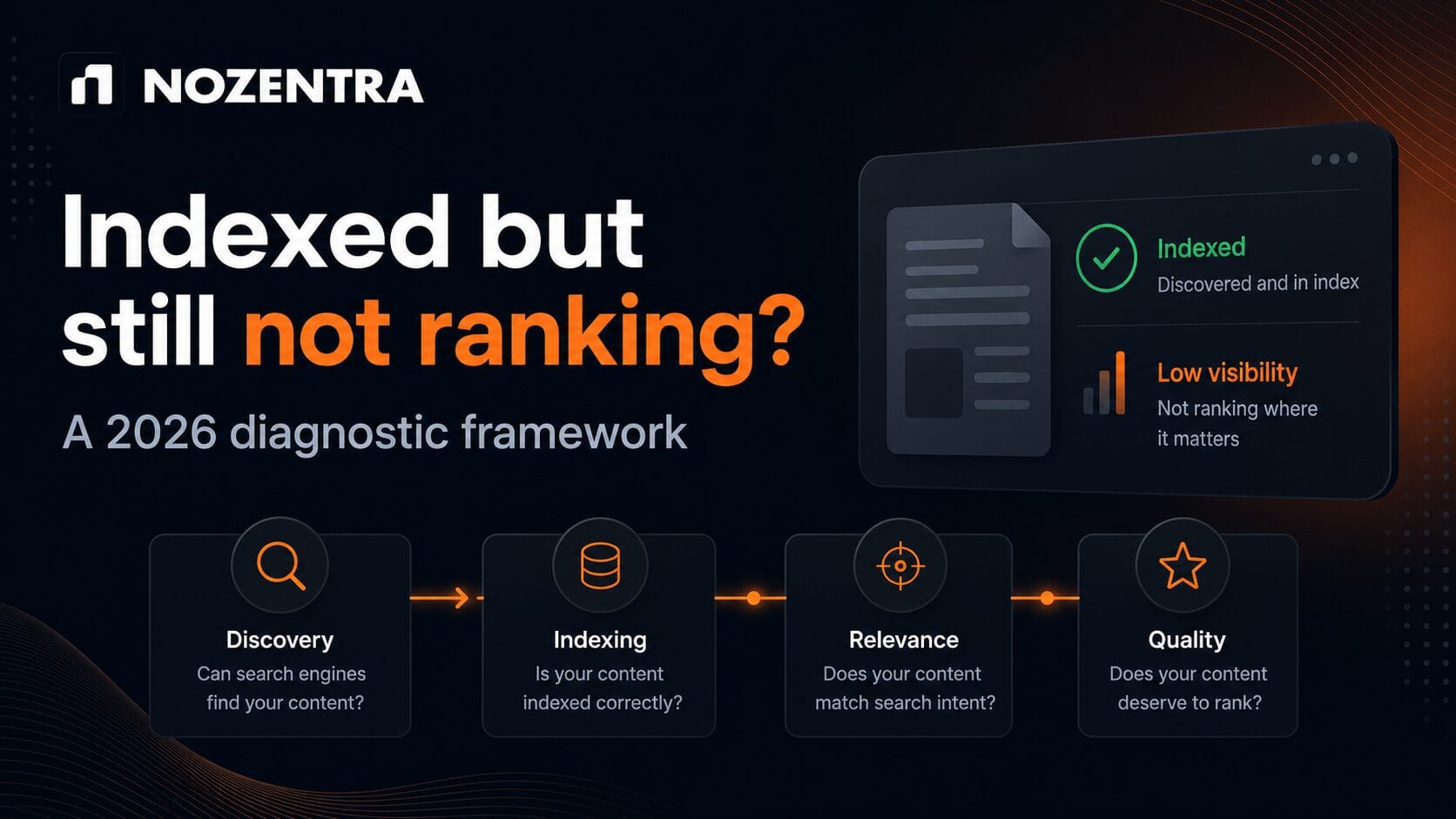
If Google Search Console shows your pages as indexed, but you are not seeing meaningful impressions or clicks, the problem is not indexing. It is somewhere else in the chain: relevance, authority, quality, or a recent update that changed how your content is being evaluated. This framework walks through that chain in order, so you can find out where it actually breaks.
Key takeaways
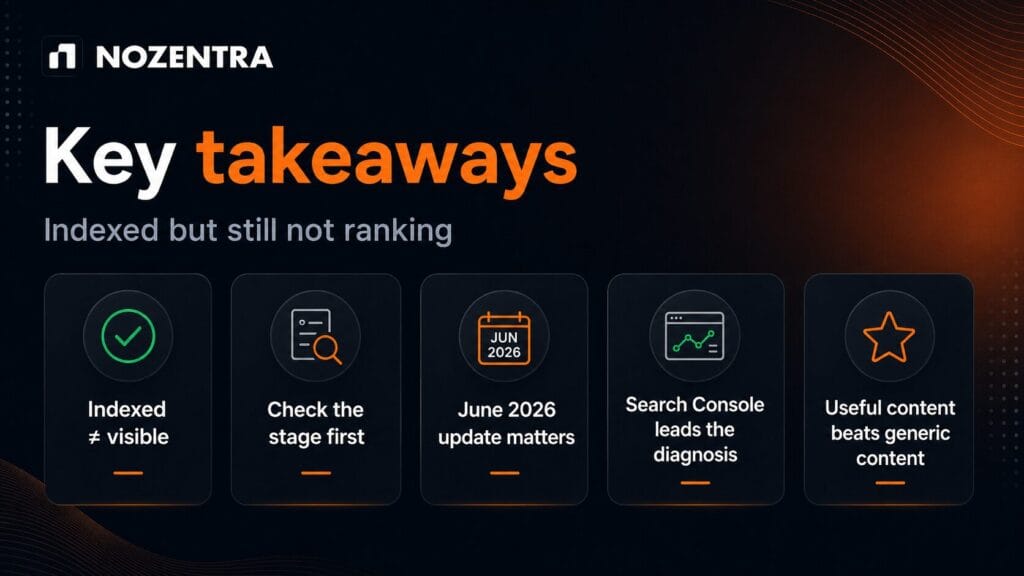
- Indexed does not mean visible. Indexing and ranking are separate stages, and treating them as one hides the real problem.
- Google’s June 2026 spam update rolled out quickly and was described as substantial, which makes this a good moment to re-check pages that dropped without an obvious cause.
- Work through discovery, indexing, relevance, and quality in that order rather than guessing at the whole site at once.
- Search Console is the primary diagnostic tool, not analytics.
- A page can be technically fine and still underperform if it does not fully answer the query it targets.
Start with the actual question: where in the chain is the failure
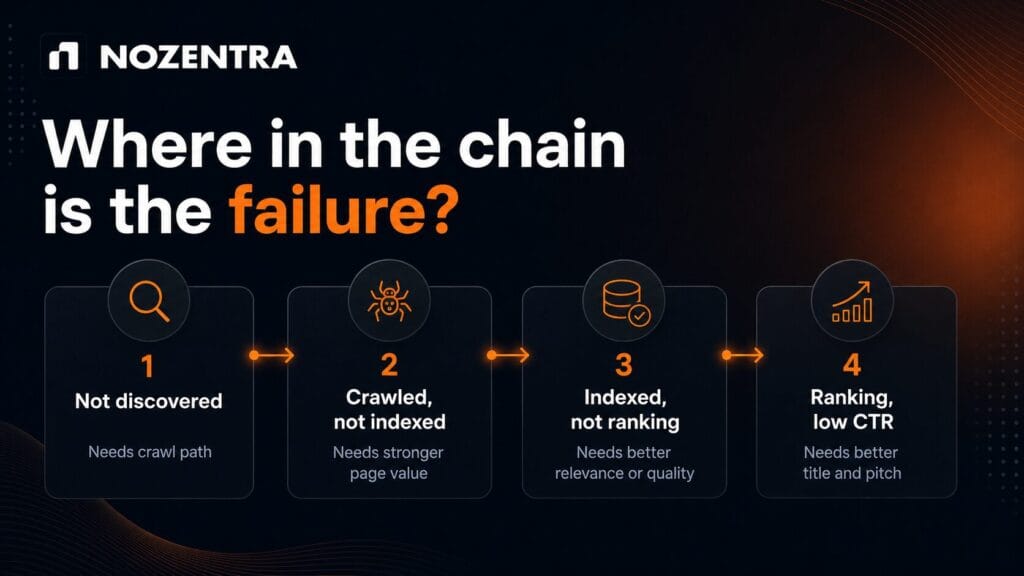
There are four distinct states a page can be in: not discovered, crawled but not indexed, indexed but not ranking, or ranking but with low click-through. Each has a different cause and a different fix. Diagnosing the wrong stage wastes time on fixes that were never going to help.
Stage one: is the page even discovered
Check the Pages report in Search Console under Indexing. If a page shows as “Discovered, currently not indexed” or does not appear at all, the issue is upstream of ranking entirely. Confirm the page is linked internally from somewhere Google actually crawls, that it is included in your sitemap, and that robots.txt is not accidentally blocking it.
Stage two: is it crawled but excluded from the index
If Search Console shows “Crawled, currently not indexed,” Google has seen the page and chosen not to index it. This usually points to thin content, near-duplicate content elsewhere on the site, or a page that does not clearly justify its own existence. Consolidating near-duplicate pages, rather than adding more content to each one, often resolves this faster than expanding word count.
Stage three: indexed but not ranking
This is the stage most sites in this position actually sit in, and it is where the June 2026 spam update matters most. Google’s search team has been public about a stronger emphasis on chunking, clear site signals, and content that demonstrates direct, first-hand value rather than repackaged summaries. If a page was ranking modestly before the update and dropped afterward, check whether it reads as a generic overview available on dozens of other sites. If it does, that is the most likely explanation, not a technical fault.
Stage four: ranking but with low click-through
If a page appears in results but rarely gets clicked, the problem is not visibility, it is the pitch. Check your title and meta description against what is actually ranking above and below you. A title that does not match the searcher’s intent, or a meta description that reads as generic, will suppress clicks even from a reasonable position.
What changed with the June 2026 update specifically
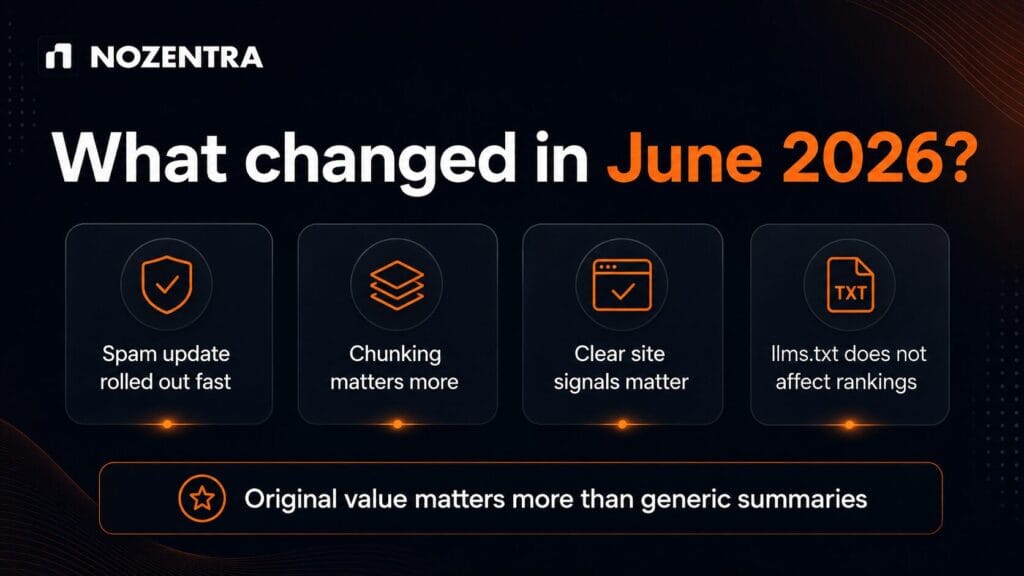
Coverage of the update described it as rolling out over about two days and feeling more substantial than typical monthly refreshes. Google’s search team has also been discussing chunking, site-wide signals, content quality, and how paywalled or gated content is handled. Separately, Google confirmed that llms.txt files have no effect on rankings, closing off a tactic some sites had adopted in place of actual content work. None of this changes the fundamentals. It reinforces them.
A note on terminology
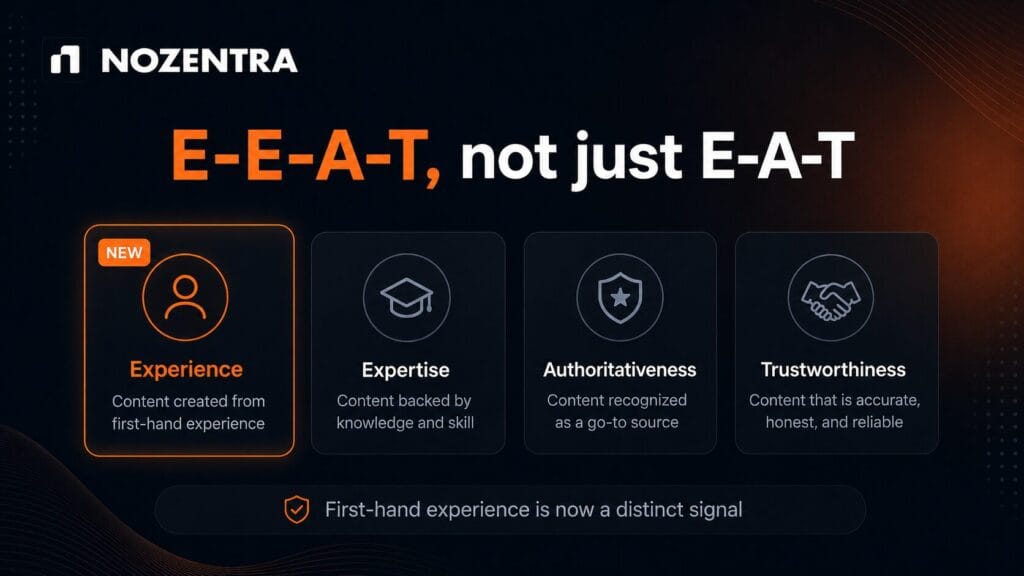
If your site or CMS still references E-A-T without the second E, update it. Google’s current framing is E-E-A-T, adding Experience alongside Expertise, Authoritativeness, and Trustworthiness. This is not cosmetic. Demonstrated first-hand experience is now a distinct signal from stated expertise, and content that only claims expertise without showing direct experience is weaker for it.
What Nozentra sees in audits
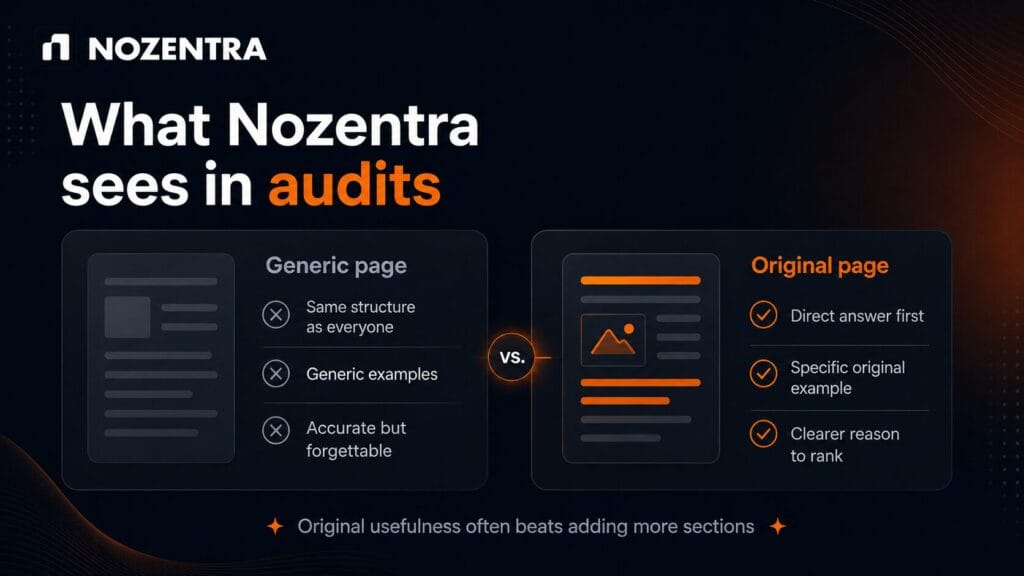
Nozentra often sees one clear problem in stage three audits: the page is not technically broken, it is just too generic. It is a page that answers the topic accurately but generically, in the same order and with the same examples as everything else ranking nearby. Reordering the page around a direct answer and adding one specific, original example usually moves the needle faster than adding more sections.
What to do next

Pull your Search Console Pages report and sort by indexing state. Group your underperforming pages into the four stages above before doing anything else. For any page stuck at stage three, ask honestly whether it reads as more useful than the five pages already ranking above it. If the answer is no, that is the fix to make first, before touching technical settings that were never the actual problem.
If you want a second opinion on which stage your key pages are stuck in, Nozentra offers a focused indexing-to-ranking audit that maps your priority pages against this exact framework.
FAQs
Does the June 2026 update mean I need to rewrite my whole site?
No. Start with pages that dropped or stalled specifically, not everything at once.
Is E-E-A-T a ranking factor Google measures directly?
Google has described it as a framework for evaluating content quality and trust, not a single measurable score. It shapes evaluation rather than acting as one isolated signal.
How long should I wait before deciding a fix did not work?
Give a meaningful content change several weeks to be recrawled and reassessed before concluding it failed, and confirm via Search Console that the page was actually recrawled.
Conclusion
Indexed and ranking are two different problems with two different fixes. Work through discovery, indexing, relevance, and quality in that order, and use the June 2026 update as a reason to check pages that stalled, not as a reason to rebuild everything at once.