


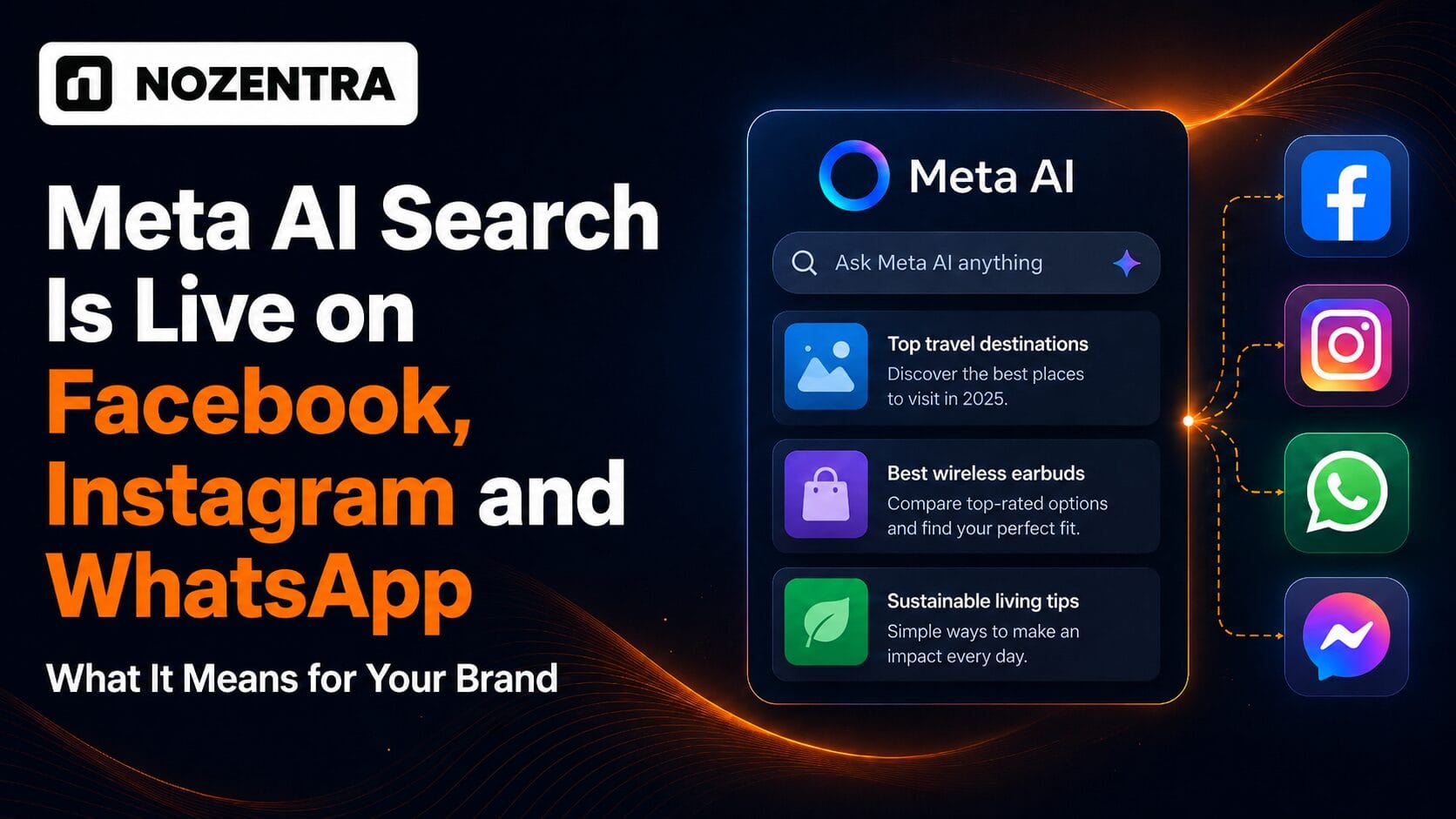
Meta AI can answer questions inside Facebook, Instagram, WhatsApp and Messenger, including in search bars, chats, posts and other in-app surfaces where the feature is available, without sending the user to a separate app or a search engine. For small businesses, that means a growing share of discovery is starting to happen inside apps you may already post to, but haven’t thought about as search surfaces.
Key takeaways
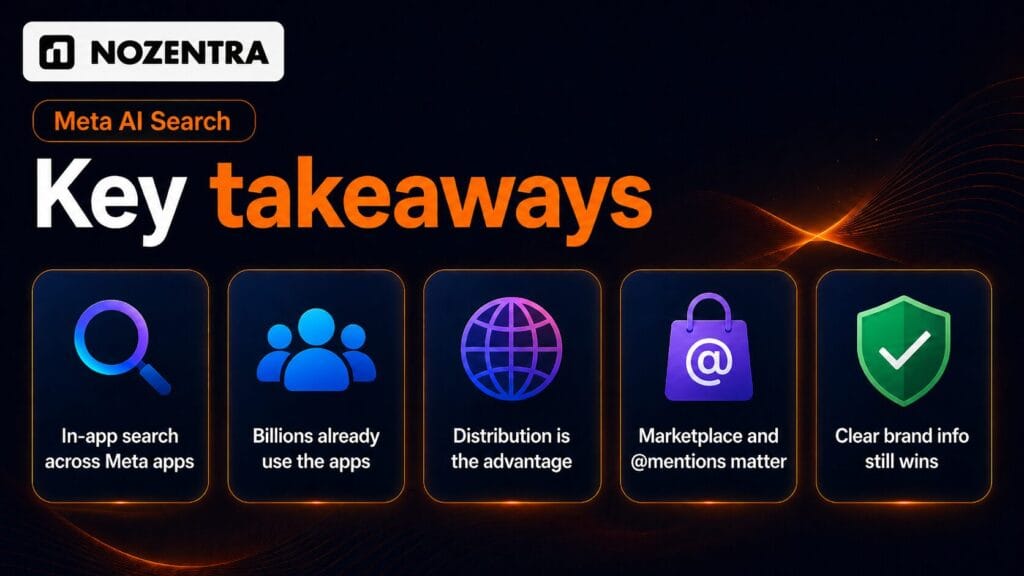
- Meta AI is built into search, feeds, and chats across Facebook, Instagram, WhatsApp, and Messenger, powered by Meta’s Muse Spark model.
- WhatsApp passed 3 billion monthly users in 2025, and Instagram passed 3 billion monthly active users in September 2025, giving Meta AI a built-in audience most standalone AI tools don’t have.
- Meta’s advantage isn’t a better model. It’s that people already spend time in these apps for reasons unrelated to AI, and Meta AI now sits inside that existing behavior.
- Meta AI can search Facebook Marketplace listings, pull up brand and creator content through @-mentions, and answer shopping questions without leaving the app.
- The fundamentals barely change: consistent brand information, genuine engagement, and clear product content still matter most. What’s new is a second surface, alongside Google, where that information gets used.
Why this matters now
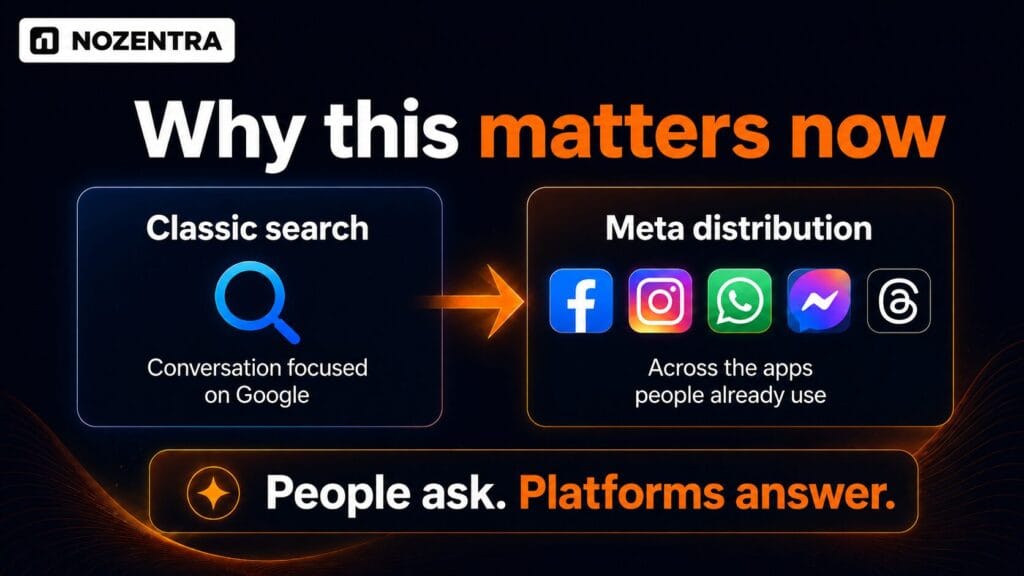
Search behavior has been splitting for a while between classic search engines and AI-generated answers. Most of that conversation has centered on Google. Meta’s push changes the picture, because it isn’t competing on having the smartest model. It’s competing on distribution it already owns.
According to a Search Engine Land analysis published this week, Meta AI is available across Facebook, Instagram, WhatsApp, and Messenger, and can generate real-time answers without the user ever leaving the app. That analysis also points to the scale involved: Threads reached 500 million monthly active users in June 2026. A person planning a weekend trip in a WhatsApp group doesn’t need to open a browser to compare venues if Meta AI can answer inside the same conversation.
Meta’s underlying model, Muse Spark, launched publicly on April 8, 2026 from Meta Superintelligence Labs and has been rolling out across the company’s apps since. It accepts voice, text, and image input, and Meta has been expanding what it can do inside each app, including browsing a brand’s public content through an @-mention and searching Facebook Marketplace listings alongside general web results.
What’s actually new versus what’s the same
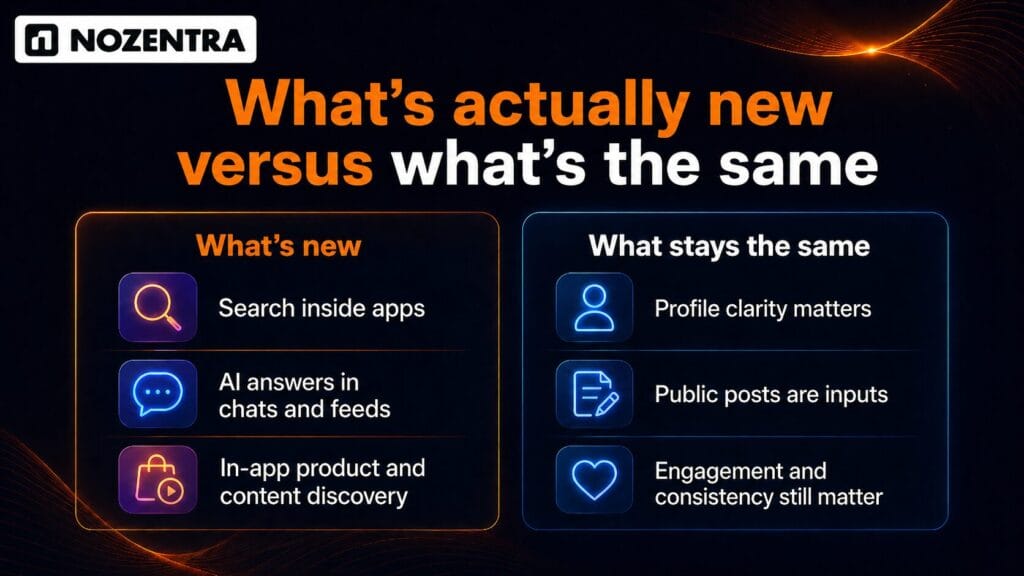
What’s new
Search-style behavior is now happening inside apps that weren’t built as search engines. A shopper can ask Meta AI to compare products, summarize what people are saying in a Facebook Group, or pull up a business’s public posts directly, all without a separate search step.
What hasn’t changed
The inputs Meta AI draws on are largely the same signals that have always mattered on these platforms: your public posts, your profile information, your engagement, and in supported markets, information people have chosen to share. At the moment, Meta has not announced a dedicated schema markup system or an optimization checklist for Meta AI discovery. The businesses AI surfaces most naturally are the ones with clear, current, consistent information across their profile, posts, and product listings, which is the same standard that’s mattered for organic reach on these platforms for years.
How this compares to Google’s AI search push
Google’s AI Overviews and AI Mode work from crawled web content and structured data on your site. Meta AI works from content and signals inside Meta’s own apps. A business investing only in website SEO and treating social platforms as an afterthought is now missing a second, separate surface where AI-driven discovery is happening.
This doesn’t mean starting over. It means applying the same consistency discipline to your Facebook, Instagram, and WhatsApp Business presence that you’d apply to your website: accurate details, current product information, and content that actually answers the questions your audience asks. Our guide to how AEO is changing search around user intent covers the same principle for Google’s AI features, and it transfers directly to Meta’s apps.
Nozentra’s view
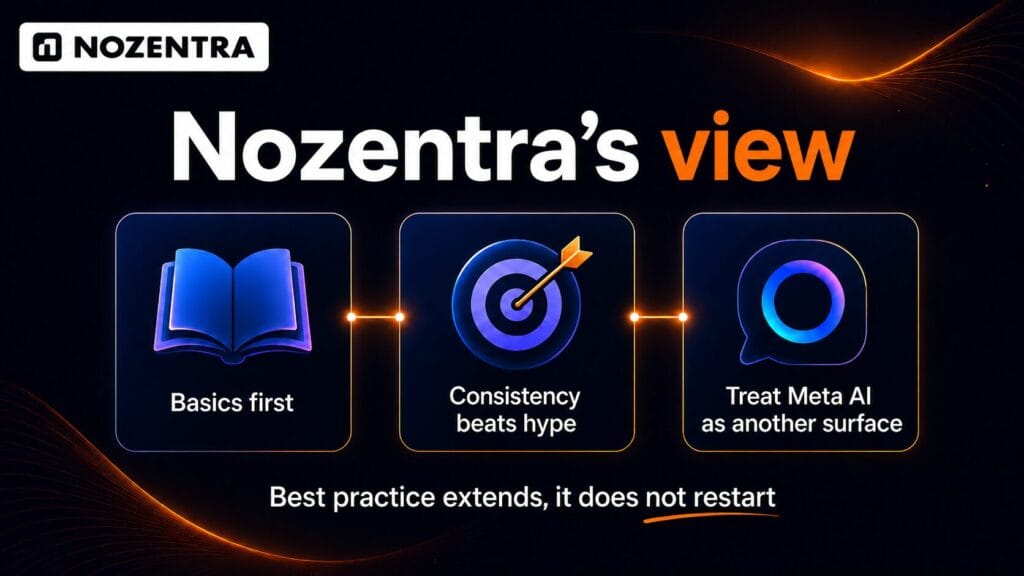
We’re cautious about treating this as an urgent new channel to chase. The businesses likely to benefit are the ones already doing the basics well: consistent naming, an accurate Business Profile on Meta, and content that answers real questions rather than pure promotion. Meta AI drawing more directly on that content extends existing best practice rather than demanding a rebuilt social strategy.
Where this does change planning is platform selection. A business weighing Instagram against TikTok, a question we’ve covered before, should now also weigh how much of each platform’s audience asks questions directly inside the app instead of clicking through to a website. That shifts some value toward platforms where content can be found and used in an AI answer, not only seen in a feed.
Implementation: what to check this month
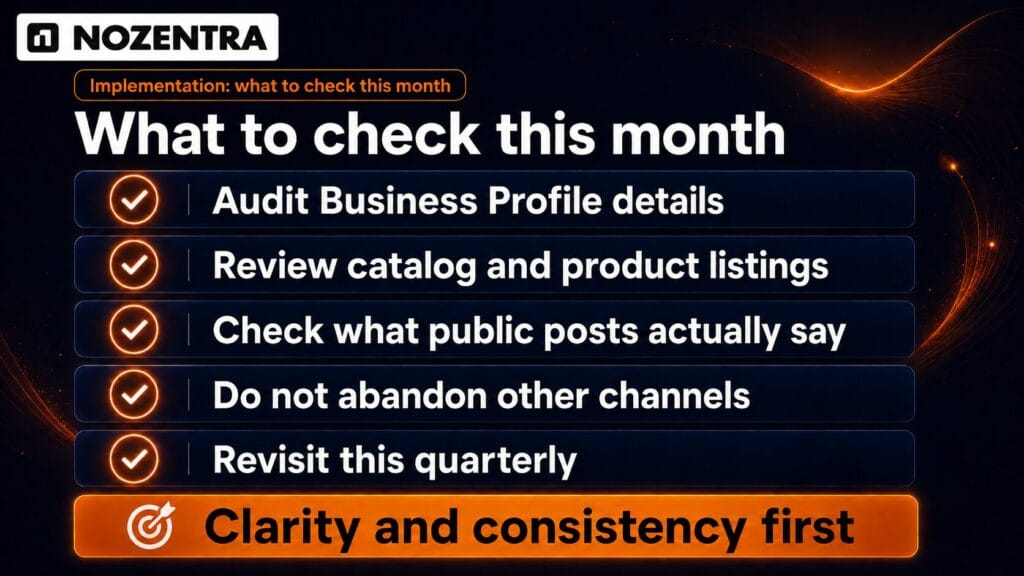
- Audit your Meta Business Profile details. Confirm your business name, hours, location, and product information are accurate and consistent across Facebook and Instagram, since these are likely inputs to how Meta AI describes your business.
- Review your product and catalog content on Meta. If you sell through Facebook Marketplace or Instagram Shopping, clear and current listings matter more now that Meta AI can surface them directly in a shopping query.
- Check what your public posts actually say. Content that clearly explains what you offer and who it’s for is more useful to an AI system summarizing your brand than purely promotional posts.
- Don’t abandon other channels to chase this. Meta AI is one more surface, not a replacement for search engine visibility or direct engagement with your audience.
- Revisit this quarterly. Meta has shipped AI features quickly through 2026, and what’s true about Meta AI Search in July may expand again within a few months.
If you’re weighing how to split time and budget between social platforms and search visibility, that’s a strategy conversation worth having with Nozentra’s social media and content team.
FAQs
Do I need to add anything technical to my Meta profiles for this?
No. Unlike Google’s structured data requirements, there’s no schema or markup to add for Meta AI. It draws on your existing profile, posts, and product information.
Is Meta AI Search replacing Google search for most people?
No evidence supports that yet. It’s an additional surface where discovery happens, particularly for questions that come up naturally inside a chat or feed, not a wholesale replacement for search engine use.
Should I prioritize Meta AI Search over my website’s SEO?
No. Website SEO and Meta’s in-app AI search serve different moments and different audiences. Treat this as an additional consideration, not a reason to deprioritize your website.
Conclusion
Meta AI Search matters less because of what it can technically do and more because of where it now lives, inside apps billions of people already open every day. For small businesses, the response isn’t a new technical checklist. It’s making sure the same consistency and clarity that’s always supported organic reach on these platforms is genuinely in place, since that’s exactly what an AI system summarizing your brand will draw on.