For a start-up, email is one of the few marketing channels you fully own. Nobody changes an algorithm and takes your list away, and every message goes to people who asked to hear from you.
The biggest wins rarely come from sending more newsletters. They come from a handful of well-built automated emails that reach people at the right moment.
Key takeaways
Automation does the heavy lifting. Klaviyo's 2026 benchmarks show automated flows generate nearly 41% of email revenue from just 5.3% of sends.
Start with four email types: welcome, value newsletter, launch sequence and behaviour-triggered emails.
Build your list with consent. Never buy lists.
Do not judge success by open rates alone. Apple Mail Privacy Protection hides whether people opened your email.
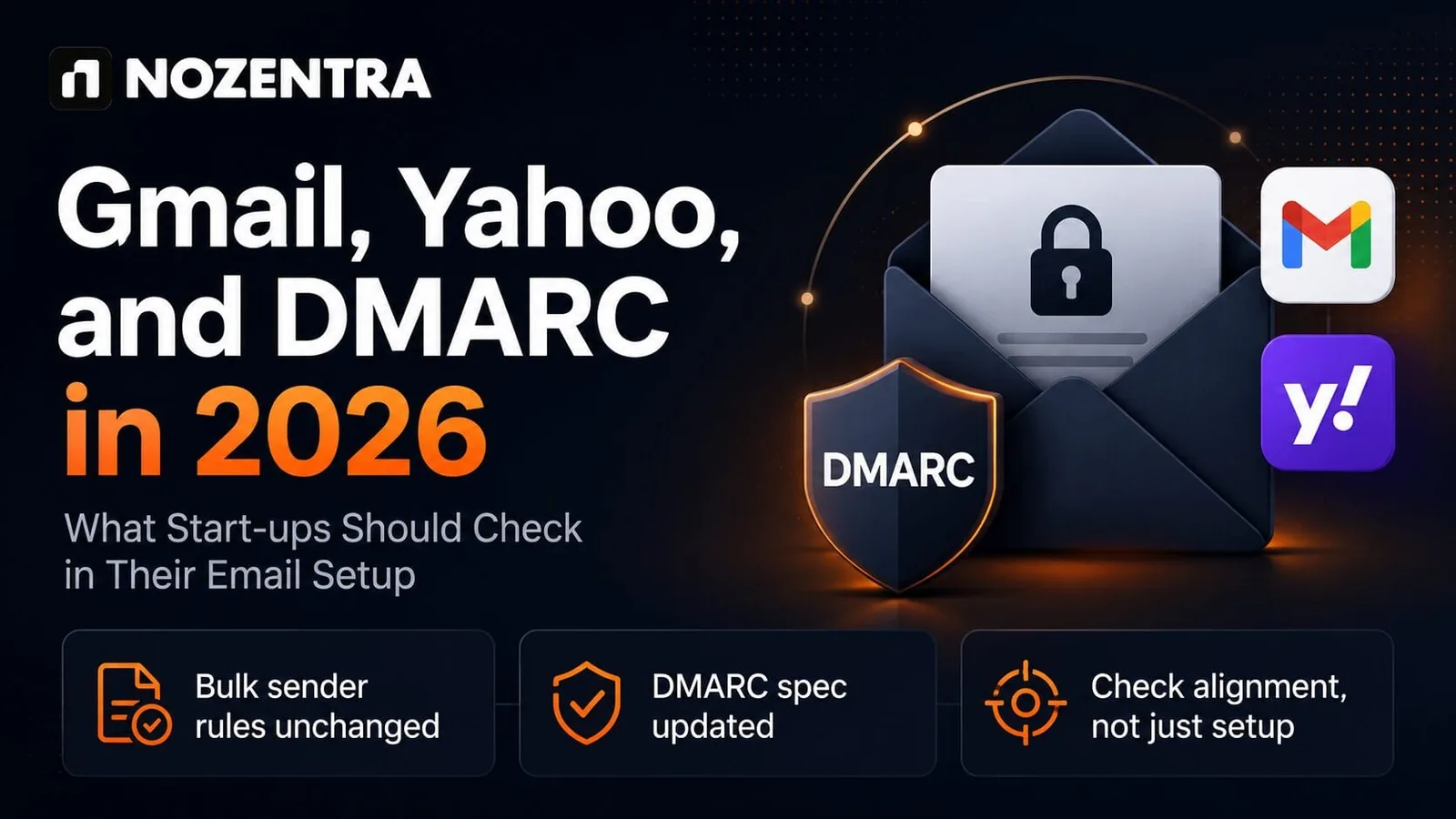
Deliverability comes first. Gmail and Yahoo require authentication and easy unsubscribes from bulk senders.
Why is email worth it for a start-up?
You own the audience. Your list stays yours even if a social platform changes its rules.
It is cheap to run. Once written, an automated email can keep working for months.
Performance is measurable. You can see clicks, sign-ups and sales from each message.
Litmus, which surveys email marketers each year, reports that "on average, email drives an ROI of $36 for every dollar spent." That is a survey-based average across companies, not a promise for yours, but it explains why email remains a core channel.
Why do automated emails outperform campaigns?
Because they arrive when someone has just done something: signed up, browsed, left a cart, or bought. Klaviyo's 2026 email benchmarks compare automated flows with one-off campaigns:
- Flows' share of email sends5.3%
- Flows' share of email revenue41%
- Flow revenue from new buyers48%
- Campaign revenue from new buyers16%
Source: Klaviyo, Email marketing benchmarks by industry 2026
Klaviyo also found flows deliver click rates of 5.58% against 1.69% for campaigns, and placed order rates 13 times higher. Its conclusion: "relevance and timing outweigh frequency."
Which four email types should a start-up build first?
| Email type | Job it does | When it sends |
|---|---|---|
| Welcome series | Introduces you, sets expectations, gives a first reason to act | Right after sign-up, then a follow-up or two |
| Value newsletter | Keeps you remembered without constant selling | A regular rhythm you can sustain |
| Launch sequence | Drives action around a new product or offer | Teaser, launch day, last chance |
| Behaviour-triggered emails | Responds to what people do | Abandoned cart, browsing, milestones, lapsed customers |
How should a welcome series work?
It is the first email most people read from you, so make it useful rather than a thank-you note. Here is a simple, illustrative welcome flow for an online store:
welcome_flow:
  trigger: subscribed to newsletter
  emails:
    - send: immediately
      goal: deliver what they signed up for (guide, discount or checklist)
      include: [the promised item, what to expect from future emails, one clear next step]
    - send: 2 days later
      goal: build trust
      include: [your story in three sentences, a customer review, best-selling products]
    - send: 5 days later
      goal: help them decide
      include: [answers to common questions, returns policy, a reminder of any offer]
  exit_when: subscriber makes a purchase
What should a newsletter contain?
Mostly help, occasionally selling. Useful examples include how-to tips, short case studies, answers to customer questions and genuine news. Reuse the best pieces as blog posts or social posts, as covered in how to distribute content so people actually see it.
How do you run a launch sequence?
Teaser: hint at what is coming and why it matters.
Launch: explain the product clearly with one call to action.
Last chance: a reminder before an offer ends, only if it genuinely ends.
Which behaviour-triggered emails matter most?
Abandoned cart emails are usually the best place to start for ecommerce, followed by browse abandonment, post-purchase follow-ups and win-back emails for lapsed customers. For software products, onboarding emails triggered by which features someone has or has not used do the same job.
How do you grow a list without buying one?
Bought lists damage deliverability and usually break consent rules. Grow your list instead with:
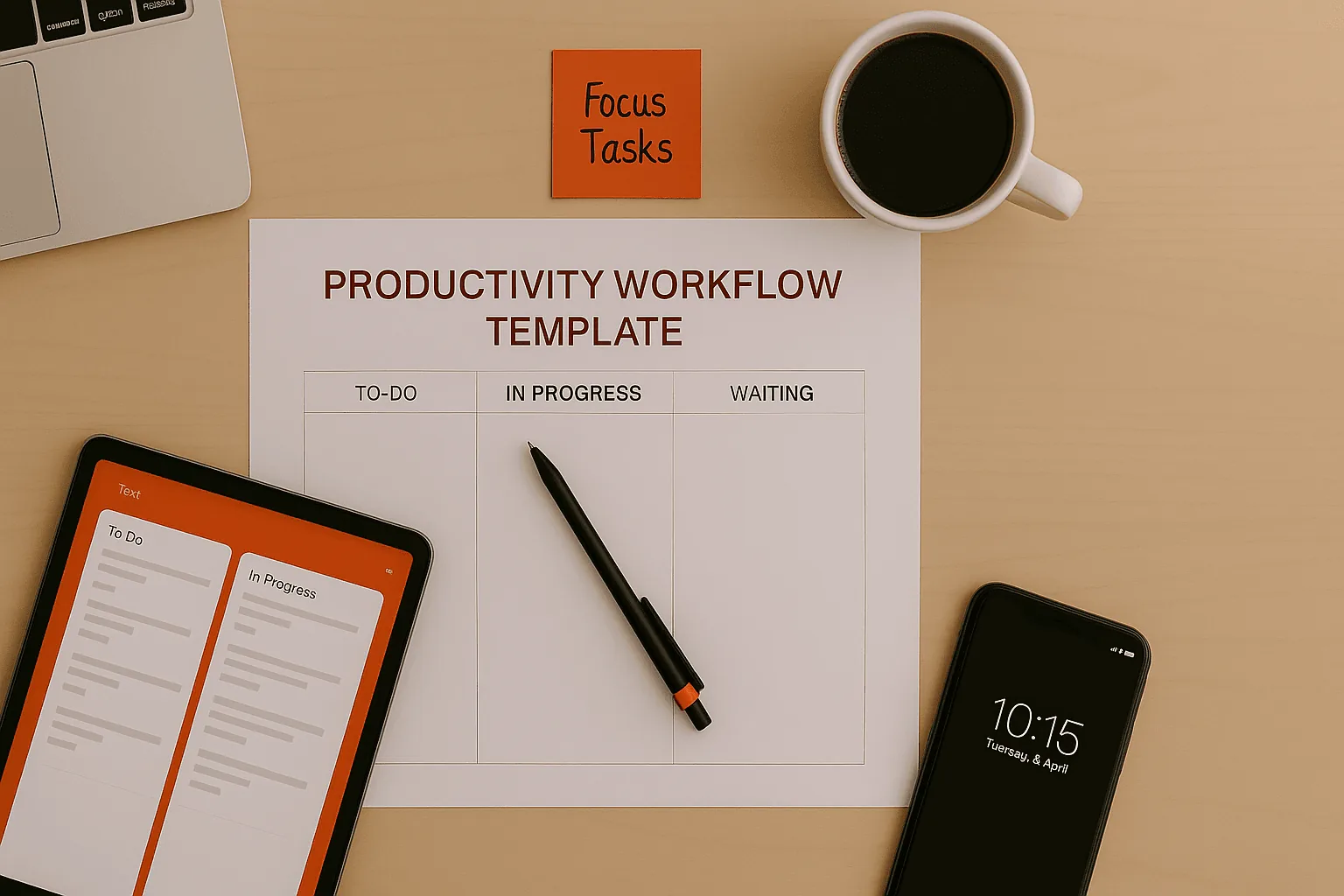
A genuinely useful lead magnet, such as a calculator for ecommerce margins or a workflow template for a software audience.
Sign-up forms on high-intent pages, like blog posts that rank well and your pricing page.
Timed or scroll-based pop-ups that appear after someone has shown interest, not the moment they land.
Webinars and events with reminders and follow-ups.
Referral rewards for existing subscribers.
Always make it clear what people are signing up for and how often you will email them.
How should you segment and personalise?
Start simple. Three segments already make emails far more relevant:
| Segment by | Example | What changes in the email |
|---|---|---|
| Lifecycle stage | Subscriber, first-time buyer, repeat customer | Offer, tone and next step |
| Behaviour | Viewed a category, abandoned a cart | Products and reminders shown |
| Location | Country or region | Currency, delivery times and local timing |
How do you avoid spam folders?
Authenticate your domain with SPF, DKIM and DMARC.
Make unsubscribing easy, including one-click unsubscribe.
Keep complaint rates low by emailing people who expect to hear from you.
Remove long-inactive subscribers or re-confirm their interest.
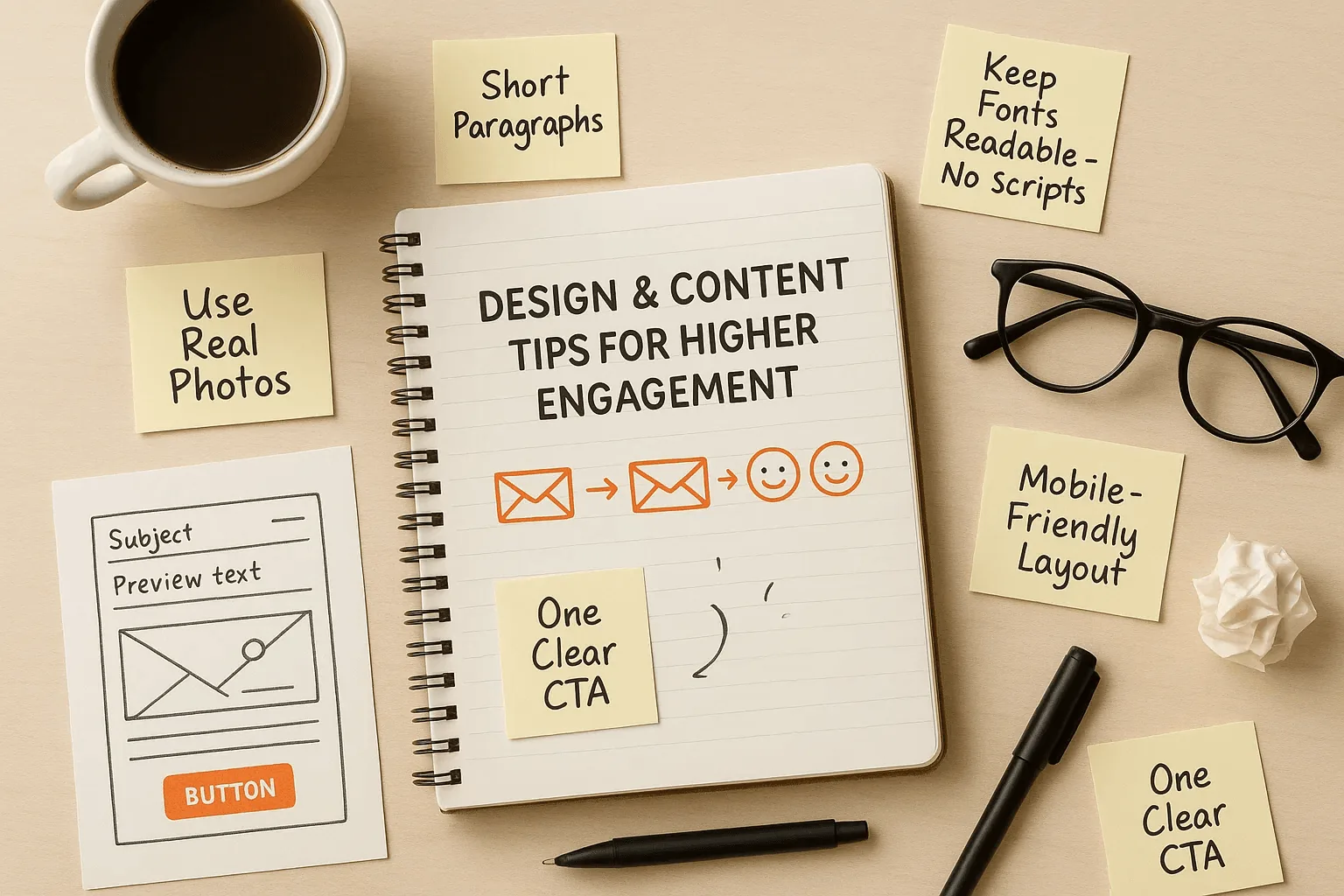
Design for mobile, with one clear call to action per email.
Gmail and Yahoo enforce specific requirements for bulk senders. We explain them step by step in what Gmail, Yahoo and the new DMARC standard require in 2026.
How should you measure email performance?
Open rates are no longer reliable. Apple's Mail Privacy Protection "prevents senders from seeing if you've opened the email message they sent you." Focus on actions instead:
| Metric | Why it matters |
|---|---|
| Click rate | Shows whether content was interesting enough to act on |
| Conversion rate from email clicks | Shows whether the landing page and offer work |
| Revenue or leads per recipient | Lets you compare flows and campaigns fairly |
| Unsubscribe and spam complaint rates | Early warning that frequency or relevance is off |
| List growth rate | Shows whether you are replacing the people who leave |
Test one thing at a time: subject lines, send times, calls to action or layout.
What mistakes should start-ups avoid?
Sending only promotions with nothing useful in between.
Launching newsletters before building the welcome and abandoned cart flows.
Ignoring mobile layout.
Judging success by opens rather than clicks and sales.
Never cleaning the list.
For how email fits into lead generation, read how B2B companies generate quality leads. For help setting up flows that sell, see our content and demand work or talk to us.
Frequently asked questions
How often should a start-up send emails?
As often as you can send something genuinely useful. Automated flows send when triggered. For newsletters, a consistent rhythm you can maintain beats frequent sends you cannot keep up.
Which email platform should a start-up use?
Choose one that connects to your store or CRM, supports automated flows, and handles authentication and unsubscribe requirements. Klaviyo, Mailchimp and HubSpot are common starting points depending on whether you sell online or generate leads.
Is email marketing still worth it with AI and social media?
Yes. It is one of the few channels you own outright, and automated emails consistently earn more per send than one-off campaigns.