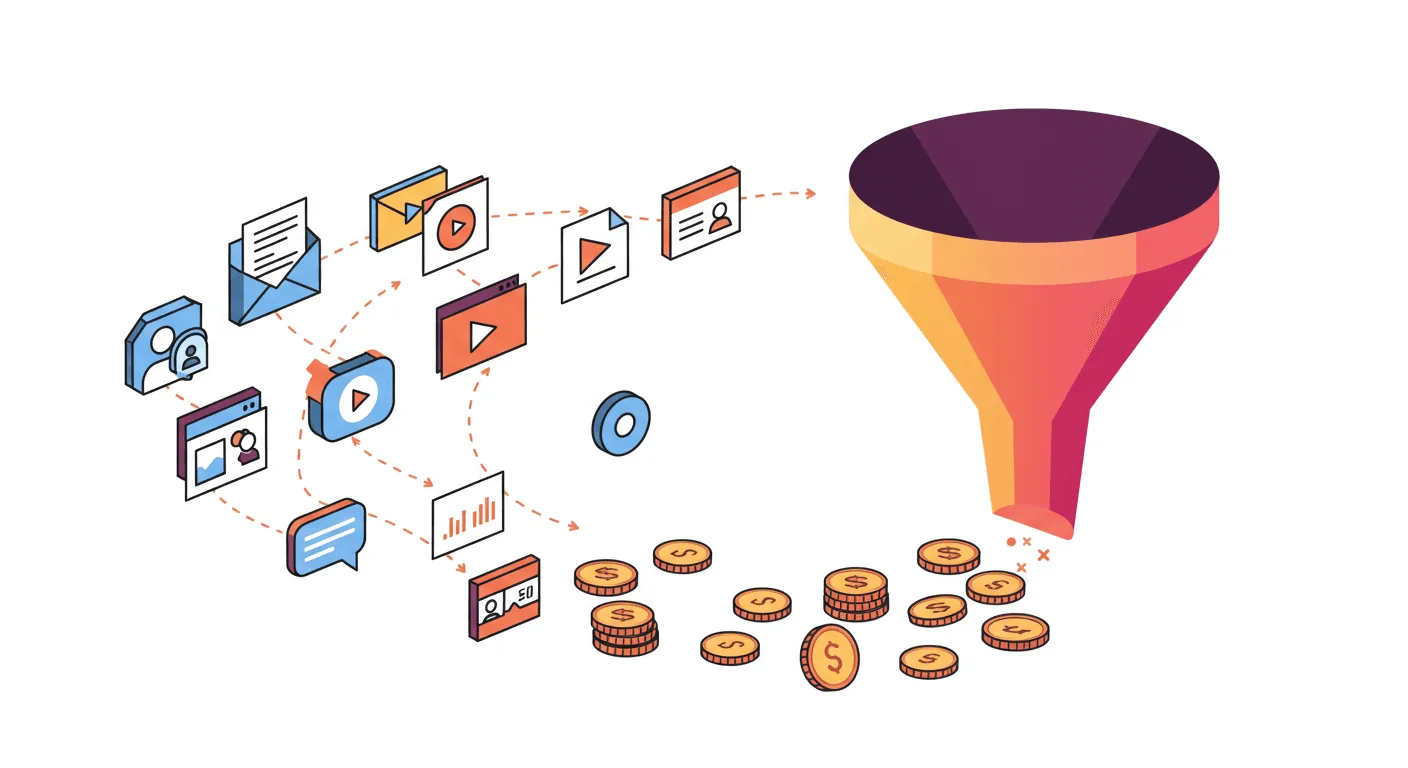
Content drives sales by answering buyers' questions before they are ready to talk to you. Done well, it gets you found, earns trust, and puts you on the shortlist while the decision is still forming.
Unlike an ad, a useful article keeps working after you publish it. It can keep bringing in the right visitors for years, as long as it stays accurate.
Key takeaways
The decision starts before contact. 6sense found buyers choose from their day-one vendor shortlist 95% of the time.
Trust is a buying factor, not a nice extra. Edelman says trust is "as much of a purchase consideration as quality and price."
Map content to buying stages. Different questions come up at awareness, consideration and decision.
Evergreen content compounds when you keep it updated.
Measure to revenue. Track which content is involved in real opportunities, not only traffic.
Why does content influence sales so much now?
Because buyers research on their own for longer. 6sense's 2025 Buyer Experience Report, based on nearly 4,000 B2B buyers, found:
- Pick the winner from their day-one shortlist95%
- Initiated first contact themselves79%
- Journey completed before first contact61%
Source: 6sense, The B2B Buyer Experience Report for 2025
By the time someone fills in your contact form, most of their thinking is done. The content they found during research shaped whether you were on the list at all.
How does content build trust?
Trust matters to buyers in a very practical way. Edelman's 2025 Trust Barometer special report on brand trust found that 80% of people trust the brands they use, and puts it plainly:
Trust is as much of a purchase consideration as quality and price.
Content earns that trust when it shows rather than claims:
| Trust signal | Content that shows it |
|---|---|
| Expertise | Detailed guides that answer hard questions honestly, including limits |
| Experience | Case studies with real, specific results |
| Transparency | Pricing factors, process explanations, what is and is not included |
| Social proof | Reviews, testimonials and named clients where permitted |
| Reliability | Content that is kept accurate and dated |
What content fits each stage of the buying journey?
| Stage | Buyer question | Content that helps |
|---|---|---|
| Awareness | "What is causing this problem?" | Explainers, how-to articles, short social posts |
| Consideration | "What are my options?" | Comparison guides, webinars, checklists |
| Decision | "Why should I choose this provider?" | Case studies, demos, pricing guides, testimonials |
| After purchase | "How do I get the most from this?" | Onboarding guides, tips, customer newsletters |
A common gap is having plenty of awareness content and almost nothing for the decision stage. The pages that close deals, such as case studies and clear service pages, often get the least attention.
Why does evergreen content keep selling?
An ad stops working when the budget stops. A strong guide or comparison page can bring in qualified visitors for years.
We saw this with Druids, a UK ecommerce brand. Alongside technical fixes and link building, every key page was optimised for search intent and internal linking. Over 12 months, ranked keywords grew from 12,800 to 52,300, the site gained around 8,000 monthly users, and organic search became the brand's largest traffic channel.
Evergreen does not mean untouched. Review your best pages regularly: update statistics, examples, screenshots and prices, and check that the calls to action still lead somewhere useful.
Which tactics turn readers into customers?
Answer high-intent questions first. Pricing factors, comparisons and "is it right for me" questions sit closest to a sale.
Give every piece a clear next step that matches the reader's stage, such as a checklist, a case study or a consultation.
Use dedicated landing pages for offers, with short forms.
Distribute deliberately. See how to distribute content so people actually see it.
Involve your experts. Content from people who do the work is more credible and more original.
Keep the whole library accurate, not just new posts.
How do you prove content is driving sales?
Track a chain of metrics, not a single number:
| Metric | Where to find it | What it tells you |
|---|---|---|
| Organic sessions to key pages | GA4, filtered to organic search | Whether content attracts visitors |
| Search visibility | Search Console Performance report | Whether pages are gaining ground |
| Leads from content pages | GA4 key events or your CRM | Whether readers take action |
| Content in the path to opportunities | CRM with page or source tracking | Whether content influences real deals |
| Revenue from those opportunities | CRM and finance data | Whether it pays back |
A simple way to tag which content a lead touched is to record the landing page and source on every form submission, then pass them into your CRM. For example, a hidden form field populated like this:
// Store the first page a visitor landed on, so it can be sent with any form later.
if (!sessionStorage.getItem('landing_page')) {
  sessionStorage.setItem('landing_page', window.location.pathname);
}
document.querySelectorAll('input[name="landing_page"]').forEach((field) => {
  field.value = sessionStorage.getItem('landing_page');
});
Check your privacy notice and consent setup cover this before you use it.
How do you keep improving?
Review content performance every quarter:
Update pages that rank on page two or bring visitors but few leads.
Expand topics where readers keep asking follow-up questions.
Consolidate overlapping articles into one stronger page, redirecting the weaker URLs.
Retire content that is outdated and cannot be fixed, with a redirect to the closest useful page.
For planning content around real buyer decisions, read connecting content work to a real demand decision. For help building content that sells, see our content and demand work or talk to us.
Frequently asked questions
How long does content marketing take to drive sales?
It usually takes months, not weeks, because content needs time to be found, rank and build trust. Decision-stage content, such as case studies, can help sales conversations sooner.
Is content marketing cheaper than advertising?
It works differently. Ads stop when spending stops, while good content can keep bringing visitors. Most businesses get the best results using both.
What type of content drives the most sales?
Content closest to a buying decision: comparisons, pricing guides, case studies and clear service pages. Awareness content feeds those pages with visitors.