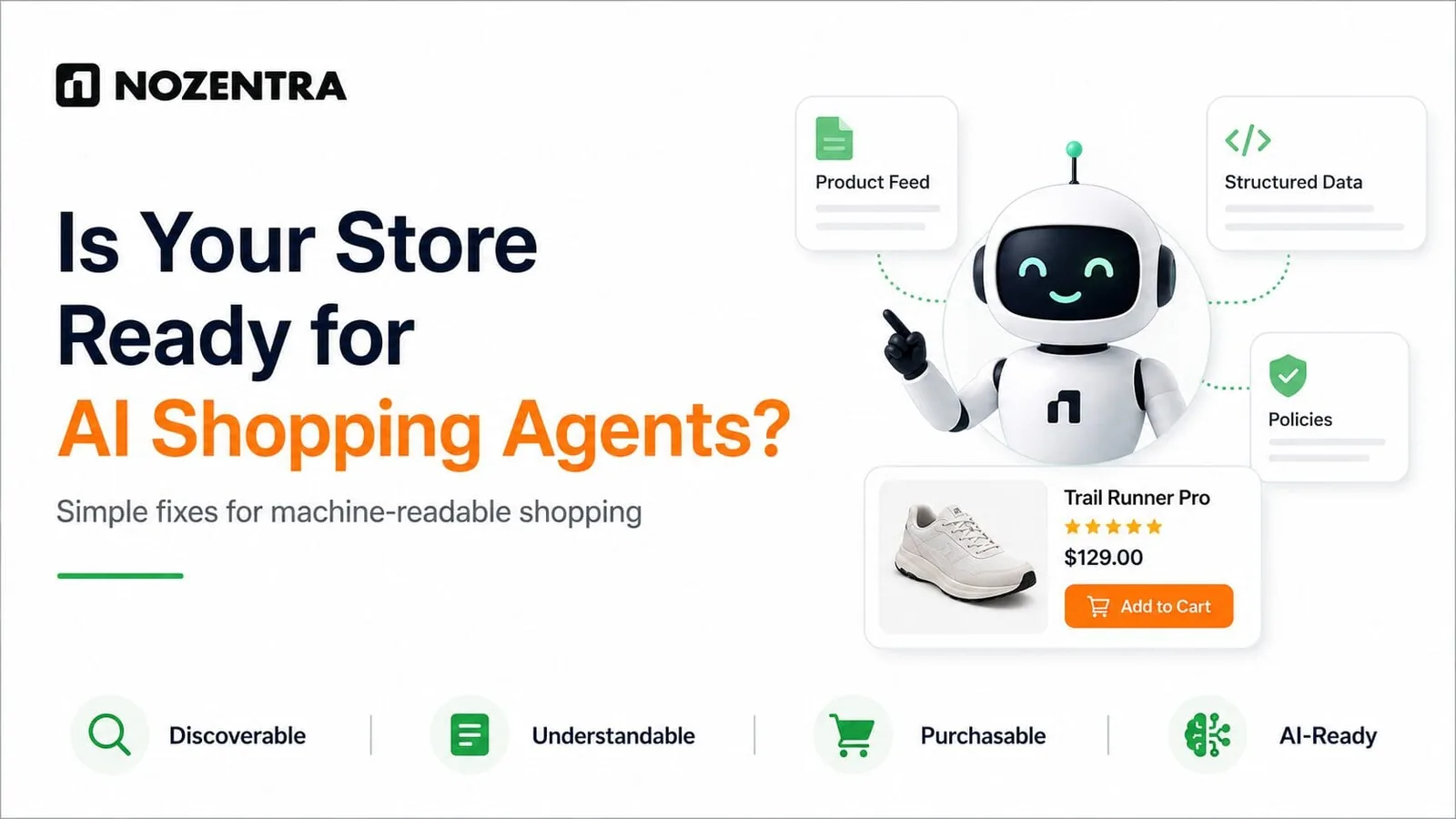
AI assistants are becoming a real way people shop. They research, compare and increasingly hand shoppers to a checkout. But the way that works has already changed once this year, and it may change again.
For a store owner, the question underneath is simple: can an AI agent find, understand and trust your products, or does your store only work for a person clicking through pages?
Key takeaways
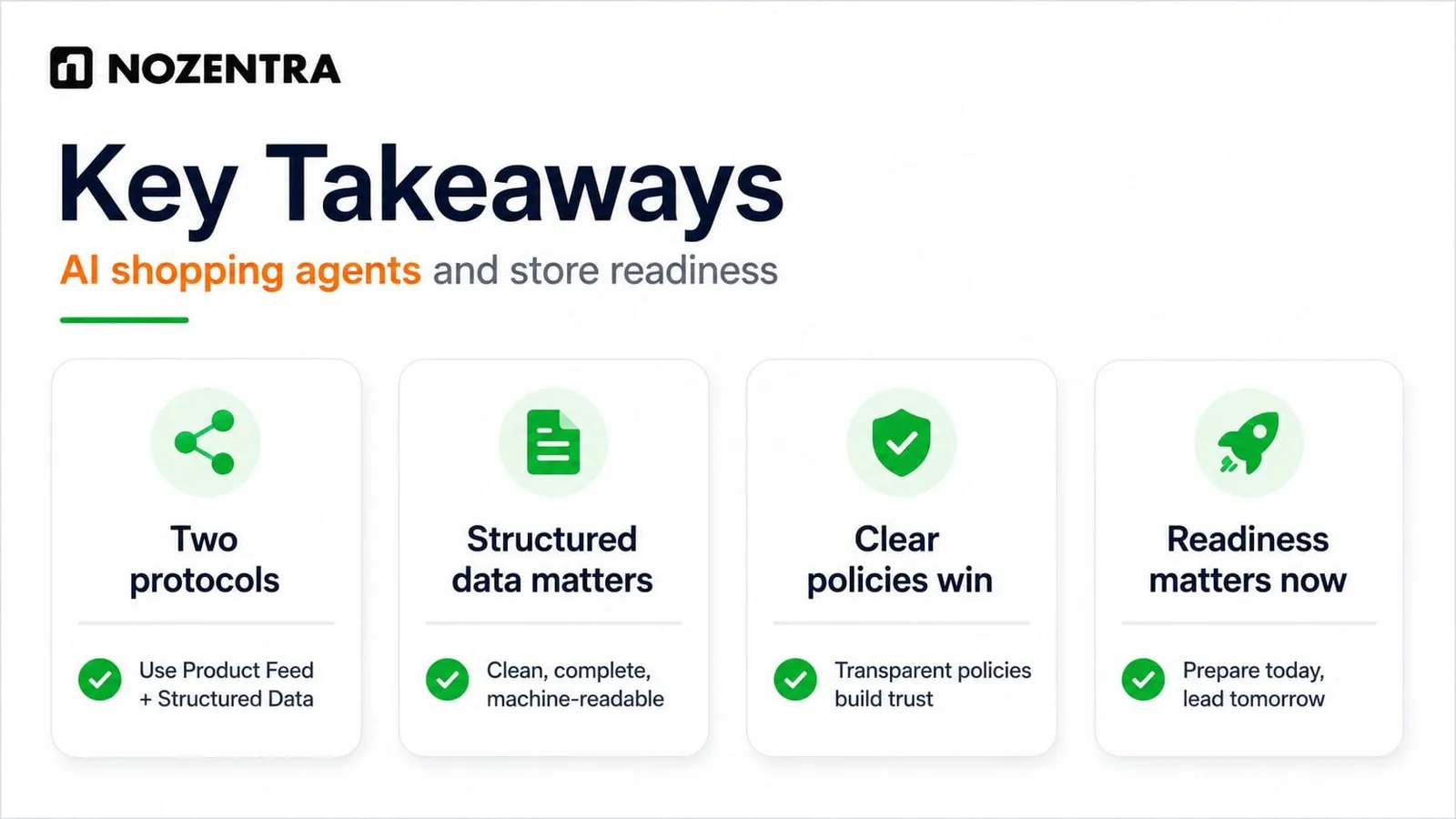
AI shopping traffic is growing fast from a small base. Adobe measured a 693.4% rise in traffic from generative AI tools to US retail sites over the 2025 holidays.
Google's Universal Commerce Protocol powers checkout in AI Mode and the Gemini app for selected US retailers, with the retailer staying the seller of record.
OpenAI changed course. In March 2026 it said Instant Checkout is "moving to Apps" and ChatGPT will focus on search and product discovery.
Structured, accurate product data matters more than persuasive copy when an agent is doing the comparing.
Do not rebuild checkout around one protocol yet. The data work helps with every channel.
How much shopping traffic comes from AI today?
Still a small share, but growing quickly. Adobe Analytics, which tracks traffic to US retail sites, reported this for the 2025 holiday season:
- Whole holiday season693.4%
- Cyber Monday670%
Source: Adobe Analytics, 2025 holiday season report, 7 January 2026
Adobe was careful to add that "the base of users remains modest." Treat this as an early channel worth preparing for, not a replacement for search.
How is the shopping journey changing?
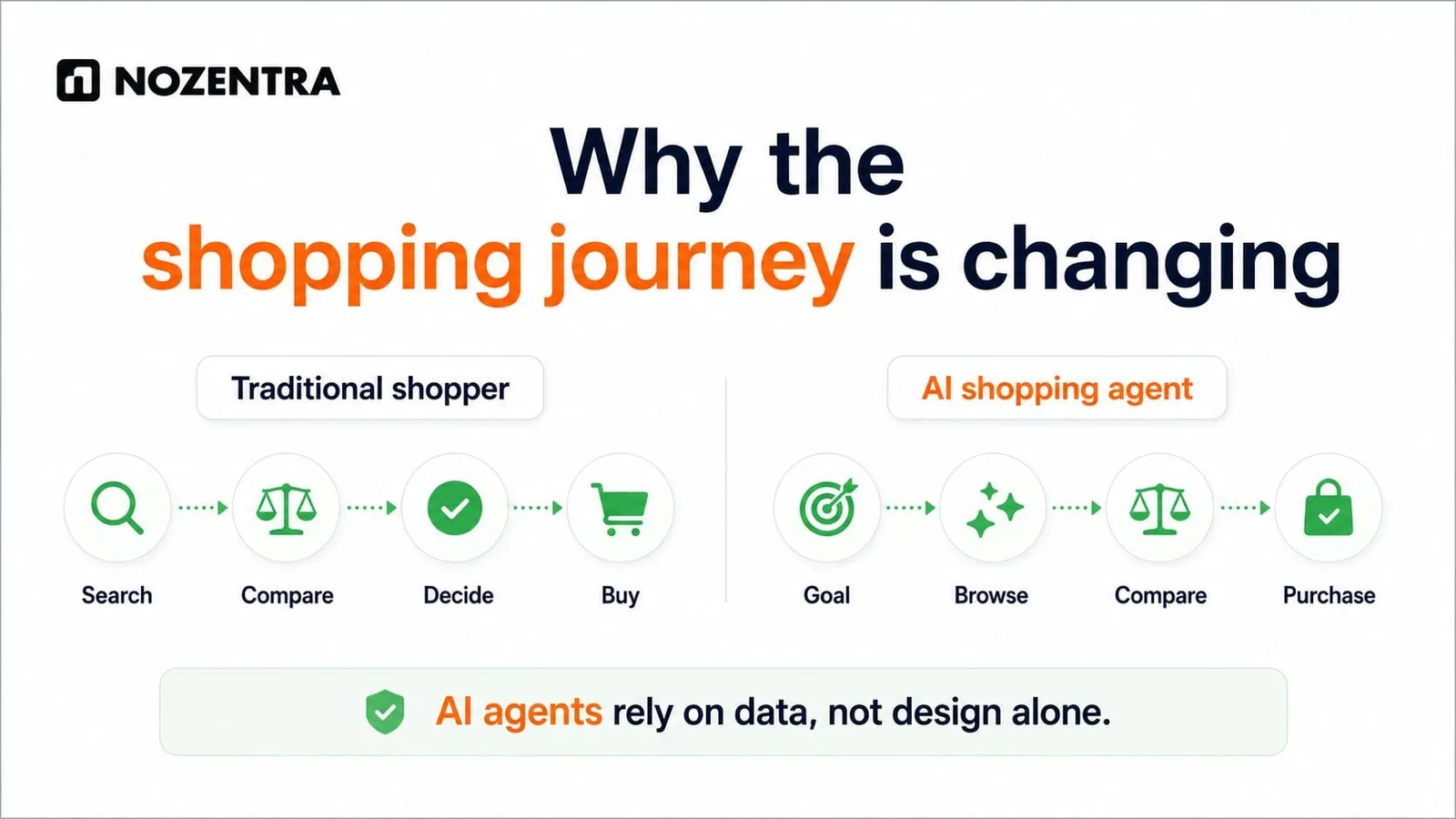
A person searches, clicks, compares and decides. An AI agent gets a goal and some constraints, then does the browsing and comparing for them.
When that happens, the agent does not experience your homepage the way a person does. It reads your product feed, your structured attributes and your schema markup. If that data is thin, inconsistent or missing, it has no reliable reason to recommend your product over a competitor's, however good your site looks.
Which protocols matter, and where do they stand?
Two standards emerged, and their paths have already split:
| Question | Google's Universal Commerce Protocol (UCP) | OpenAI's Agentic Commerce Protocol (ACP) |
|---|---|---|
| Announced | 11 January 2026 | 29 September 2025 |
| Built with | Shopify, Etsy, Wayfair, Target and Walmart | Stripe and OpenAI |
| Where shoppers buy | AI Mode in Search and the Gemini app | Originally inside ChatGPT, now moving to merchant apps |
| Who can use checkout | Eligible US retailers, with broader rollout underway | Changed in March 2026 |
| Seller of record | The retailer | The merchant |
Google. Google's announcement says UCP "will soon power a new checkout feature on eligible Google product listings in AI Mode in Search and the Gemini app." Shoppers pay with Google Pay, and "Retailers remain the seller of record." More than 20 companies endorsed it, including Adyen, American Express, Best Buy, Mastercard, Stripe and Visa. By June 2026, Shopify described AI Mode checkout as "available to select brands selling to US buyers" with "broader rollout underway."
OpenAI. OpenAI's Instant Checkout launched in ChatGPT on 29 September 2025, starting with Etsy sellers for US users. In March 2026, an OpenAI spokesperson told Digital Commerce 360: "We're prioritizing making ChatGPT search and product discovery great, with ACP serving as the infrastructure that connects users to merchants across the full shopping journey. Instant Checkout is moving to Apps, where purchases can happen more seamlessly."
The lesson for store owners is not which protocol wins. It is that the channel is still settling, while the data both rely on is not changing.
Why do AI agents care about details people skim past?
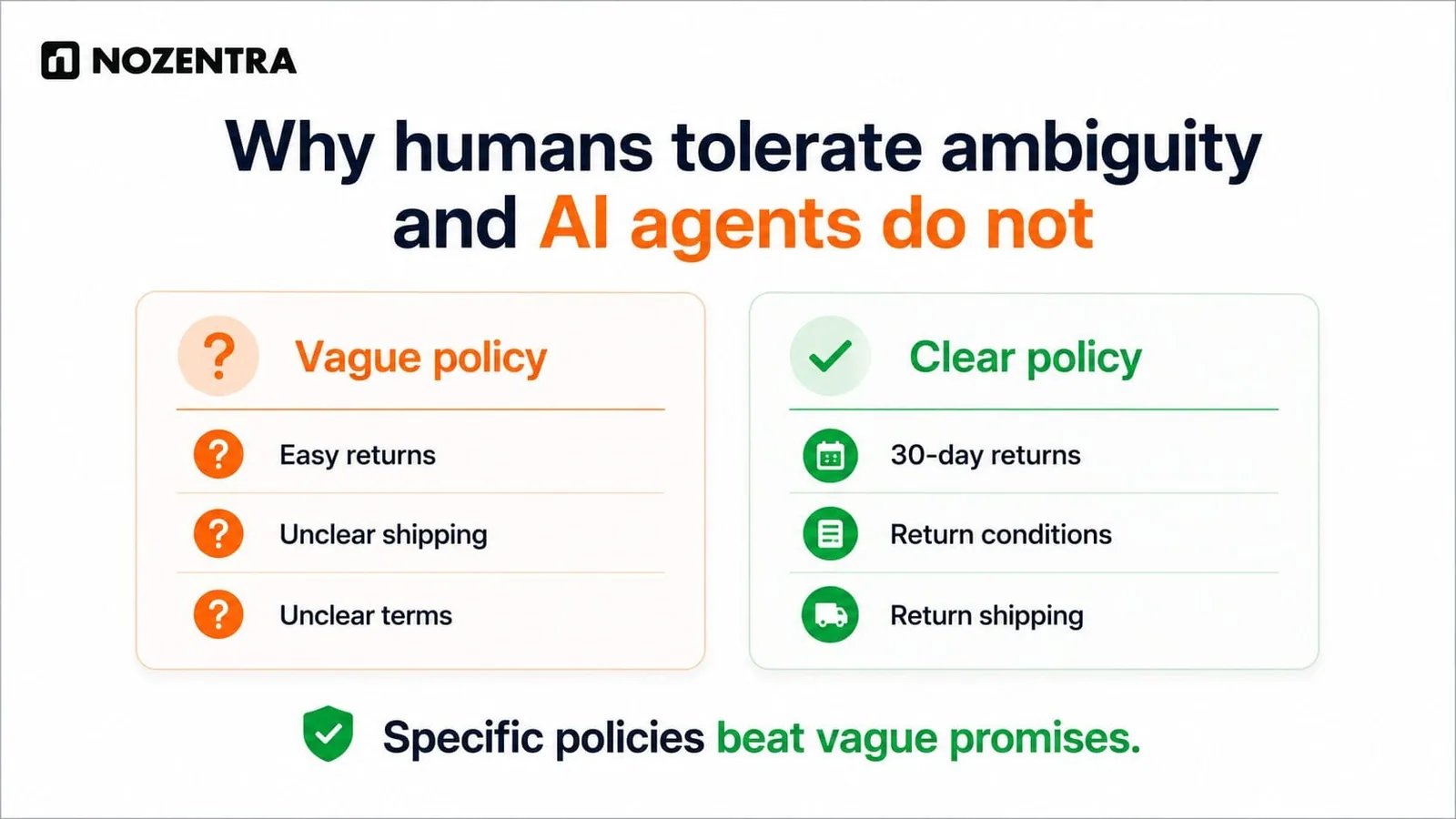
A person reading a vague shipping estimate will usually keep browsing or ask support. An agent comparing dozens of offers in seconds cannot resolve that uncertainty, so it may simply move on.
Picture two stores selling similar products:
| Detail | Store A | Store B |
|---|---|---|
| Returns | "Easy returns" in the footer | 30 days, unworn with tags, free return label |
| Shipping | "Fast delivery" | Ships in 1 business day, arrives in 2 to 5 days |
| Stock | Shown only on the product page | Kept current in the product feed |
| Price | Differs between feed and page after a sale | Identical everywhere |
Store A is not wrong to a human reader. But an agent can only compare Store B with confidence.
What does machine-readable product data look like?
The same details a person reads on the page should also exist as structured data. Google documents these properties in its merchant listing structured data guide. A trimmed example for one product:
{
  "@context": "https://schema.org",
  "@type": "Product",
  "name": "Merino Crew Neck Jumper",
  "sku": "MCJ-NAVY-M",
  "gtin13": "0012345678905",
  "brand": { "@type": "Brand", "name": "Example Knitwear" },
  "offers": {
    "@type": "Offer",
    "price": "89.00",
    "priceCurrency": "USD",
    "availability": "https://schema.org/InStock",
    "shippingDetails": {
      "@type": "OfferShippingDetails",
      "shippingRate": { "@type": "MonetaryAmount", "value": "0", "currency": "USD" },
      "shippingDestination": { "@type": "DefinedRegion", "addressCountry": "US" },
      "deliveryTime": {
        "@type": "ShippingDeliveryTime",
        "handlingTime": { "@type": "QuantitativeValue", "minValue": 0, "maxValue": 1, "unitCode": "DAY" },
        "transitTime": { "@type": "QuantitativeValue", "minValue": 2, "maxValue": 5, "unitCode": "DAY" }
      }
    },
    "hasMerchantReturnPolicy": {
      "@type": "MerchantReturnPolicy",
      "applicableCountry": "US",
      "returnPolicyCategory": "https://schema.org/MerchantReturnFiniteReturnWindow",
      "merchantReturnDays": 30,
      "returnMethod": "https://schema.org/ReturnByMail",
      "returnFees": "https://schema.org/FreeReturn"
    }
  }
}
Every value here should match what the page shows and what your product feed says. A mismatch is worse than leaving the property out.
What should be on your readiness checklist?
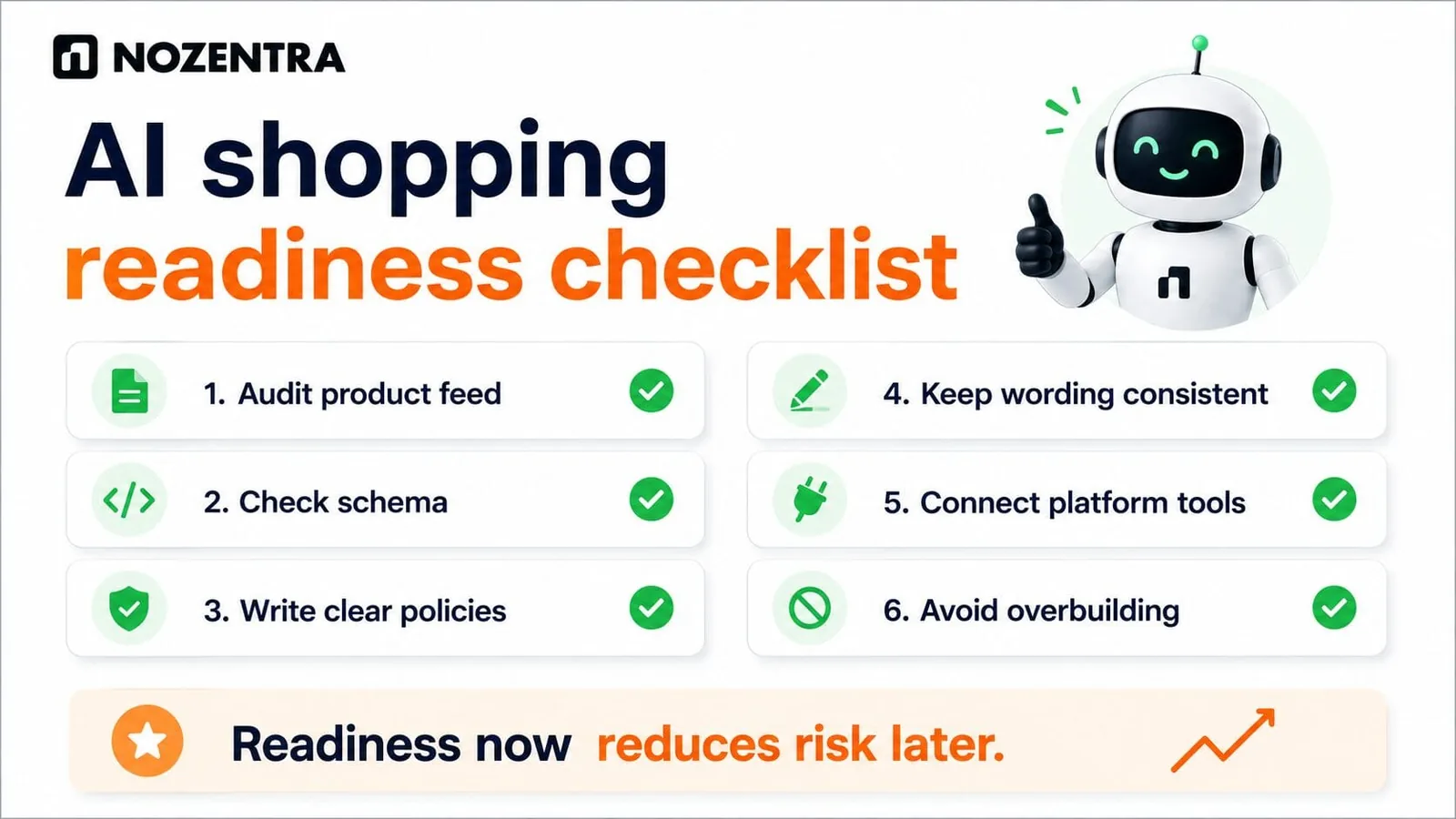
Audit your product feed. Accurate titles, categories, attributes, identifiers, availability and prices, kept current in the feed itself, not just on the site. Google's product data specification lists what Merchant Center expects.
Add or fix Product and Offer structured data on every product page, including shipping and return details.
Write policies in specific terms. Days, conditions, costs and who pays, stated identically everywhere they appear.
Keep prices and stock in sync across your site, feed and marketplaces, especially during sales.
Use your platform's agentic channels if available. On Shopify, product data is syndicated to AI channels through Shopify Catalog.
Do not rebuild checkout around one protocol. OpenAI's change in March 2026 shows how quickly the channel can shift.
What does this not require?
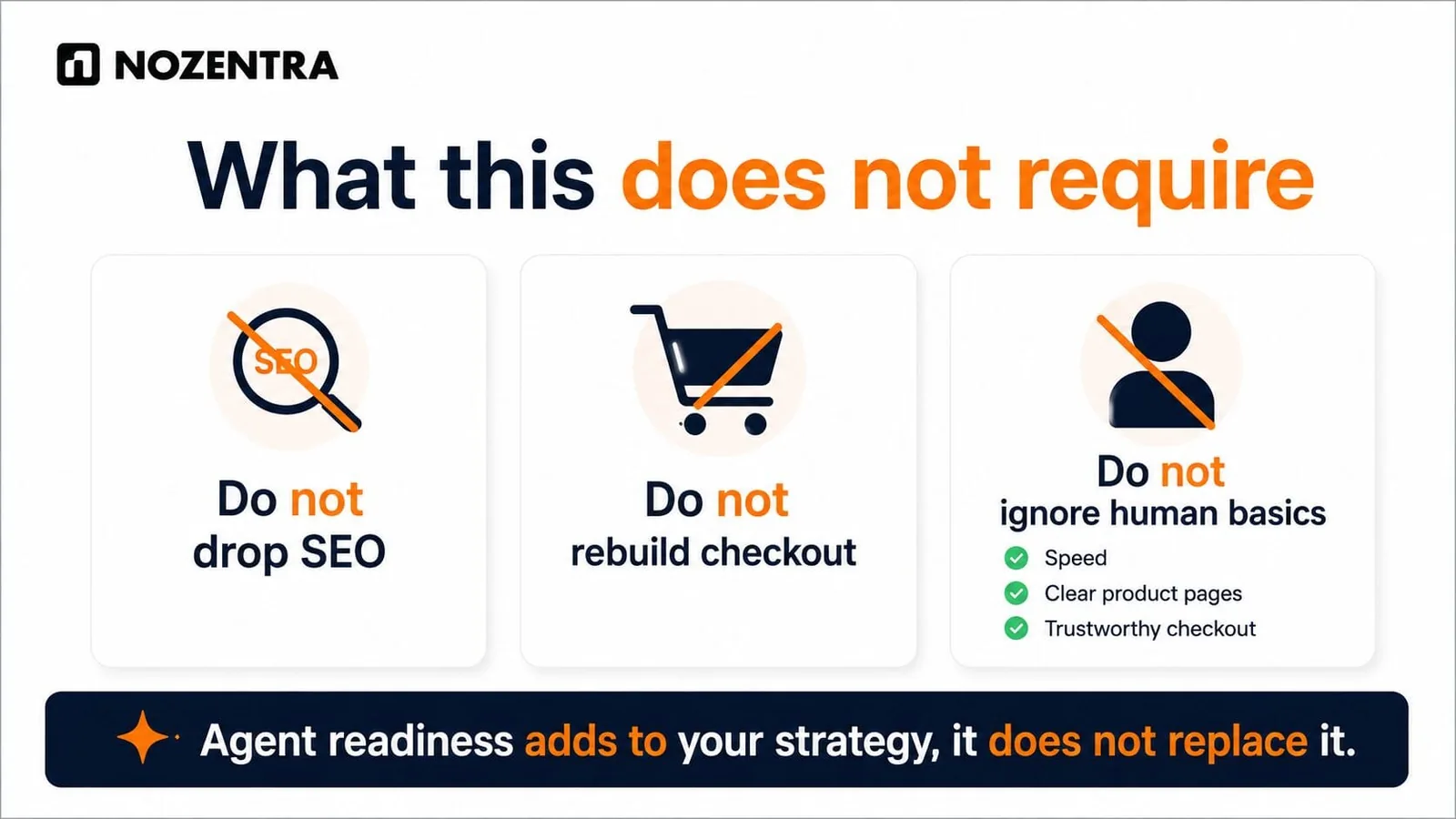
It does not mean abandoning SEO or rebuilding checkout this quarter. Fast pages, clear product presentation and a trustworthy checkout still decide most purchases, because most purchases are still made by people. Those basics are covered in the important features of an ecommerce website.
Agent readiness is extra data work on top of a good store, not a replacement strategy. It is also the same foundation that helped Druids, a UK ecommerce brand, grow ranked keywords from 12,800 to 52,300 in 12 months: fix technical issues first, then map every category and product page to what people actually search for.
If your product data needs an audit, talk to us or see our website and ecommerce builds. If you are still choosing a platform, read WordPress, Webflow or Shopify: which should I pick?
Frequently asked questions
Do I need to support both Google's and OpenAI's approaches?
Not right away. Clean product data and structured data help with both. Then prioritise the channel your customers actually use.
Will AI shopping agents replace my website traffic?
Not in the near term. Adobe's own data describes the user base as modest. Treat it as a growing extra channel.
Is my store eligible for checkout in Google's AI Mode?
As of mid-2026, AI Mode checkout is available to selected brands selling to US buyers, with a wider rollout in progress. Check your Merchant Center account and platform for current eligibility.
Sources
Adobe: Holiday shopping season drove a record $257.8 billion online (7 January 2026)
Google: New tech and tools for retailers to succeed in an agentic shopping era (11 January 2026)
Shopify: Agentic commerce on Shopify, how it works (18 June 2026)
Digital Commerce 360: OpenAI shifts checkout plans in its agentic commerce strategy (6 March 2026)
Stripe: Stripe powers Instant Checkout in ChatGPT and releases the Agentic Commerce Protocol (29 September 2025)