To build an AI app, choose one business task, agree what a good result looks like, and prototype it with data you can use. Compare a simple baseline with a model that can handle the task. Then build the workflow around the model, test what happens when it fails, and launch to a small group with a person responsible for the outcome.
AI can help a team write software. An AI app uses a model as part of what the software does for the user. You can use AI to build a working prototype quickly, but the launch plan still needs to cover access, data, evaluation, support and who has the authority to act.
How do I build an AI app for my business?
The AI app development process starts with a brief for one user and one decision. Work through scoping, data, model choice, application design, testing and a limited release. Each step should answer a business question before the team commits to the next one.
1. Define the job and measure the current process
Before you build an AI app for business users, describe what starts the task, what the user does today, and what they need at the end. For example, a support team might want a draft reply with a link to the relevant returns policy. The support lead still checks that the policy applies and decides whether the reply is sent.
Measure the current workflow before you set a target. Record the time needed to complete a case and the types of errors that cause rework. Agree what the pilot needs to improve and which errors are serious enough to stop it. A useful success measure is the time to a correct, approved reply, including review and corrections.
2. Prepare the data and decide what the app may access
List the source material the app needs, who owns it, how it stays current and which users may retrieve it. A support assistant might need approved policy pages and the text of a ticket. It should retrieve only material the signed-in person can access. Keep test data separate, remove information the task does not need, and agree with the provider where prompts, files and logs are stored and for how long.
Decide what happens when a source is missing, stale or contradictory. Route the case to a person if the app cannot support the proposed answer. Test that instructions embedded in a ticket or retrieved document cannot give the model extra permissions. OWASP lists prompt injection and excessive agency among the risks for large language model applications.
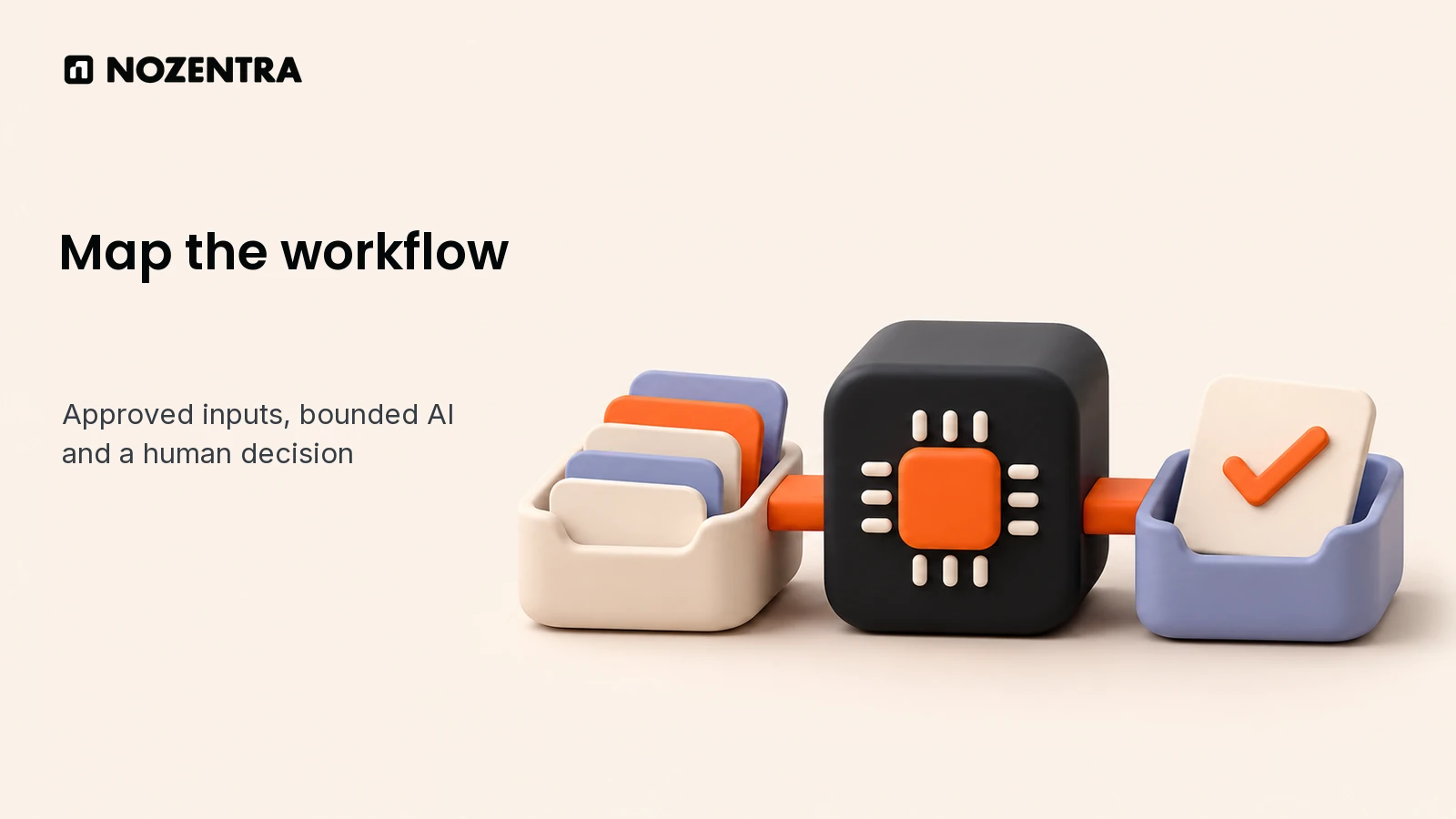
3. Choose the simplest approach that meets the brief
When deciding how to build an AI product, start with a rule, search result or template as a baseline. If the task needs a model to interpret varied language or draft text, test an existing model through an API on representative cases. Compare output quality, response time, cost per completed task, and the provider's data terms.
If answers need current company material, give the model the relevant approved passages when it responds. This approach is called retrieval-augmented generation, or RAG. It lets the team update source material independently of the model. Consider fine-tuning only when you can describe a repeatable behaviour problem, have suitable examples and can measure whether the change helps. OpenAI's development track explains retrieval, fine-tuning and evaluating outputs.
4. Build the application around the model
Add the interface, sign-in, permissions, integration and review steps your user needs. Use server-side checks to enforce access and validate the response before anything is written to another system. Show the source, the draft status and the next action. Set timeouts, usage limits and a fallback route, and make repeated requests safe so a retry cannot create the same record twice.
Assign an owner for the source data, a reviewer for individual outputs and a person who can approve a wider release or pause the feature. Depending on the workflow, these may be different people. Write down which actions require approval before the app can send a message, publish content or change a record. Nozentra's guide to keeping human ownership in AI workflows describes those boundaries in more detail.
5. Test normal cases and failures before a limited launch
Test the software and the model output separately. Check sign-in, data access, duplicate requests and provider outages as software behaviours. For the model, save examples of routine, ambiguous and adversarial inputs with an expected result or review rubric. Run the same cases when you change the model, prompt or source index. A response can have all the right fields and still misstate the policy. OpenAI's evaluation guide covers representative datasets and repeatable scoring.
For this guide, we tested a small local review gate using four simulated responses. The draft with an allowed source went to human review. The response with an unrecognised source, the malformed payload and the simulated provider outage went to the manual queue. All four matched the expected routing. The exercise checked the application's decision to route a draft. A pilot also needs to check whether the draft's claims match its sources.
Roll out to a small group first. Track approved completions, corrections, fallbacks, response times and cost. Compare the new workflow with your baseline. Agree who can turn off the AI step and how staff will handle incoming work if it is paused.
How long does it take to build an AI app?
The timeline depends on the starting position, the users and markets in scope, data readiness, integrations and the testing needed before launch. A prototype can be much quicker to build than a pilot with real users. For a schedule you can plan around, ask for milestones that show what has been demonstrated, what must be approved and which dependencies could delay the next step.
PomoZentra is a real in-house example. Nozentra lists it as a full-stack SaaS internal product, and its public site describes a focus timer with task and weekly planning features. The published build log says “Live in 6 weeks”. It records architecture and design first, reports and core app sections in week three, QA and polish in week five, and the live deployment in week six. AI supported production, with the team owning design, review and launch. That timeline describes PomoZentra's scope. You can see the project scope in Nozentra's work portfolio, try the timer on PomoZentra's public site and review the milestones in the published build log.
When you compare schedules, check whether they end at a demo, an internal pilot or a supported production launch. Ask when the data owner can approve access, when an integration can be tested and who will review the results. A project that depends on a third party or a policy decision can wait on that step even when the prototype is ready.
How much does it cost to build a custom AI app?
The AI app development cost has two parts. The initial budget pays for discovery, design, data preparation, integration, application development and testing. The running budget covers model use, hosting, storage, monitoring, human review and ongoing support. The scope and the cost of handling mistakes matter more than the price of any one model call.
Published ranges vary with the assumptions behind them. For example, Appinventiv's Dubai cost guide lists AED 90,000 to AED 180,000 for its minimum viable AI system tier, which covers basic automation, simple models and reporting. That is one vendor's planning example for that scope. Compare it with a quote for your data, workflow and launch requirements.
Ask for the one-time build and the operating costs separately. For each usage scenario, estimate monthly tasks, calls per task, typical input and output size, the cost of any external tools, and the share of cases a person reviews. Include retries and rejected outputs when you calculate cost per approved completion. A quote should say which integrations, evaluation work, handover and support it includes.
Should I build a custom AI app or use an off-the-shelf tool?
Use an existing tool when it fits the task, permissions and review process. Configure your current platform when it can handle most of the job. Consider custom AI software development when the workflow needs distinct rules, multiple systems, specific user permissions or a product experience you need to control.
| Approach | When it fits | What to verify |
|---|---|---|
| Existing tool | A common task your team can do within the tool's permissions. | Data terms, user roles, exports and the path for reviewing outputs. |
| Configure or extend | Your current platform handles most of the workflow. | Connector permissions, error handling, usage caps and the work your team still owns. |
| Custom application | The workflow needs tailored access, integrations or an interface in your own product. | Source code and account access, integration testing, evaluation coverage and support. |
Run the same approved examples through the viable options. Compare time to a usable result, what reviewers have to fix, and which safeguards the tool can enforce. Ask who owns the repository, accounts, data exports, evaluation cases and deployment access before committing to a build. Include the practical steps for handing over the app if the relationship ends.
What is an AI MVP and why start with one?
An AI MVP is the smallest version that lets a defined group use the AI feature in a real workflow with appropriate safeguards. It gives you evidence about whether the task is worth solving, whether the output is reliable enough and how much review it takes.
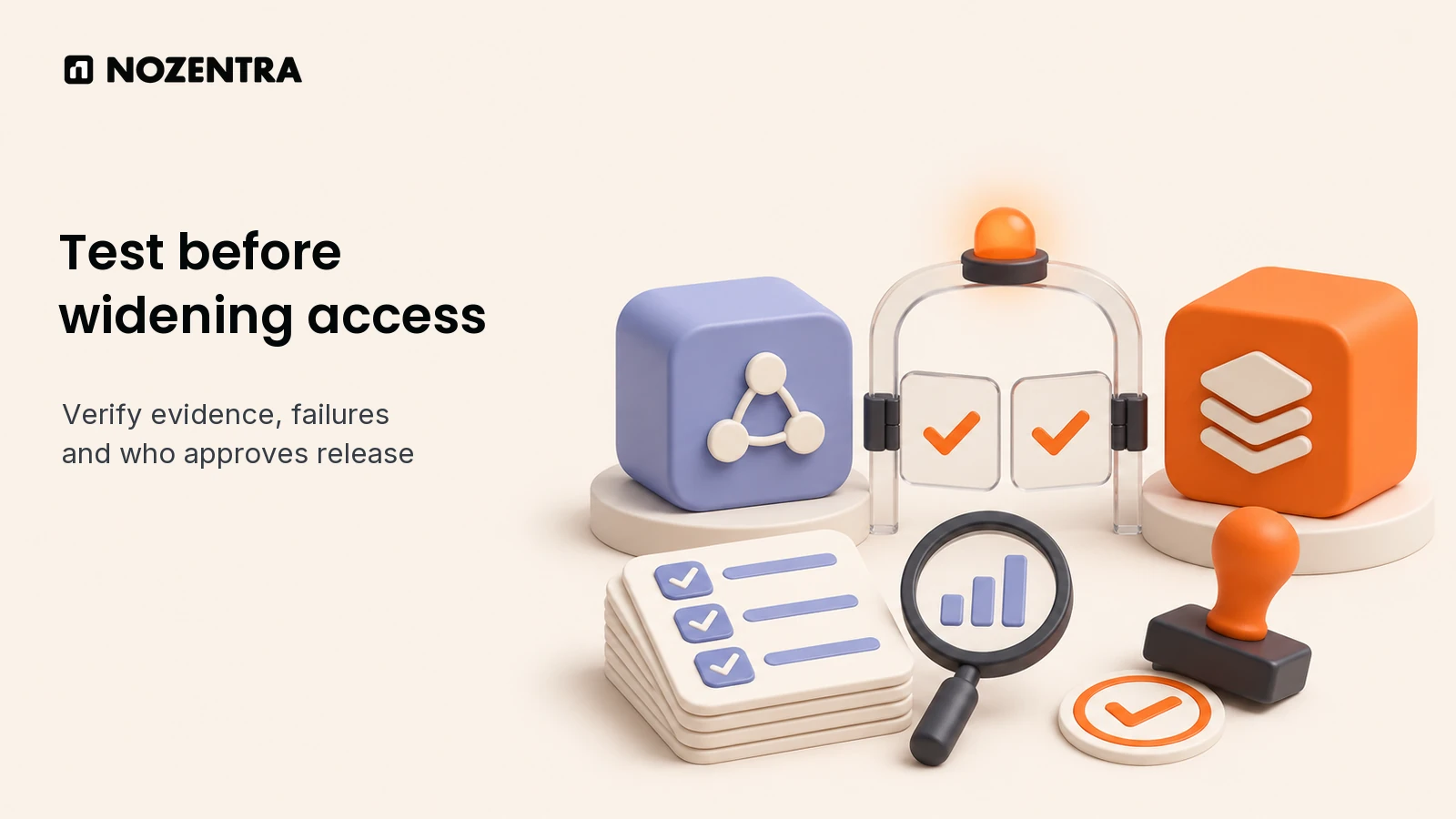
For the support example, start with one policy, one queue and a draft for a reviewer to approve. Measure time to approval, check that replies use the correct policy and review why staff reject or rewrite them. Keep unresolved cases in the normal support queue. If the trial is useful and the failure paths work, add one more policy or team and test again.
Decide in advance what will happen after the trial. If source coverage is poor, fix the data and rerun the evaluation. If review takes as long as the manual workflow, simplify the task or try a different approach. If staff finish useful work with acceptable review effort and the safeguards hold, scope the next release from that evidence.