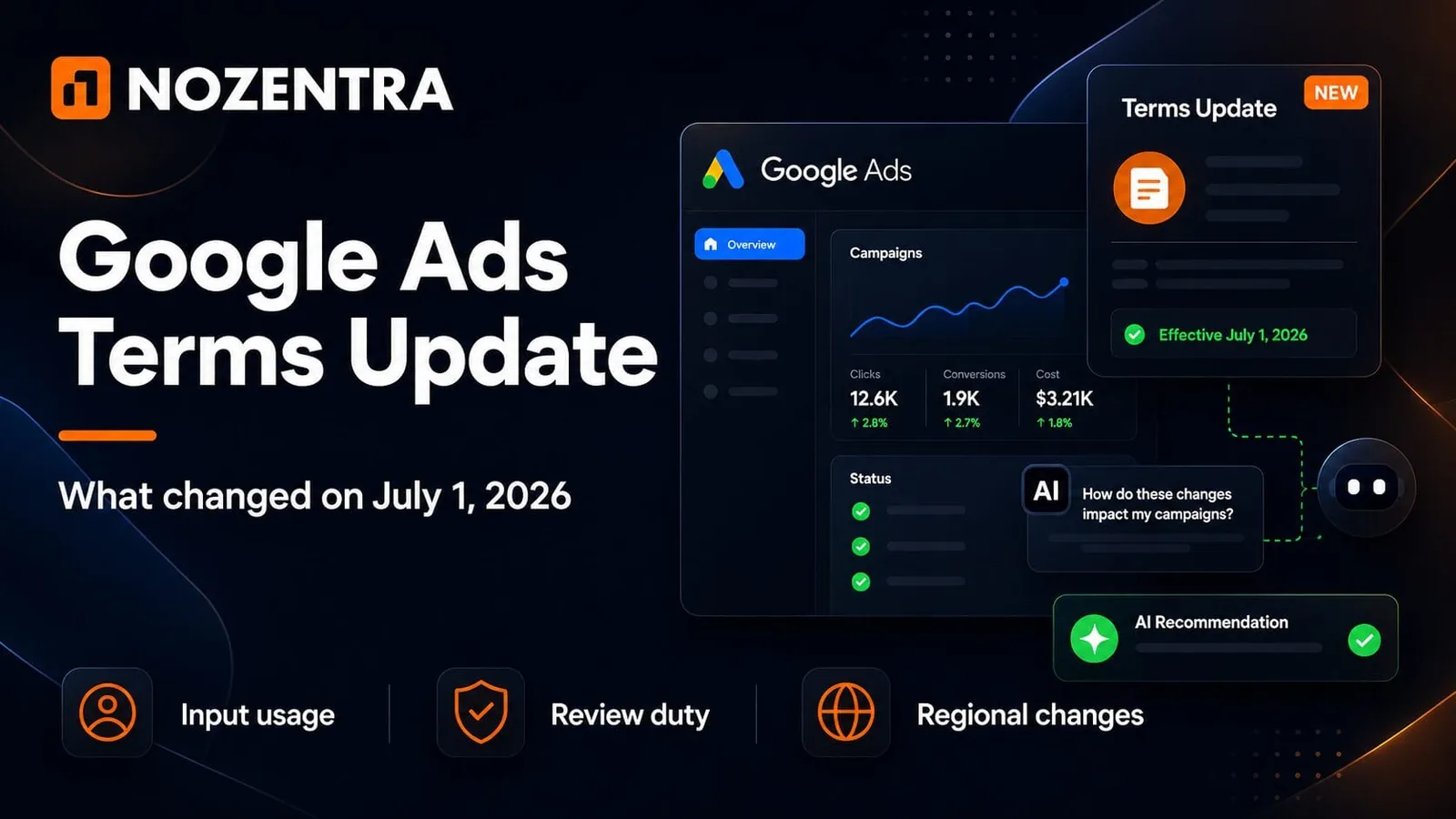
Google's updated Advertising Program Terms took effect on 1 July 2026. Google announced them in April, and they apply to Google Ads accounts from that date.
Two changes matter most. The terms now spell out how Google can use what you type or link into its AI tools. And they make it explicit that you are responsible for reviewing everything Google's automation creates for you. If you run Google Ads directly or for clients, here is what changed and what to check.
Key takeaways
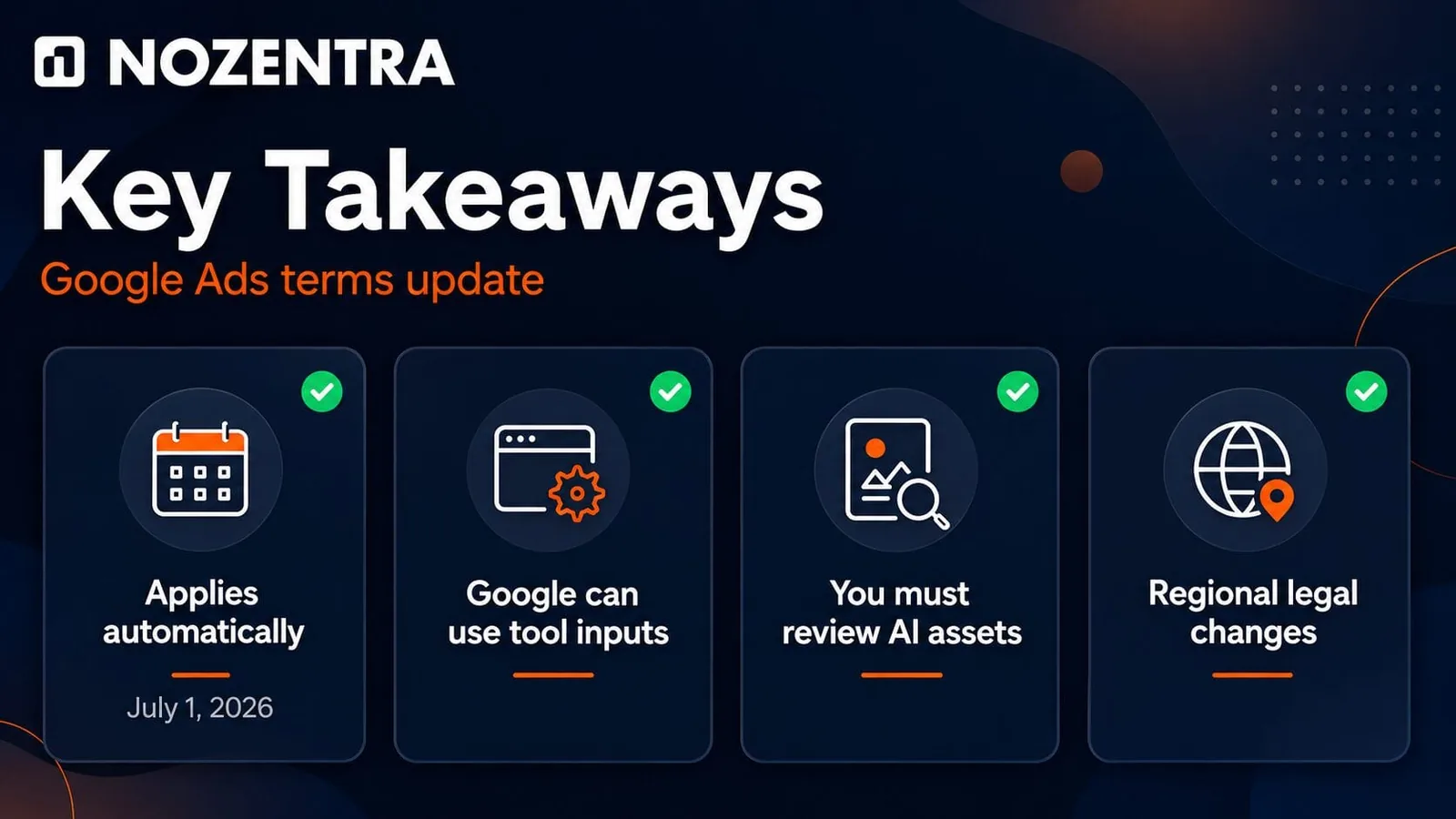
The new terms have applied since 1 July 2026. Google's notice does not describe an acceptance step.
Your inputs can be used across Ads features, including what you enter into conversational tools and the URLs you authorise Google to crawl.
You must review AI-generated campaigns and assets. Google calls it a "continued obligation to review, approve, or remove" them.
Regional changes include batch arbitration in the US, jurisdiction-specific fees and a Brazil clarification.
More automation is coming. Automatically created assets and broad match settings start moving to AI Max in September 2026, and Dynamic Search Ads in February 2027.
Why does this update matter now?
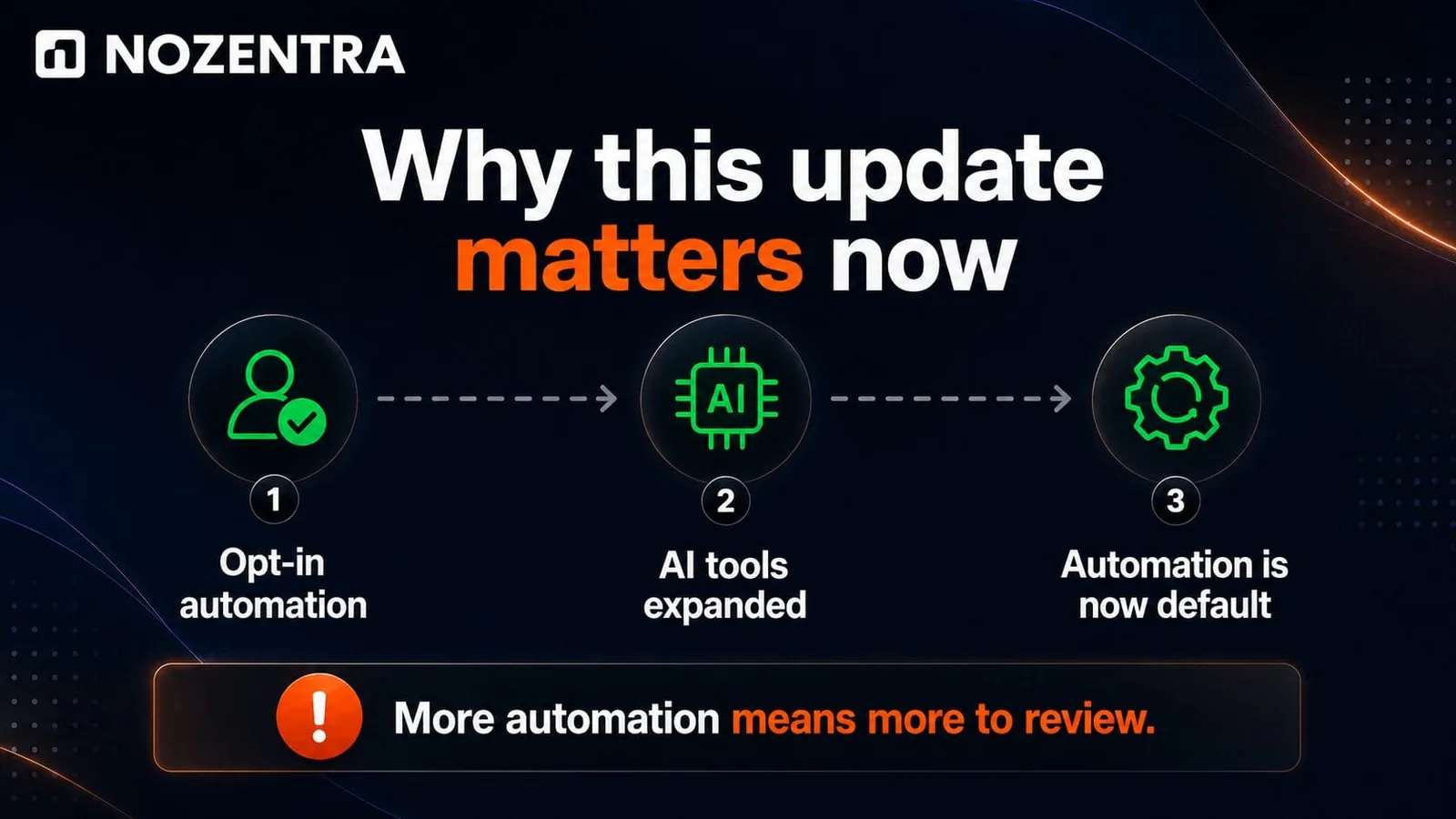
Because more of your account is now built by Google's AI, and that pace is increasing.
| Date | What happened |
|---|---|
| 6 May 2025 | Google launched AI Max for Search campaigns |
| 12 Nov 2025 | Google announced Ads Advisor for English-language accounts, available globally in early December 2025 |
| 15 Apr 2026 | AI Max left beta, and Google set dates for moving older features into it |
| 17 Apr 2026 | Google published the updated Ads terms notice |
| 30 Apr 2026 | Google announced AI Max for Shopping campaigns |
| 1 Jul 2026 | The new terms took effect |
| Sep 2026 | Automatically created assets and campaign-level broad match start auto-upgrading to AI Max |
| Feb 2027 | Dynamic Search Ads start auto-upgrading to AI Max |
Google is clear about why it wants advertisers on AI Max. At launch, it said advertisers who activate it "will typically see 14% more conversions or conversion value at a similar CPA/ROAS":
- All Search campaigns14%
- Campaigns mostly on exact and phrase match27%
Source: Google, 'Introducing AI Max for Search campaigns', 6 May 2025 (Google's own figures)
Those are Google's numbers, not independent research. Either way, the more your campaigns rely on automation, the more of what runs under your name was never written by your team.
What actually changed in the terms?
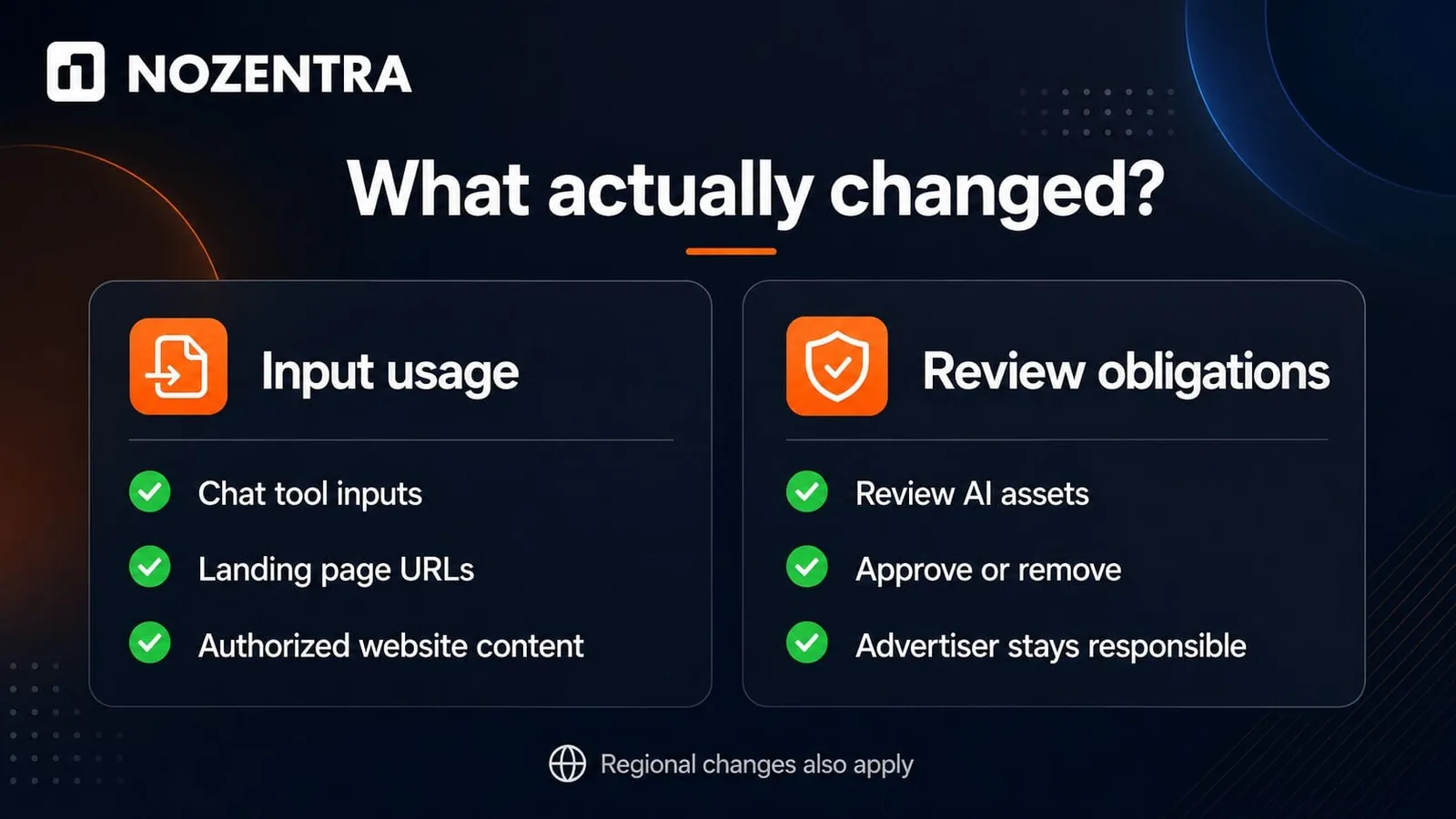
Google's notice about the updated terms lists these changes:
| Area | What Google's notice says | What it means in practice |
|---|---|---|
| Your inputs | Covers "Information or URLs that you enter into conversational experience and other similar Google Ads features" | What you type into tools like Ask Advisor can be used to improve campaigns |
| Crawled content | Covers "URLs or accounts that you provide Google access to and authorize Google to crawl in connection with automated campaign setup" | Pages you point Google at can shape your ads |
| Responsibility | Your "continued obligation to review, approve, or remove all campaigns and ad assets generated automatically" | An inaccurate AI headline is your problem, not Google's |
| US disputes | Allows "batch arbitration" of similar claims | Many near-identical claims can be handled together |
| Fees | References "regulatory operating fees or other jurisdiction-specific fees (where applicable)" | Check invoices for new line items in some countries |
| Brazil | Clarifies Google BR's role in monetising Google's advertising spaces | Relevant if you advertise in Brazil |
Do you need to do anything?
Not to activate the terms. They already apply. But the review obligation is worth acting on, because it describes something that can cost you: an ad making a claim you cannot support.
Three checks are worth doing now:
Pull the last 30 days of auto-generated assets in any AI Max or Performance Max campaign. Look for headlines, descriptions or images that claim something untrue, outdated or unapproved.
Check which URLs Google can use. Use URL exclusions to keep expired offers, careers pages and internal pages out of automated ads.
Treat conversational tool inputs like a written brief. Anything you type into Ask Advisor can feed your campaigns.
Contract questions, such as arbitration in your country, belong with whoever manages your legal relationship with Google, not a marketing checklist.
How should you review auto-generated assets?
In the accounts we audit, the teams that handle changes like this best already treat auto-generated assets as drafts, not finished ads. Teams that review weekly catch a stray claim before it spends budget. Teams that only look when performance dips find the same problem weeks later.
A simple shared log is enough. This is an illustrative example:
date,campaign,asset_type,asset_text,generated_by,claim_supported,action,reviewer
2026-09-14,Search - Roof repairs,Headline,"Same-day roof repairs",AI Max text customisation,No,Removed,Sam
2026-09-14,Search - Roof repairs,Description,"Licensed roofers across Brisbane",AI Max text customisation,Yes,Kept,Sam
2026-09-14,PMax - All services,Image,"Crew on a tiled roof",Performance Max,Yes,Kept,Sam
The "claim supported" column is the one that protects you. If nobody on the team can point to evidence for a claim, remove the asset.
What should you check this quarter?
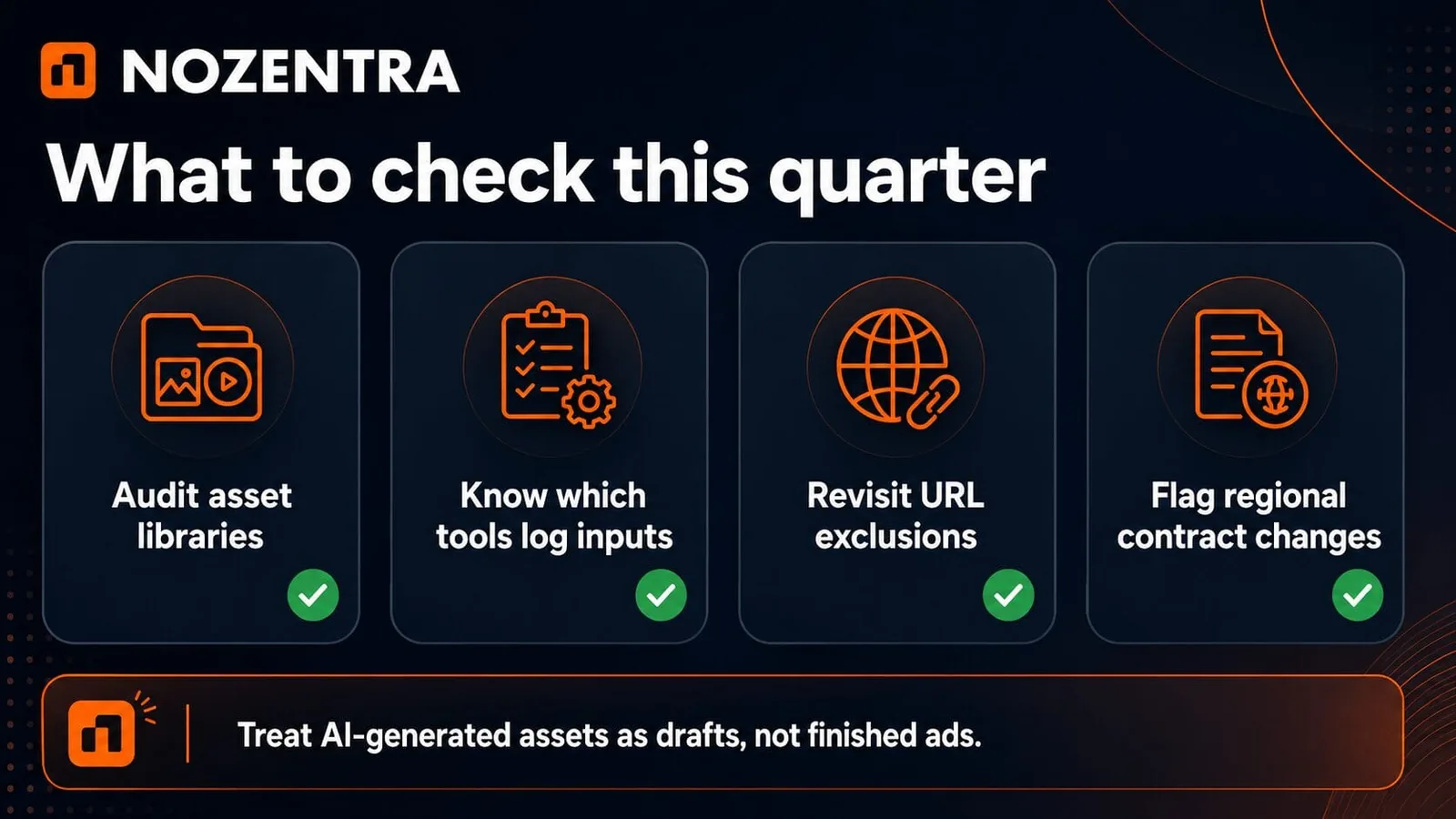
Audit asset libraries in AI Max and Performance Max, using asset group reporting to see what is serving.
Know which tools log inputs and who on your team uses them.
Revisit URL exclusions before the September 2026 auto-upgrades reach your campaigns.
Plan for February 2027 if you still run Dynamic Search Ads, so the move to AI Max is a decision, not a surprise.
Flag regional contract and fee changes to whoever manages your Google agreement.
If you use AI-generated creative, also check whether your ads now need an AI label. For a second pair of eyes on what your account is generating, ask us for a Google Ads review.
Frequently asked questions
Do I need to click anything to accept the new terms?
Google's notice says the terms are "effective as of July 1, 2026" and encourages advertisers to read them. It does not describe a separate acceptance step.
Does this change how much I pay for ads?
The terms do not set prices. In some countries they reference regulatory or jurisdiction-specific fees, so check your invoices for new line items.
Is this related to Google's 2026 search ranking updates?
No. This is a contract update for Google Ads. Organic ranking updates are separate and listed on Google's Search Status Dashboard.
Sources
Google Ads Help: Important updates to the Google Ads Terms of Service (updated 17 April 2026)
Google: Introducing AI Max for Search campaigns (6 May 2025)
Google: Try out Ads Advisor and Analytics Advisor (12 November 2025)
Google: Google's Dynamic Search Ads are upgrading to AI Max (15 April 2026)
Google: AI Max turns 1 with new ways to steer performance (30 April 2026)