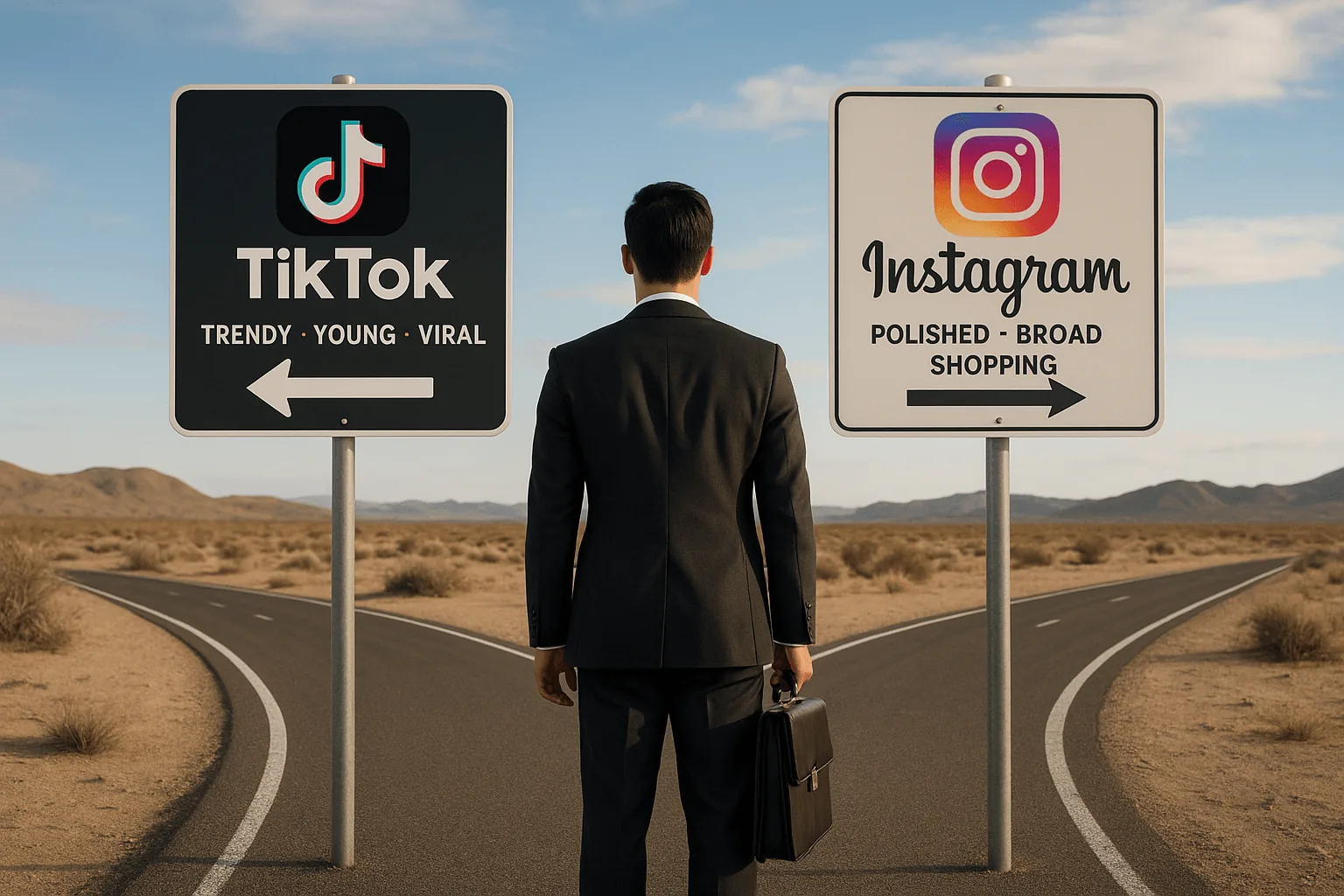
Instagram and TikTok both reward short video, and both can bring customers. They still behave differently. TikTok is built to show videos to people who have never heard of you. Instagram is a mix of the people who already follow you and a growing layer of recommendations.
The right choice depends less on which app is "bigger" and more on who your buyers are, what you can film every week, and what you need the platform to do.
Key takeaways
Instagram has the larger audience. Meta announced 3 billion monthly active users in September 2025.
TikTok holds attention longer. Similarweb data puts TikTok at 97 minutes a day per Android user, against 73 for Instagram.
Both now push recommended content, but TikTok's For You feed is still the easier place for a new account to reach strangers.
TikTok's US future is settled for now. A majority American owned joint venture was established on 23 January 2026.
Pick based on your content capacity and buyers, then measure cost per result, not views.
How do Instagram and TikTok compare in 2026?
| Question | TikTok | |
|---|---|---|
| Audience size | More than 200 million people in the US alone, per TikTok's joint venture | 3 billion monthly active users worldwide |
| Daily time per user (Android app) | 97 minutes | 73 minutes |
| How new content gets seen | Mostly through the For You feed, including by non-followers | Followers first, with Reels and recommendations growing |
| Content that fits | Raw, fast, trend-aware video | Polished video, photos, carousels and Stories |
| Best at | Discovery and fast awareness | Brand building, community and repeat engagement |
| Selling | TikTok Shop, where available | Product tags and links, plus Meta's ad system |
The time-spent figures come from Similarweb data cited in DataReportal's Digital 2026 Global Overview Report:
- TikTok97 min
- Instagram73 min
- Facebook67 min
Source: Similarweb App Intelligence, cited in DataReportal Digital 2026 Global Overview Report
Time spent is not the same as buying intent, but it does tell you where attention is concentrated.
Why does TikTok suit brands starting from zero?
Because followers matter less. TikTok explains that its For You feed ranks videos using signals such as what people like, share and comment on, and that "neither follower count nor whether the account has had previous high-performing videos are direct factors in the recommendation system." A new account's video can reach people who have never heard of it.
That makes TikTok a good fit when:
You have little or no existing audience
Your product is easy to show in a few seconds
Your buyers skew younger
You can post often and react quickly to trends
Personality and behind-the-scenes content suit your brand
The trade-off is that attention is fast and fleeting. A video that performs well today rarely keeps sending people next month.
Why does Instagram suit brands building trust?
Instagram gives you more formats to show who you are: Reels for reach, carousels for explanation, Stories for everyday updates and a profile grid that works like a shop window.
It is also moving closer to TikTok. When Instagram passed 3 billion users, head of Instagram Adam Mosseri said: "almost all of our growth has been driven by DMs, Reels, and recommendations." Instagram planned to reorient the app around those three.
Instagram tends to suit brands when:
Visual quality is part of what you sell, such as fashion, food, interiors or hospitality
You already have customers who will follow you
Buyers want to check you out before they contact you or buy
You want to run ads through Meta's targeting and measurement tools
Direct messages are a real sales channel for you
Is it safe to invest in TikTok after the US ownership change?
For US brands, the long uncertainty has been resolved. TikTok announced on 23 January 2026 that TikTok USDS Joint Venture LLC had been established "in compliance with the Executive Order signed by President Trump on September 25, 2025". It describes the venture as majority American owned, serving "more than 200 million Americans and 7.5 million businesses", with Adam Presser as CEO.
Outside the US, nothing about the ownership change stops you using the platform. As with any rented channel, the sensible move is the same: use it to reach people, then move them somewhere you own, such as your email list or website.
Which platform fits your business?
| Your situation | Lean toward | Why |
|---|---|---|
| New brand with no audience | TikTok | Recommendations reach non-followers more readily |
| Product that is visual and premium | Polished formats and a profile that works like a catalogue | |
| Buyers aged 16 to 34 | Test both | Social ads are the top brand awareness source for this group |
| Local service business | Instagram, alongside Google | Buyers check your profile and reviews before calling |
| B2B service | Neither first | LinkedIn and search usually matter more |
| Limited time to create | Fewer posts can still keep a profile credible |
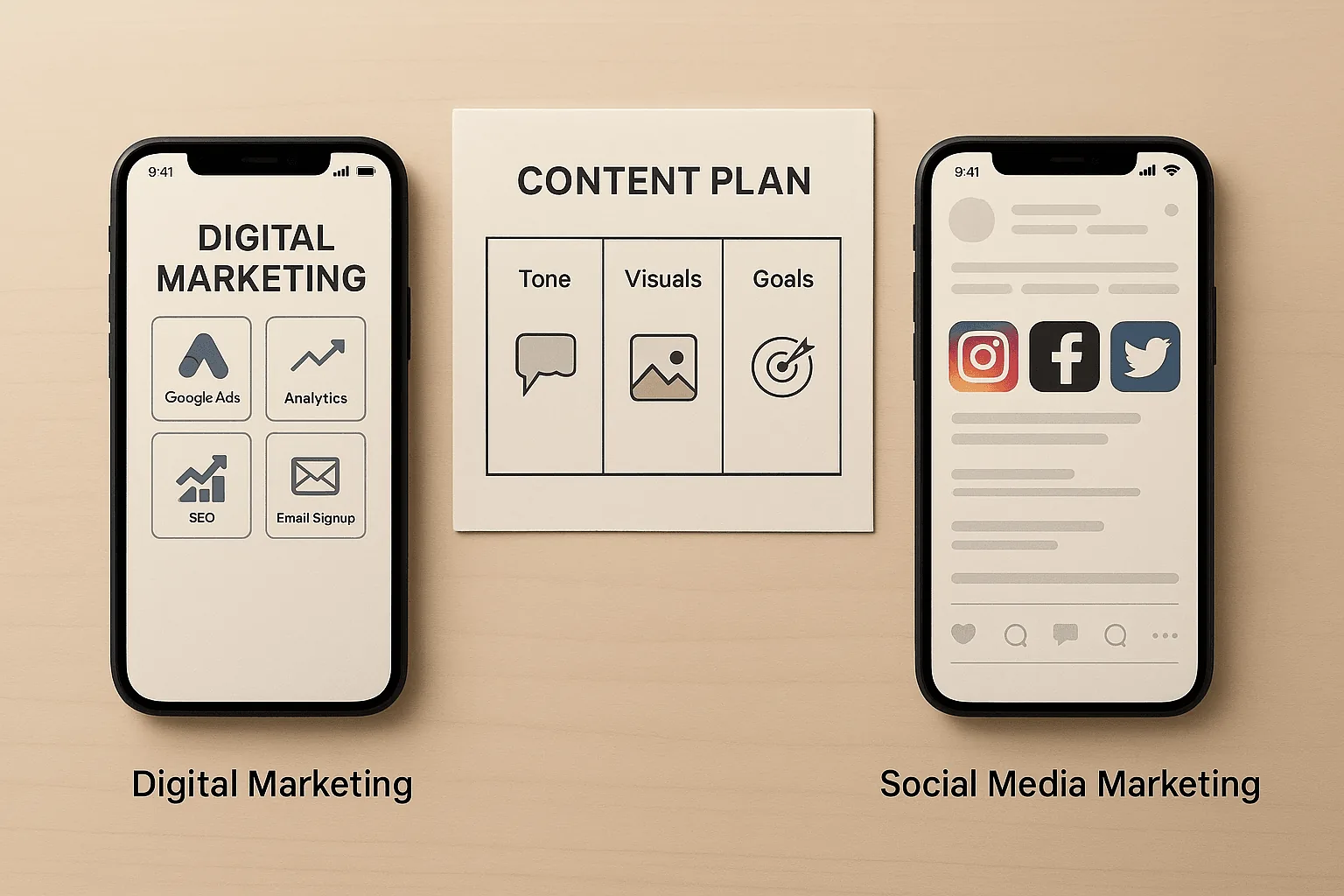
DataReportal's report, drawing on GWI research, found social media ads are the top source of brand awareness for people aged 16 to 34. For older audiences, search engines still lead. We compare those channels in the difference between digital marketing and social media marketing.
How do you run a fair test between them?
Run the same idea on both for a set period, then compare results that matter to your business. A simple plan:
platform_test:
  length: 8 weeks
  posting: 3 short videos a week on each platform
  content: same core idea, edited to suit each app
  tracking:
    - UTM-tagged link on each profile (utm_source=tiktok or utm_source=instagram, utm_medium=social)
    - a separate discount code per platform, if you sell online
  compare:
    - website sessions and enquiries per platform in GA4
    - sales or leads per hour of content work
    - cost per result, if you boost posts or run ads
  ignore_on_its_own: views and follower count
Views are cheap on both apps. What matters is whether the platform sends people who enquire, buy or join your list.
How is social discovery changing?
People increasingly ask questions inside social apps rather than on a search engine. On Instagram, that now includes Meta AI. If your profile, captions and posts clearly say what you do, where and for whom, you are easier to find in both places. We explain this in how Meta AI is changing brand discovery on social media.
If you want help deciding where to spend your social effort, talk to us.
Frequently asked questions
Is TikTok or Instagram better for small businesses?
TikTok is usually better for reaching new people quickly with little budget. Instagram is usually better for building trust and turning existing interest into enquiries. Many small businesses post short videos to both and keep whichever sends better results.
Can I post the same video on both platforms?
Yes, but adapt it. Remove the other app's watermark, adjust on-screen text and captions to each platform's style, and use the right hashtags and sounds for each.
Are TikTok ads cheaper than Instagram ads?
There is no reliable universal answer. Costs vary by audience, industry, season and creative quality. Run a small test on both and compare cost per lead or sale rather than cost per view.
Which platform is better for older audiences?
Instagram's audience spans a wider age range, and search engines remain a bigger discovery source for older buyers. If your customers are mostly over 45, social media should support search, not replace it.