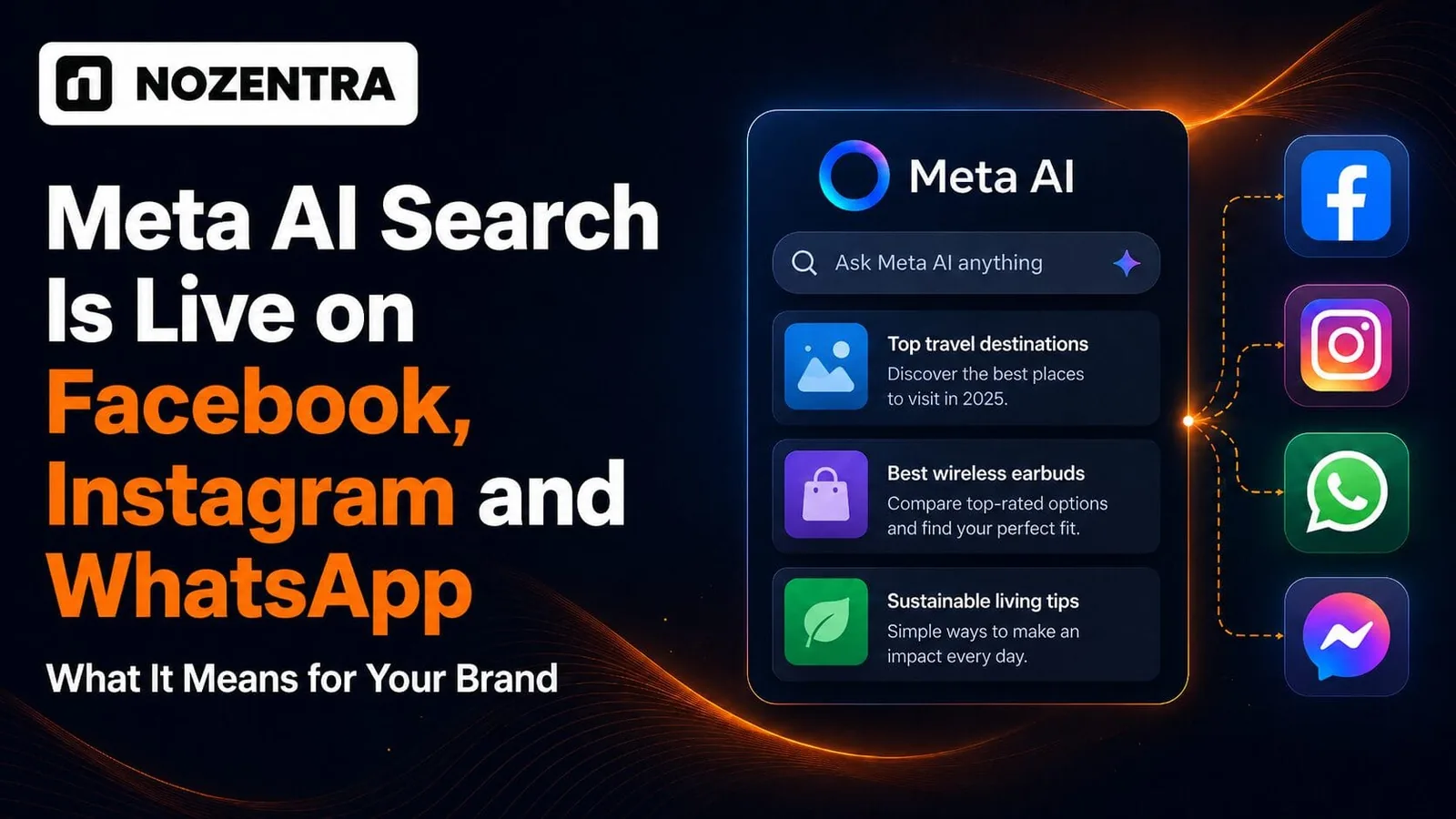
People no longer need to leave Facebook, Instagram, WhatsApp or Messenger to look something up. Meta AI can answer questions inside those apps, in search bars, chats and feeds.
For small businesses, that means some discovery now starts in apps you already post to but have probably never treated as search engines.
Key takeaways
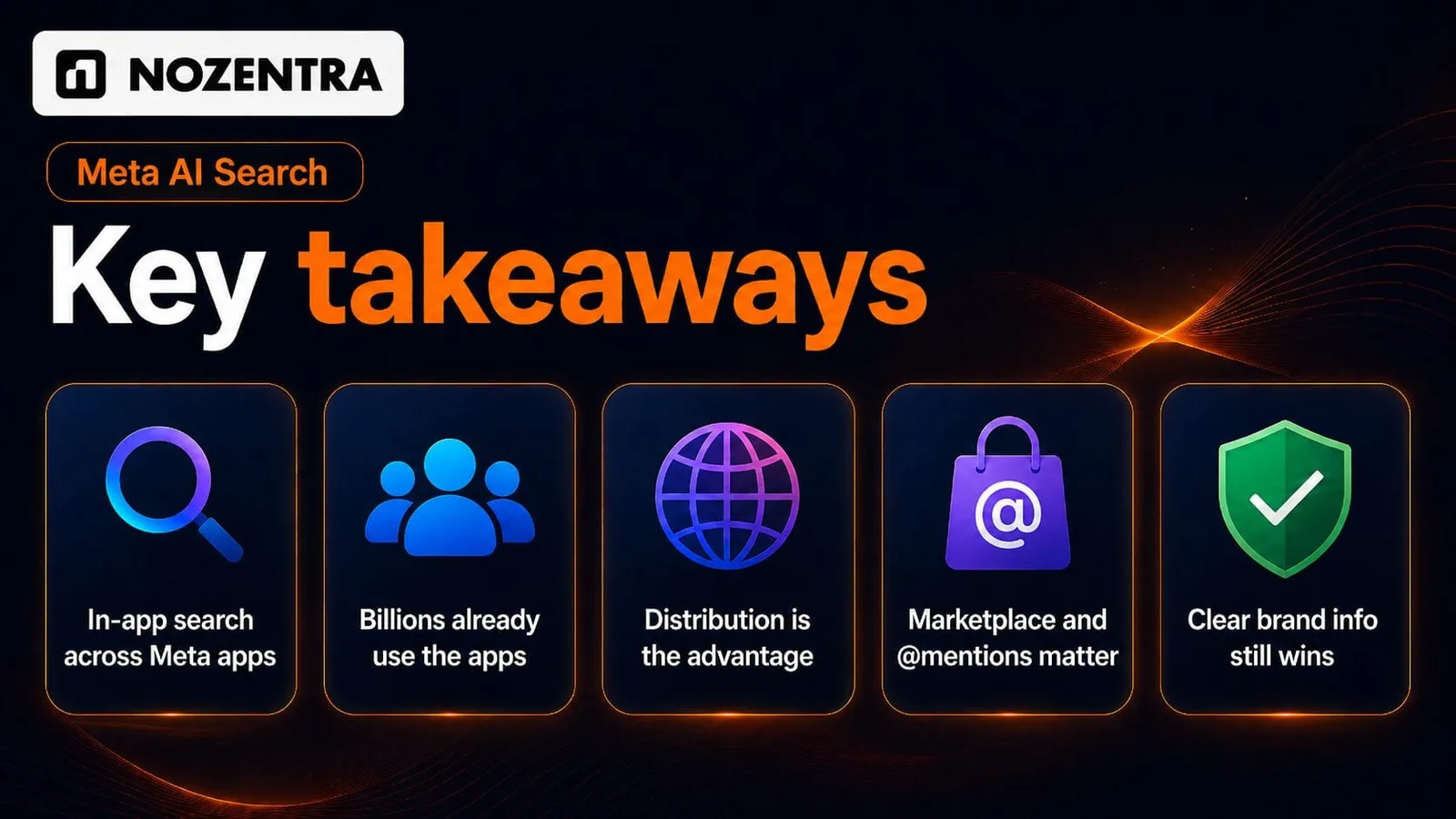
Meta AI runs on Muse Spark, a model Meta launched on 8 April 2026 and has been rolling out across its apps.
The audience is already there. Facebook, WhatsApp and Instagram each have more than 3 billion monthly users.
Distribution is Meta's advantage, not a smarter model. People open these apps for other reasons, and Meta AI sits inside that habit.
Meta AI can search Marketplace and pull up brand content when someone @mentions a brand or creator.
The fundamentals stay the same: accurate profile details, clear product listings and posts that answer real questions.
Why does this matter now?
Most conversations about AI search focus on Google. Meta's push is different because it does not need to win people over to a new app. They are already there:
- Facebook3B
- WhatsApp3B
- Instagram3B
- Threads0.5B
Source: Meta via TechCrunch (Facebook July 2023, WhatsApp May 2025, Instagram September 2025); Meta Newsroom (Threads June 2026)
On Meta's first-quarter 2025 earnings call, Mark Zuckerberg said "WhatsApp now has more than 3 billion people using it every month." Instagram reached 3 billion monthly users in September 2025, and Meta said in June 2026 that "Threads has reached 500 million monthly active users."
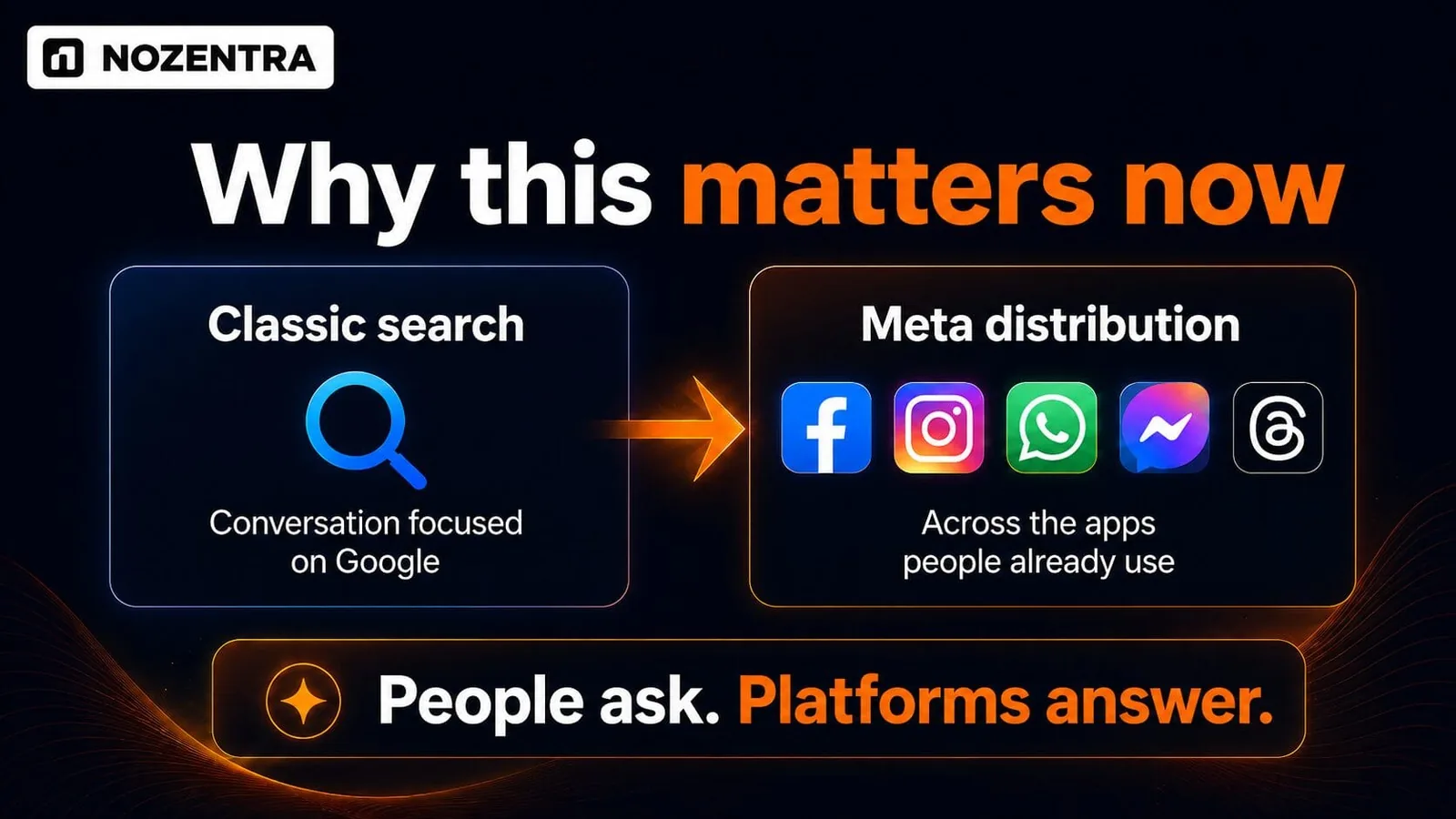
Picture someone planning a weekend away in a WhatsApp group. If Meta AI can compare places inside that same chat, they may never open a browser.
What can Meta AI actually do inside the apps?
Meta introduced Muse Spark on 8 April 2026 as a model "purpose-built for Meta's products." It powers the Meta AI app and website and has been rolling out to WhatsApp, Instagram, Facebook, Messenger and Meta's AI glasses.
For businesses, three capabilities stand out:
| Capability | What Meta says it does | Why it matters for brands |
|---|---|---|
| Shopping mode | Searches Facebook Marketplace listings near you alongside options from across the internet | Your listings can appear in a shopping answer |
| @mentions | Lets people @mention a specific brand or creator | Your public content can be pulled into an answer by name |
| Local context | Surfaces public posts from locals when you tap into a location | Your posts can shape how an area or business is described |
It also accepts voice, text and images, so people can ask about something they are looking at, not only something they type.
What is new, and what stays the same?
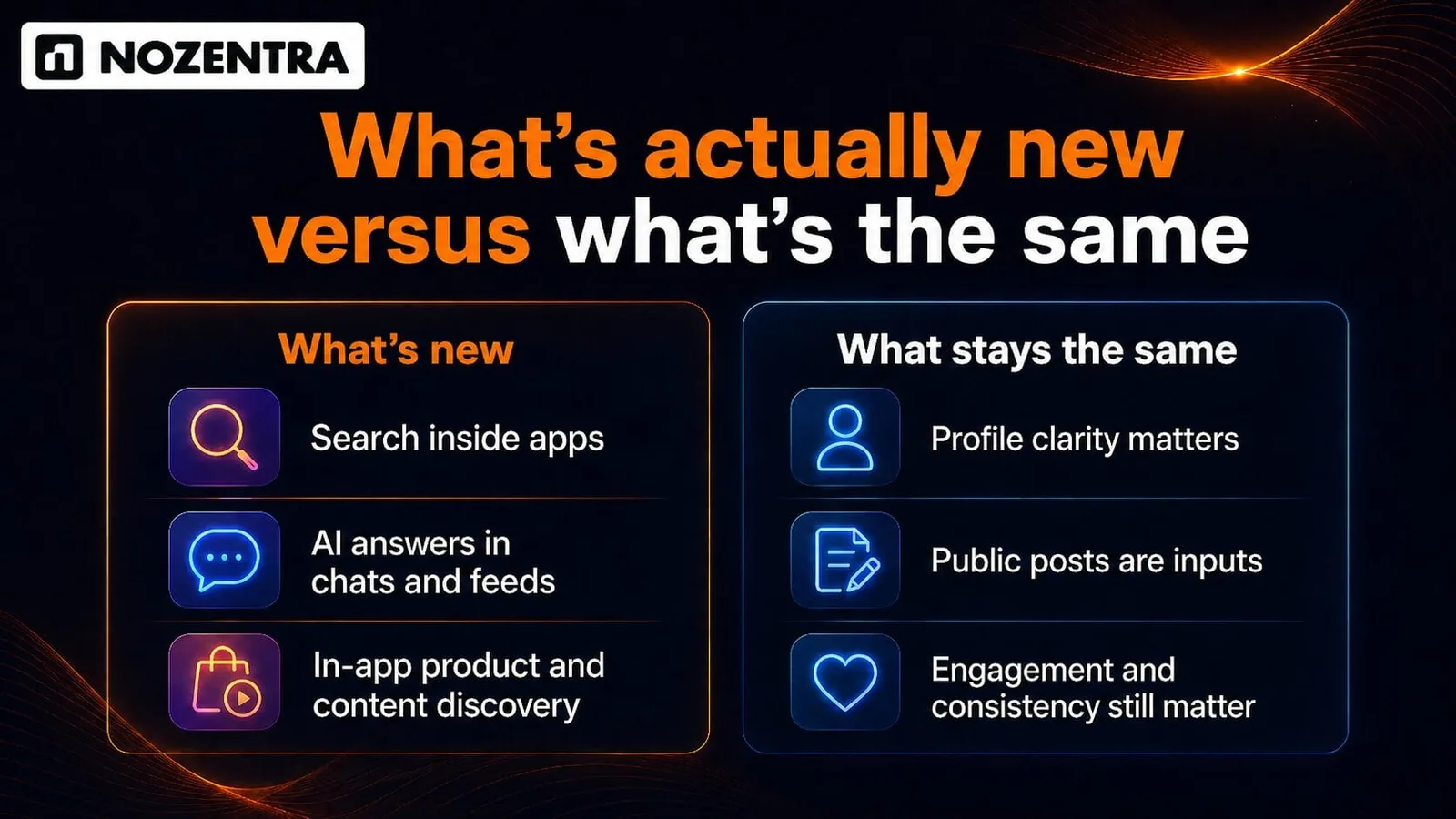
New: search-style behaviour inside apps that were never built as search engines. Someone can compare products, get a summary of what people are saying, or pull up a business's public posts without a separate search step.
The same: the inputs. Meta AI draws on the signals that have always mattered on these platforms: public posts, profile information and engagement. As of September 2026, we have not found any Meta schema markup or published optimisation checklist for Meta AI. The businesses that show up well are the ones with clear, current, consistent information, which is the same standard that has driven organic reach for years.
How is this different from Google's AI search?
They draw on different places:
| Question | Google AI Overviews and AI Mode | Meta AI in its apps |
|---|---|---|
| Where answers come from | Crawled web pages and structured data | Content and signals inside Meta's apps, plus web results in some modes |
| What you control | Your website, schema and technical SEO | Your profiles, posts, catalogue and listings |
| Where the person is | In a search engine | In a chat, feed or app search bar |
| Main risk if ignored | Weak visibility in Google's AI answers | Inaccurate or thin brand information inside Meta apps |
Google's guidance on AI features and your website covers the first column. A business that invests only in website SEO and treats social profiles as an afterthought is now missing a second, separate discovery surface.
This does not mean starting over. It means applying the same care you give your website to your Facebook, Instagram and WhatsApp Business presence. Our guide on how answer engine optimisation is changing search covers the same principle for Google, and it carries straight over.
What is our view?
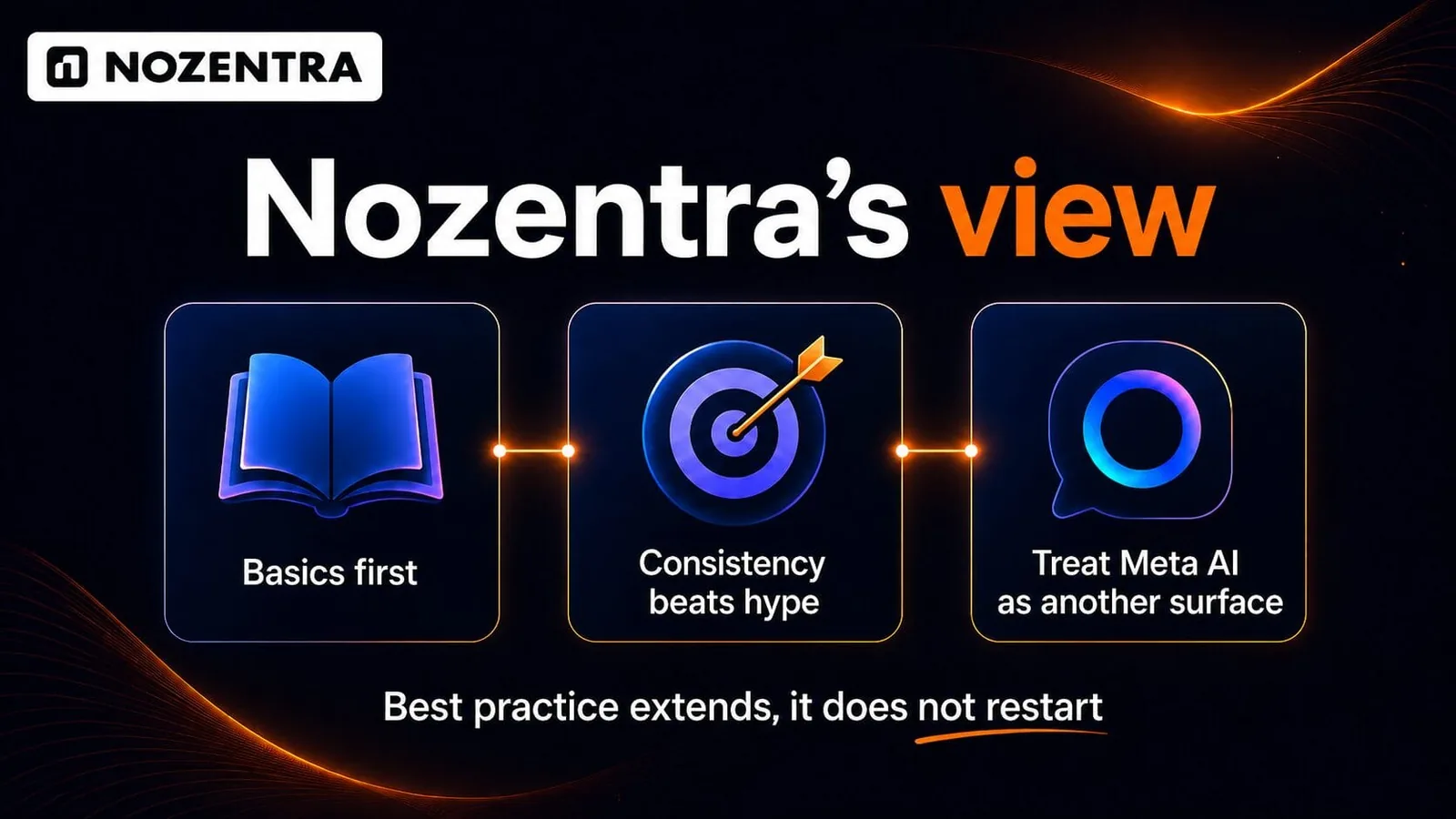
We would not treat this as an urgent new channel to chase. The businesses most likely to benefit are the ones already doing the basics well: consistent naming, an accurate business profile and posts that answer real questions instead of pure promotion.
Where it does change planning is platform choice. If you are weighing Instagram against TikTok, also consider how often each audience asks questions inside the app instead of clicking through to your website.
What should you check this month?
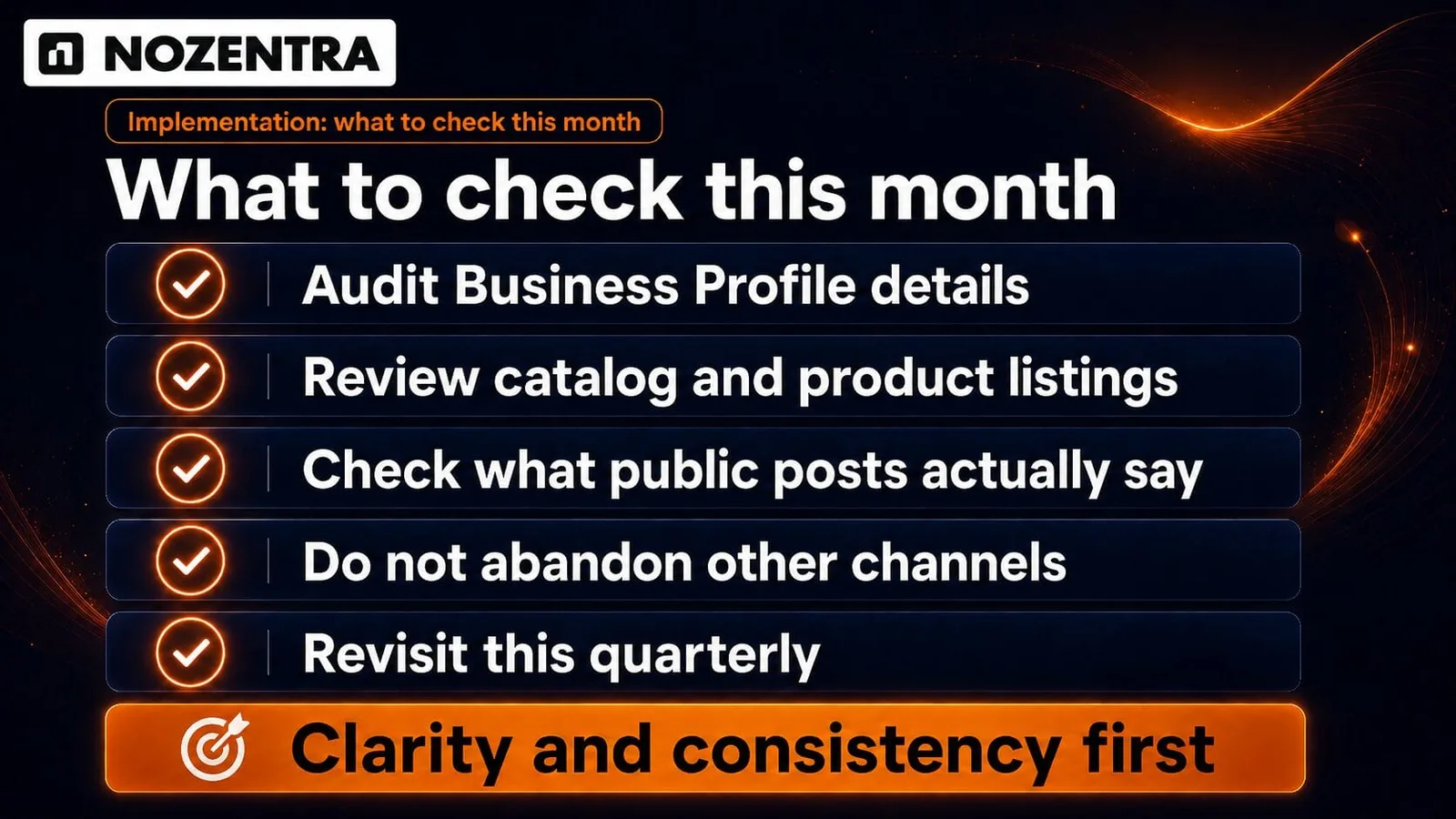
Start with a simple consistency check. Put your core business facts side by side and fix anything that does not match:
| Detail | Website | WhatsApp Business | ||
|---|---|---|---|---|
| Business name | ? | ? | ? | ? |
| Opening hours | ? | ? | ? | ? |
| Location or service area | ? | ? | ? | ? |
| Main products or services | ? | ? | ? | ? |
| Contact method | ? | ? | ? | ? |
Then work through the rest:
Review your catalogue and Marketplace listings. Clear titles, current prices and accurate stock matter more now that shopping answers can surface them.
Read your last 20 public posts. Would an AI summarising only those posts understand what you sell and who it is for?
Keep your other channels running. Meta AI is one more surface, not a replacement for search visibility or direct engagement.
Revisit this every quarter. Meta has shipped AI features quickly through 2026.
If you want to know how AI systems currently describe your business, that is exactly what our AI brand monitoring work tracks. For help splitting time between social and search, talk to us.
Frequently asked questions
Do I need to add anything technical to my Meta profiles?
We have not found any. Unlike Google, Meta has not published structured data or markup for Meta AI. It works from your existing profile, posts and product information.
Is Meta AI replacing Google search?
There is no evidence of that. It is an additional place where discovery happens, especially for questions that come up naturally in a chat or feed.
Should I prioritise Meta AI over my website's SEO?
No. They serve different moments. Treat Meta AI as an extra consideration, not a reason to neglect your website. Our guide to content distribution covers how to spread one piece of work across both.
Sources
Meta: Introducing Muse Spark, Meta's most powerful model yet (8 April 2026, updated 12 May 2026)
Meta: New features to celebrate 500 million monthly users on Threads (16 June 2026)
TechCrunch: WhatsApp now has more than 3 billion users (1 May 2025)
TechCrunch: Instagram now has 3 billion monthly active users (24 September 2025)
TechCrunch: Facebook surpasses 3 billion monthly active users (26 July 2023)