Answer engine optimisation (AEO) means shaping your content so systems that give direct answers, such as Google's AI Overviews and AI Mode, ChatGPT and Perplexity, can understand it, trust it and use it in their responses.
It matters because more searches now end with an answer instead of a click. But much of the early AEO advice has already aged badly. This guide separates what the evidence supports from what it does not.
Key takeaways
Most US Google searches now end without a click. SparkToro measured 68.01% in the first four months of 2026, up from 60.45% in 2024.
People are choosing AI search deliberately. McKinsey found 44% of AI search users call it their primary source of insight.
Intent matters more than keywords. AI answers try to address what someone actually wants, including the follow-up questions they have not asked yet.
Several 2025 AEO tactics no longer hold. FAQ rich results are gone, and Google says to ignore "chunking" content.
Few brands measure it. McKinsey found only 16% systematically track AI search performance.
Why does AEO matter now?
Because searchers get more answers without leaving the results page. SparkToro, using Similarweb clickstream data, measured this for US Google searches:
- 202460.45%
- First four months of 202668.01%
Source: SparkToro, using Similarweb clickstream data, published 8 June 2026
SparkToro called it "the fastest acceleration of this phenomenon in the last decade," and linked it to AI Overviews, which it found on more than 20% of searches.
People are also choosing AI search on purpose. McKinsey's AI discovery survey of 1,927 consumers found half already use AI-powered search. Among those users, this is their preferred source of insight:
- AI-powered search44%
- Traditional search31%
- Retailer or brand websites9%
- Review sites6%
Source: McKinsey, 'New front door to the internet: Winning in the age of AI search', October 2025
McKinsey estimates AI-powered search could affect $750 billion in revenue by 2028. Yet only 16% of brands it studied systematically track how they perform in it.
How does user intent shape AI answers?
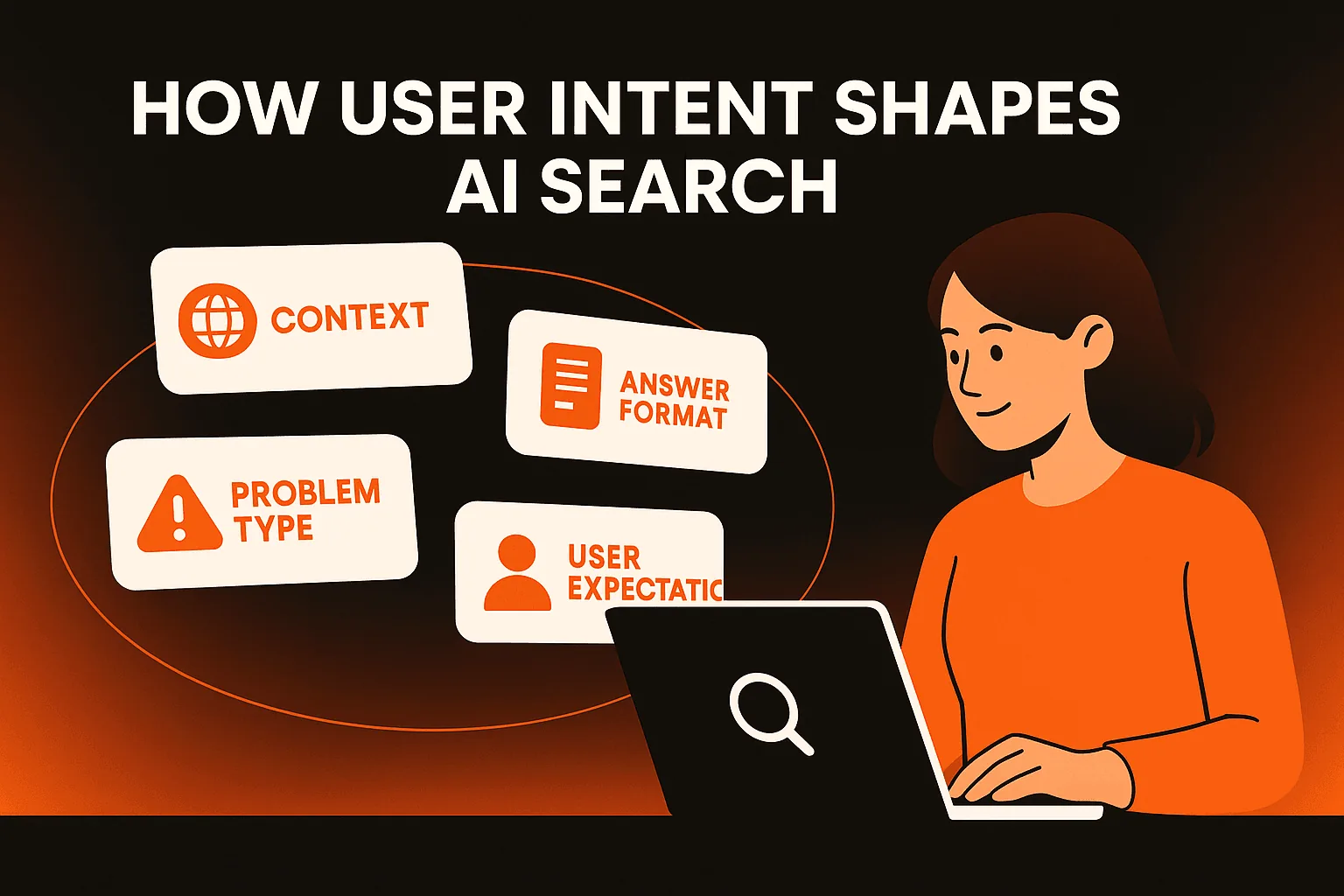
Answer engines try to work out what someone wants, not just match their words. That includes the questions sitting underneath the one they typed:
| What someone searches | What they actually want to know |
|---|---|
| How do I fix slow wifi at home? | Likely causes, quick checks, step-by-step fixes, when to call a technician |
| MacBook Air or Lenovo IdeaPad for college? | Price, battery life, weight, software needs for their course |
| Best budgeting app for freelancers? | Handling irregular income, tax set-aside, cost, bank connections |
Google describes how its AI features handle this. AI Overviews and AI Mode may use a "query fan-out" technique, running multiple related searches across subtopics and data sources to build one response, according to its guide on AI features and your website.
That is why pages that cover the real sub-questions of a topic are more useful to AI answers than pages that repeat one keyword.
Which old AEO advice no longer holds?
A lot of 2025 AEO guidance was built on assumptions that platforms have since contradicted:
| Common 2025 advice | What the evidence says now |
|---|---|
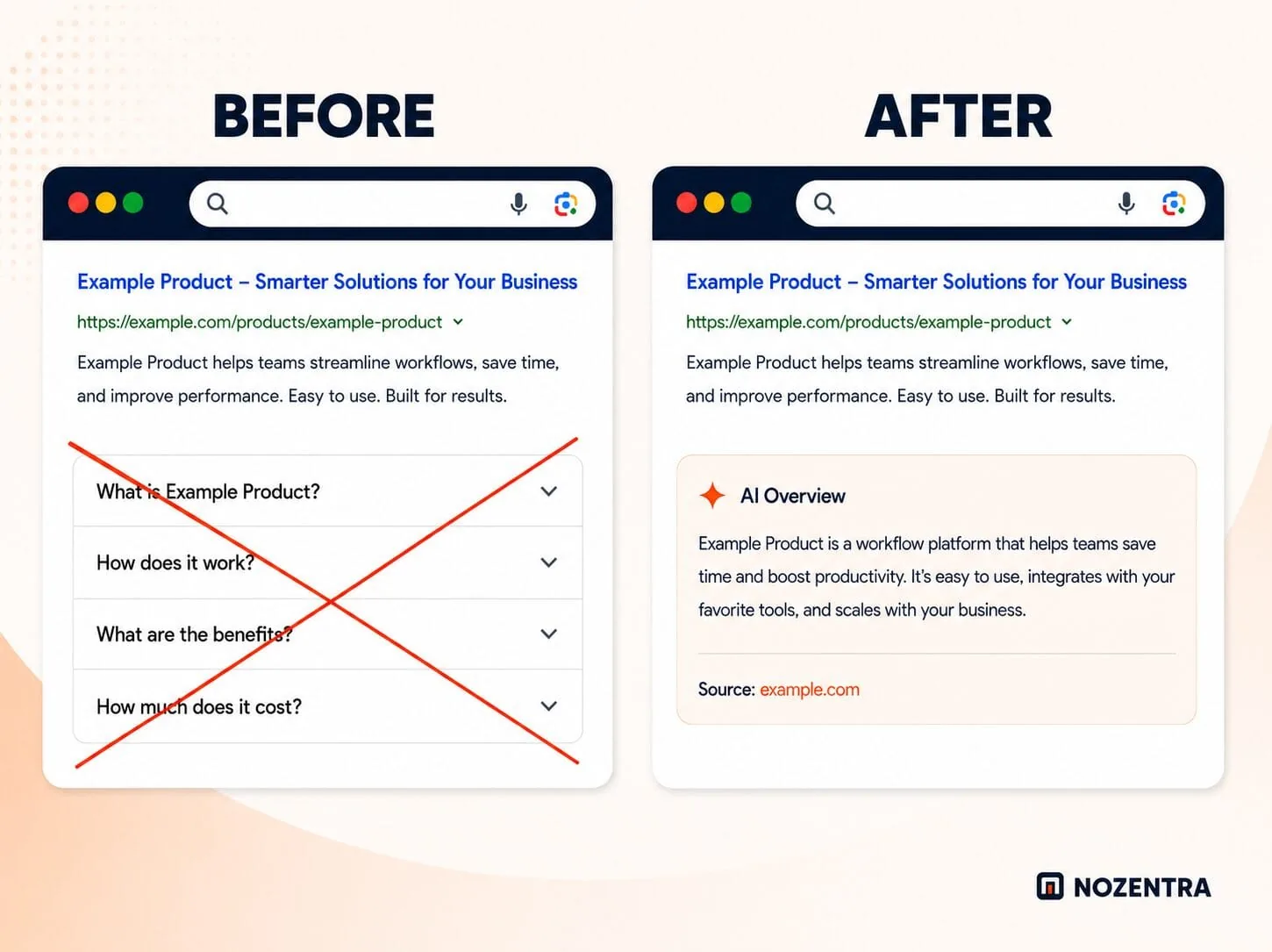
| Add FAQ schema to win answer placements | Google stopped showing FAQ rich results on 7 May 2026 and removed the documentation |
| Break content into short chunks for AI | Google's AI guide says you can ignore "chunking" content |
| Create an llms.txt file | Google says Search ignores it |
| Use special markup to get into AI Overviews | Google says there are no additional requirements beyond normal SEO |
| Answer in exactly 40 to 60 words | No platform has published a required length |
Our articles on FAQ rich results and AI-friendly formatting cover the detail.
What actually works for AEO?
Five things hold up across the evidence:
Answer the main question early, in plain language, before the background.
Cover the sub-questions a searcher will have next, in the same page where they belong together.
Use consistent names for your brand, products, services and locations.
Add original information: your data, your process, your examples. Google's helpful content guidance asks whether content provides "original information, reporting, research, or analysis."
Structure for readers: clear sections and headings where they help people navigate, not for their own sake.
Planning a page around intent can be as simple as mapping each sub-question to a section:
Page: Mobile crane hire in [your city] (illustrative)

Main question   → What does mobile crane hire cost and include?   (answer first)
Sub-question 1  → Which crane size do I need for my lift?
Sub-question 2  → Do I need a licensed operator and site permits?
Sub-question 3  → How far ahead should I book?
Next step       → Get a quote with lift weight, height and site access details
This is the approach behind our work for Knowles Cranes, a specialist crane hire business. We built dedicated pages for each crane type and service location, each optimised for the specific intent behind that type of hire. Ranked keywords grew from 101 to 240, and organic growth reached 1,900%.
How do you measure AEO?
Start with the data you already have:
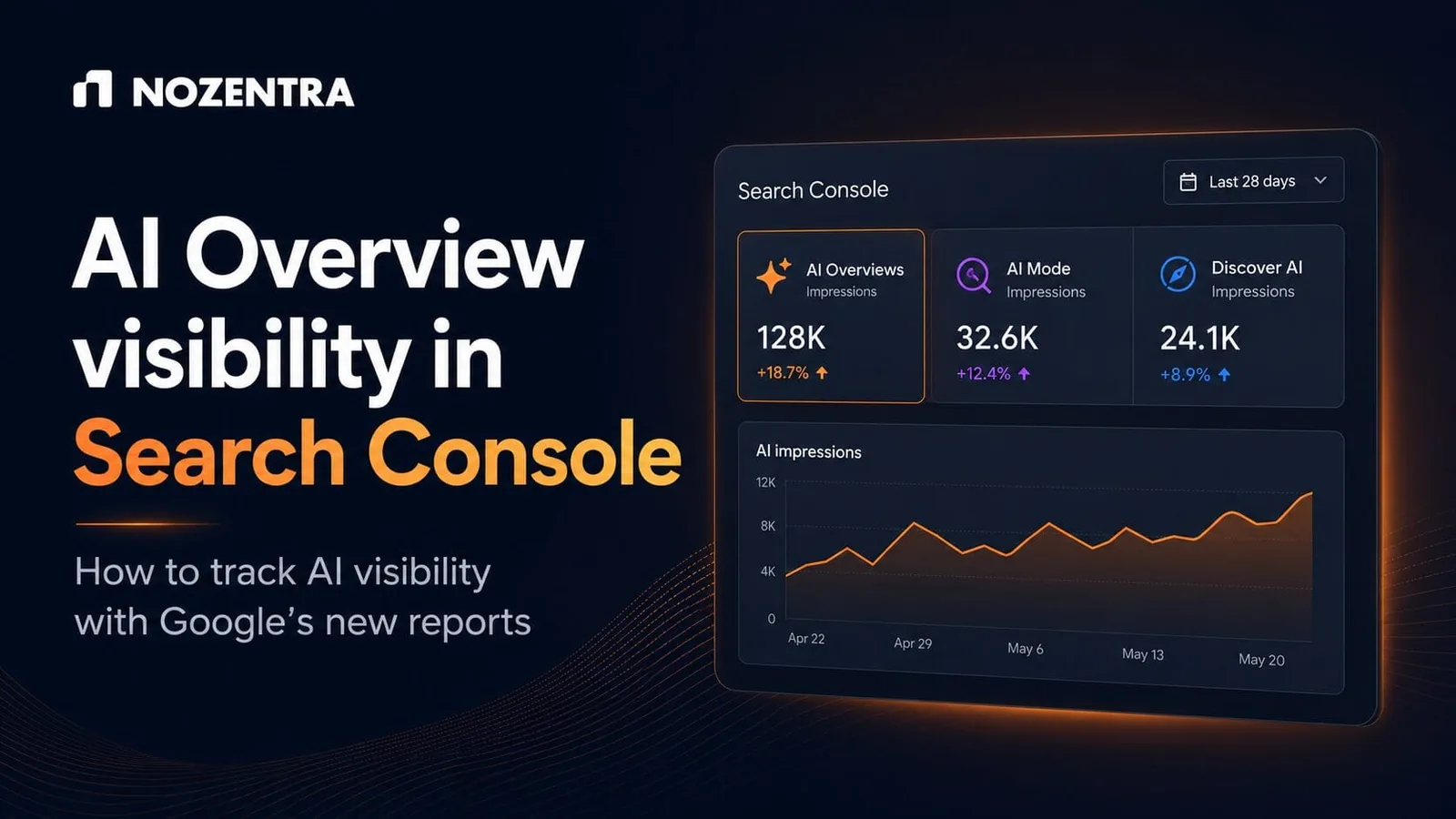
Search Console's generative AI report shows how often your pages appear in AI Overviews and AI Mode. See how to track AI Overview visibility.
GA4's AI Assistant channel shows visits from assistants such as ChatGPT, Gemini and Copilot. Clicks from Google's AI Overviews and AI Mode are counted in Organic Search instead.
Manual checks of the questions your customers ask most, in the AI tools they use.
For how AI systems choose pages in the first place, read how AI search engines decide which pages to use. If you want help, see our AI search visibility work or talk to us.
Frequently asked questions
What is answer engine optimisation in simple terms?
Making your content easy for AI systems to understand, trust and use when they answer someone's question directly.
Is AEO better than SEO?
Neither replaces the other. For Google, AI features rely on pages that are already eligible for normal search, so good SEO is the foundation for AEO.
How long does AEO take to show results?
There is no fixed timeline. It depends on how established your site is, how competitive the topic is and how much needs to change. Measure from a baseline in Search Console rather than expecting a set number of weeks.
What content works best for AEO?
Content that answers a real question clearly, covers the follow-up questions, and adds something original. Comparisons, step-by-step guides and definitions work well when the topic genuinely calls for them.