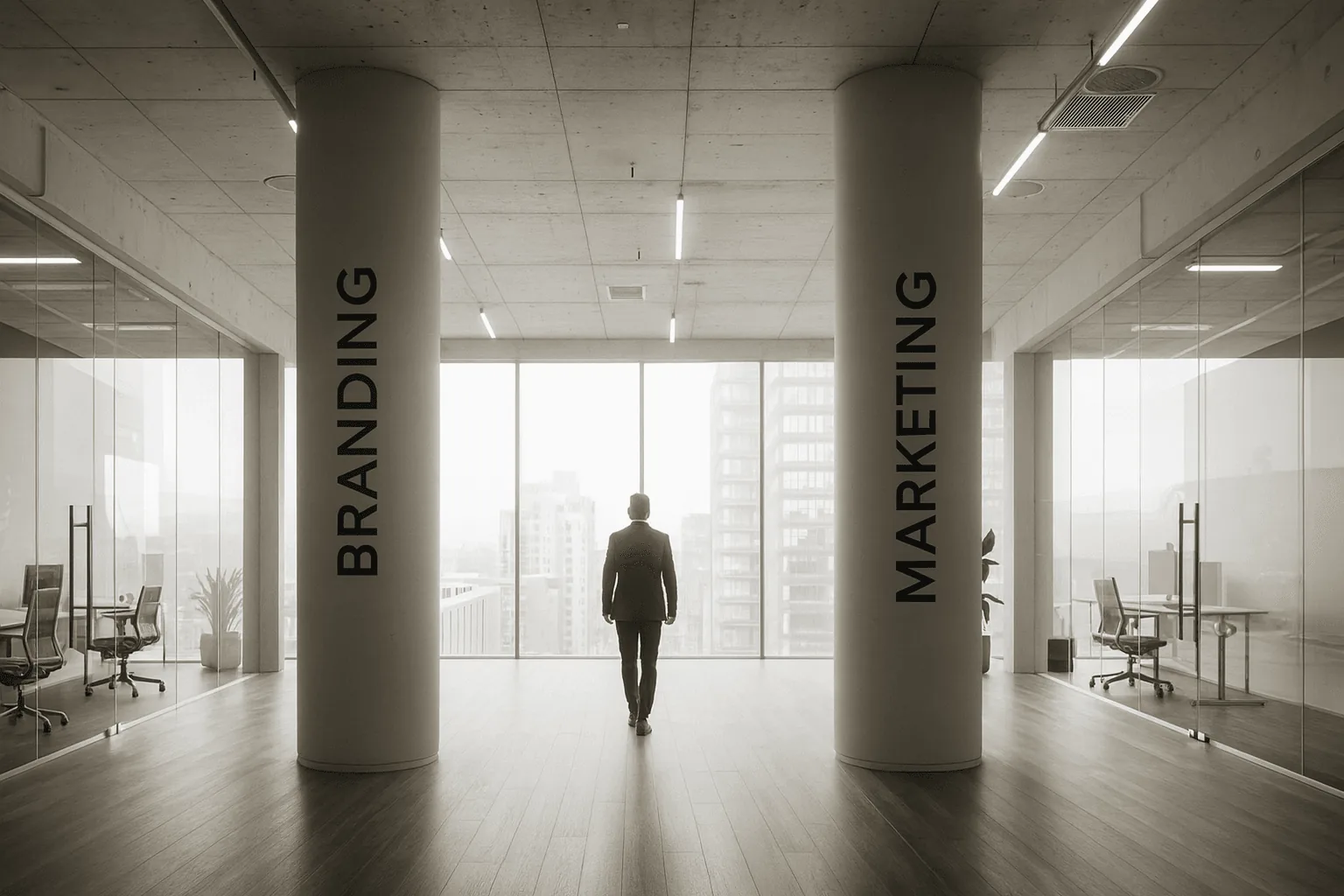
Branding is who your business is: what you stand for, how you sound and what people feel when they think of you. Marketing is how you get that in front of people and turn attention into sales.
They are not the same thing, but they depend on each other. Without a clear brand, marketing feels generic and forgettable. Without marketing, even a great brand goes unnoticed.
Key takeaways
Branding builds memory and trust. Marketing creates action. You need both.
Most buyers are not shopping right now. LinkedIn's B2B Institute says 95% of potential buyers are not ready to buy today.
Brand building and activation work on different timescales. Binet and Field's IPA research found an optimum split of about 60:40.
Trust affects purchases directly. Edelman found trust is "as much of a purchase consideration as quality and price."
Consistency is what turns activity into a brand. The same promise and voice everywhere, every time.
How are branding and marketing different?
| Question | Branding | Marketing |
|---|---|---|
| What it answers | Who are we, and why should anyone care? | What are we offering, and how do people get it? |
| Timescale | Years | Days to months |
| Main goal | Recognition, trust and preference | Leads, sales and sign-ups |
| Stays consistent? | Yes, the promise and voice rarely change | Campaigns and messages change often |
| How it is measured | Awareness, perception, loyalty | Clicks, conversions, revenue |
| Example | A clear promise customers repeat back to you | A spring offer promoted by email and ads |
A simple way to remember it: your brand voice stays the same, while your campaign messages change. A coffee brand with a relaxed voice might run a "quick energy for busy mornings" campaign, but it should still sound like itself.
Why does branding matter if marketing brings the sales?
Because most people are not ready to buy when your marketing reaches them.
LinkedIn's B2B Institute, working with the Ehrenberg-Bass Institute, describes this as the 95-5 rule: "95% of your potential buyers aren't ready to buy today." They will be in the market at some point, but not now. Its research gives examples of how rarely businesses buy:
| Purchase | How often most buyers are in the market |
|---|---|
| Company computers | 75% of companies buy once every 4 years |
| Business banking | 80% of companies change once every 5 years |
| New cars (consumers) | 90% of consumers buy every 10 years |
Short-term marketing only reaches the few who are ready today. Branding is what makes the other 95% remember you when their time comes.
How should you split effort between brand and activation?
Les Binet and Peter Field studied this for the IPA using its effectiveness databank. The IPA summarises their findings: "In The Long and The Short of It the optimum budget ratio was 60:40 between brand building and activation, in Effectiveness in Context it was 62:38."
- Brand building60%
- Sales activation40%
Source: IPA, Les Binet and Peter Field, The Long and the Short of It (2013)
Treat that as a benchmark, not a law. Binet and Field's later report, Effectiveness in Context, looks at how the balance varies between situations. A new business with little awareness may need more activation to survive in year one, then shift toward brand as it grows.
How does trust connect brand to sales?

Edelman's 2025 Trust Barometer special report found that 80% of people trust the brands they use, and states:
Trust is as much of a purchase consideration as quality and price.
Brand trust now also shapes visibility. Google's Preferred Sources feature lets people choose the sites they want to see more of in AI answers, which only works if they already trust you. We cover that in how Google Preferred Sources affect your brand in AI answers.
Why should branding come before the campaign?
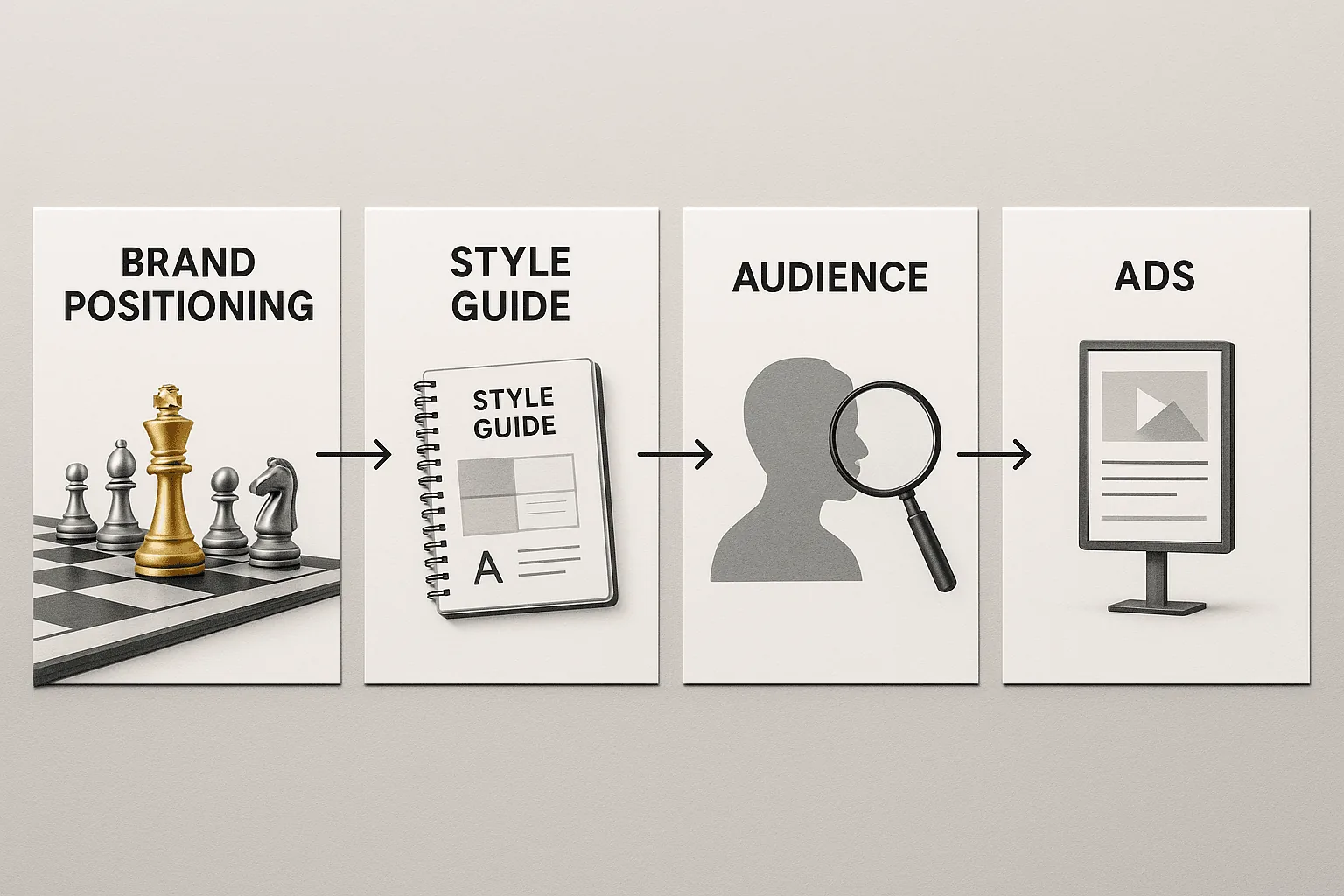
Because every campaign decision gets easier when the brand is clear. Audience, tone, message and visuals are already decided, so marketing becomes execution rather than reinvention.
A brand does not need a thick guidelines document to start. It needs a short, shared reference that everyone uses. Here is ours, as a real example:
brand: Nozentra
category: AI-powered build and growth agency
headline: One team to build and grow your brand with AI.
promise: One team, one strategy, one system.
supporting_message: >
  From websites, apps and automation to SEO, content and marketing,
  we handle it all without the handoff.
primary_call_to_action: Get your free issue review
Every page, post and proposal we write should be recognisable against those few lines. Yours can be just as short: who you serve, what you promise, how you sound and what you want people to do next.
What types of branding and marketing are there?
| Branding type | What it covers | Marketing type | What it does |
|---|---|---|---|
| Corporate | The whole business identity | Search and content | Gets found when people look for answers |
| Product | A specific product or range | Keeps existing contacts engaged | |
| Service | The quality of the experience you deliver | Paid ads | Reaches specific audiences quickly |
| Personal | An individual's reputation | Partnerships and referrals | Borrows trust from people your audience already trusts |
How do you measure branding and marketing?
They need different measures, on different schedules:
| Area | Metrics | How to track | Review |
|---|---|---|---|
| Brand | Awareness, perception, loyalty, branded search | Surveys, brand lift studies, Net Promoter Score, Search Console branded queries | Quarterly or yearly |
| Marketing | Clicks, conversions, cost per lead, revenue | GA4, ad platforms, CRM, UTM-tagged links | Weekly or monthly |
A useful bridge between the two is branded search: how many people search for your business by name. When brand building works, that number tends to rise.
How do you keep brand and marketing aligned?
Share one brand reference across marketing, sales, support and design.
Check every campaign against it before launch: does this sound like us, and does it keep our promise?
Use templates for recurring content so visuals stay consistent.
Listen to how customers describe you in reviews and calls, and compare it with how you describe yourself.
Keep the promise in delivery. A brand is ultimately judged by the experience, not the ads.
For how brand and content work together to drive revenue, read how content marketing actually drives sales. To see how AI assistants currently describe your brand, look at our AI brand monitoring, or talk to us.
Frequently asked questions
Which should a new business focus on first, branding or marketing?
Define the brand basics first, even in one page: who you serve, what you promise and how you sound. Then market consistently. Early on, more of your effort may go to activation, but it should still carry the brand.
Is branding only for big companies?
No. Small businesses often benefit most, because a clear, consistent brand makes limited marketing budgets work harder.
How long does branding take to show results?
Brand effects build over months and years. Watch leading signals such as branded search, direct enquiries and review sentiment rather than expecting immediate sales.