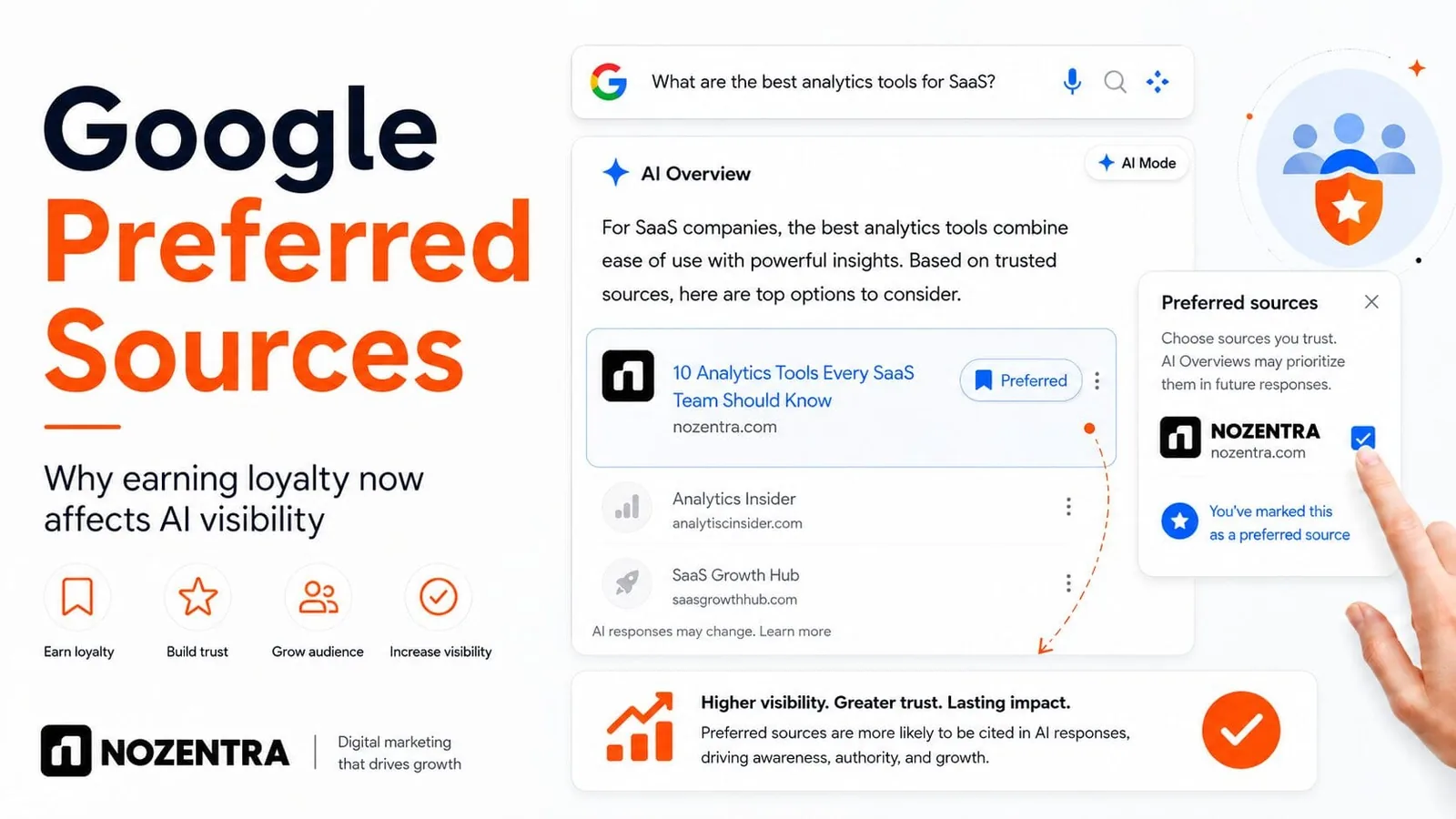
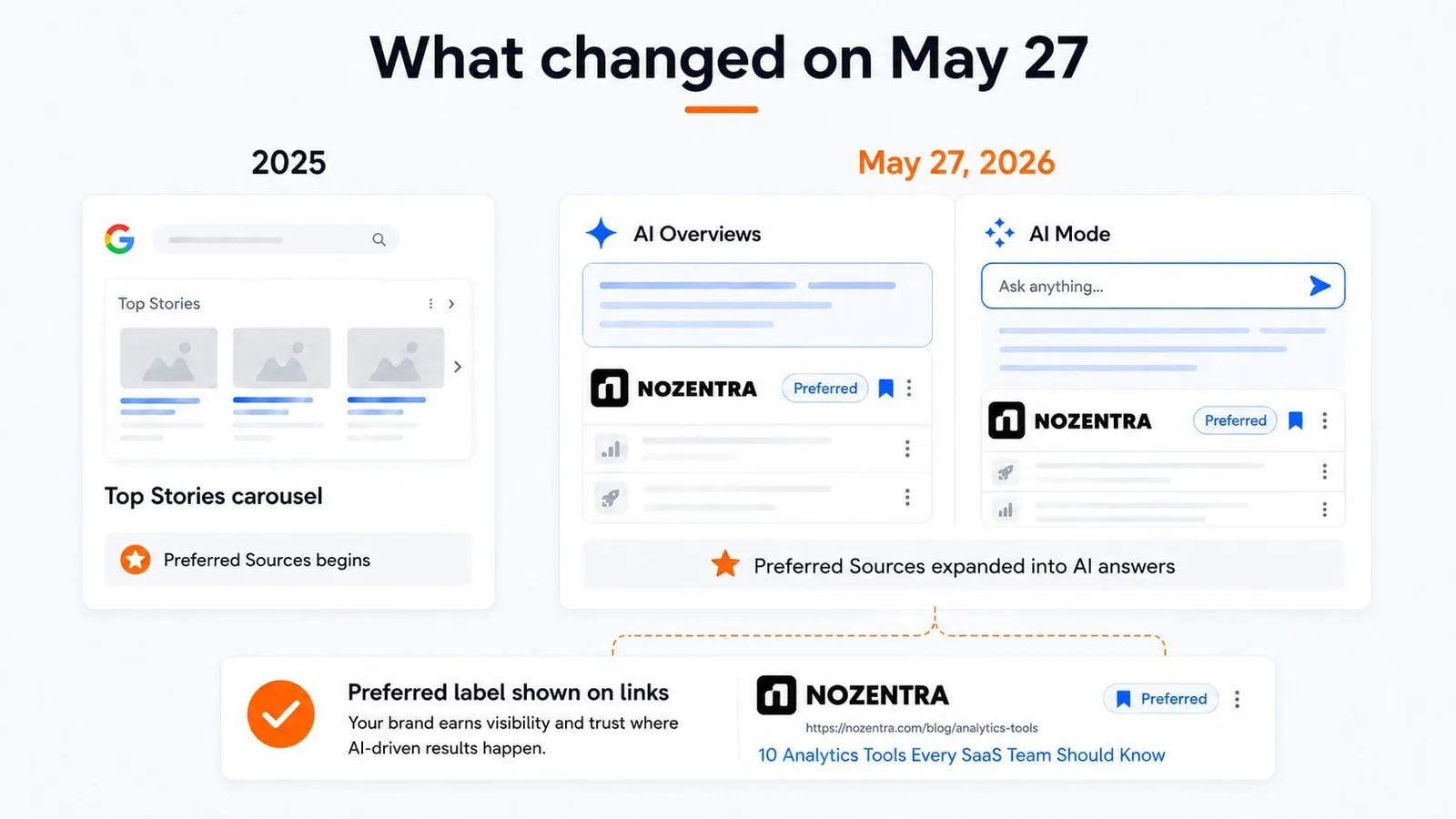
On 27 May 2026, Google brought Preferred Sources to AI Overviews and AI Mode. A person can choose sites they want to see more of, and Google labels links from those sites as "Preferred" when they appear in AI answers.
You cannot optimise your way into this. Someone has to deliberately choose you. That makes it one of the few search features that runs on brand trust rather than technical work.
Key takeaways
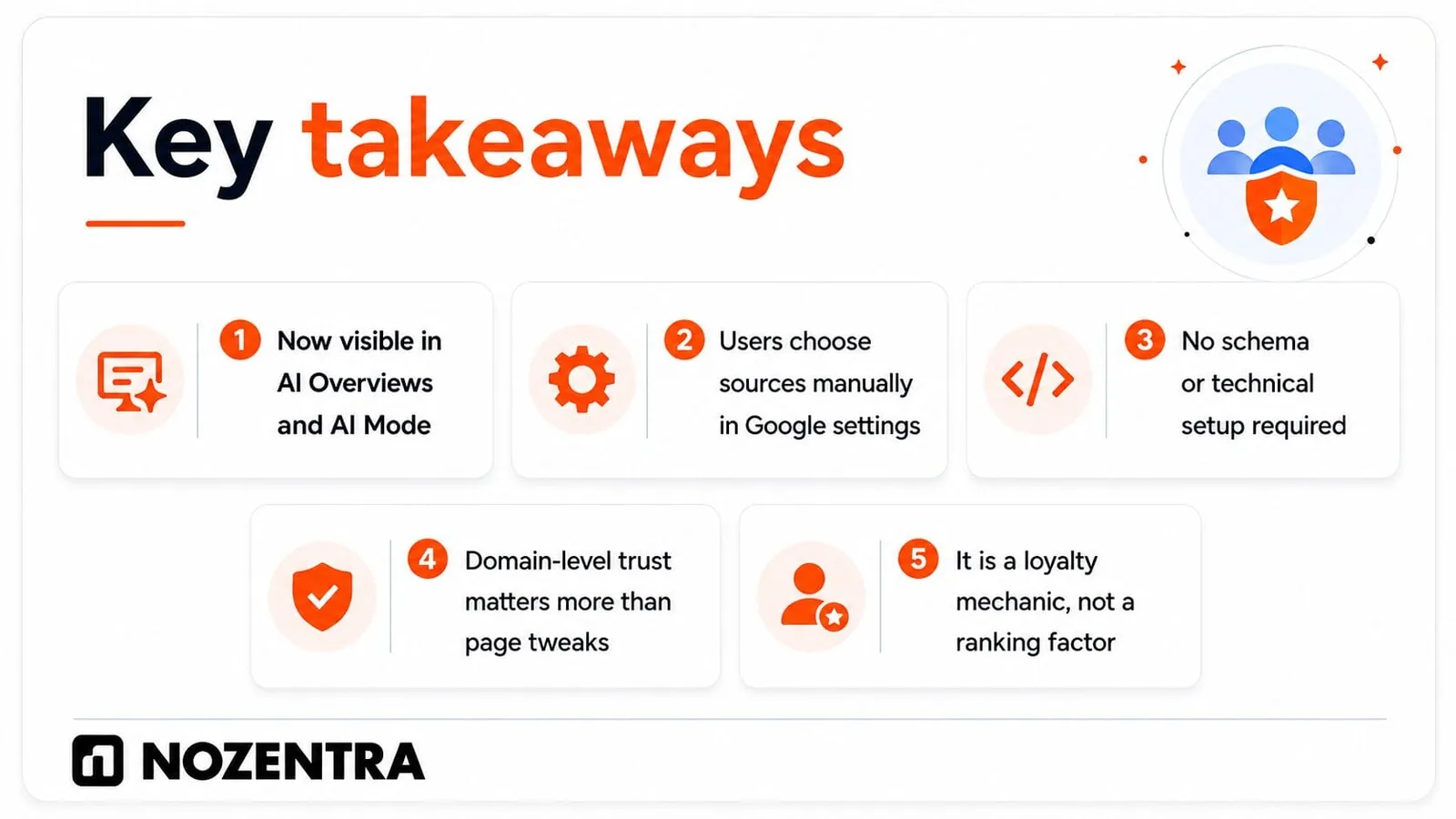
Preferred Sources now shows up in AI Overviews and AI Mode, not only in the Top Stories news carousel.
Google says people are twice as likely to click a Preferred Source, and more than 345,000 unique sources have been selected. These are Google's own figures.
Any website that publishes fresh content is eligible, not only news publishers.
It works at domain level. A subdomain can qualify, a subdirectory such as /blog cannot.
Nothing is required on your site, but Google offers an optional button and link to make it easy for your audience.
What changed on 27 May 2026?
| Date | What happened |
|---|---|
| 12 August 2025 | Google launched Preferred Sources for the Top Stories carousel |
| 27 May 2026 | Preferred Sources expanded into AI Overviews and AI Mode |
In the May 2026 announcement, Google Search product manager Duncan Osborn wrote: "We've found that people are twice as likely to click through to a Preferred Source, and people have already selected more than 345,000 unique sources."
Two notes on that. The figures come from Google and have not been independently audited. And the comparison is Google's general click finding, not a measured uplift for your site.
How does someone choose a Preferred Source?
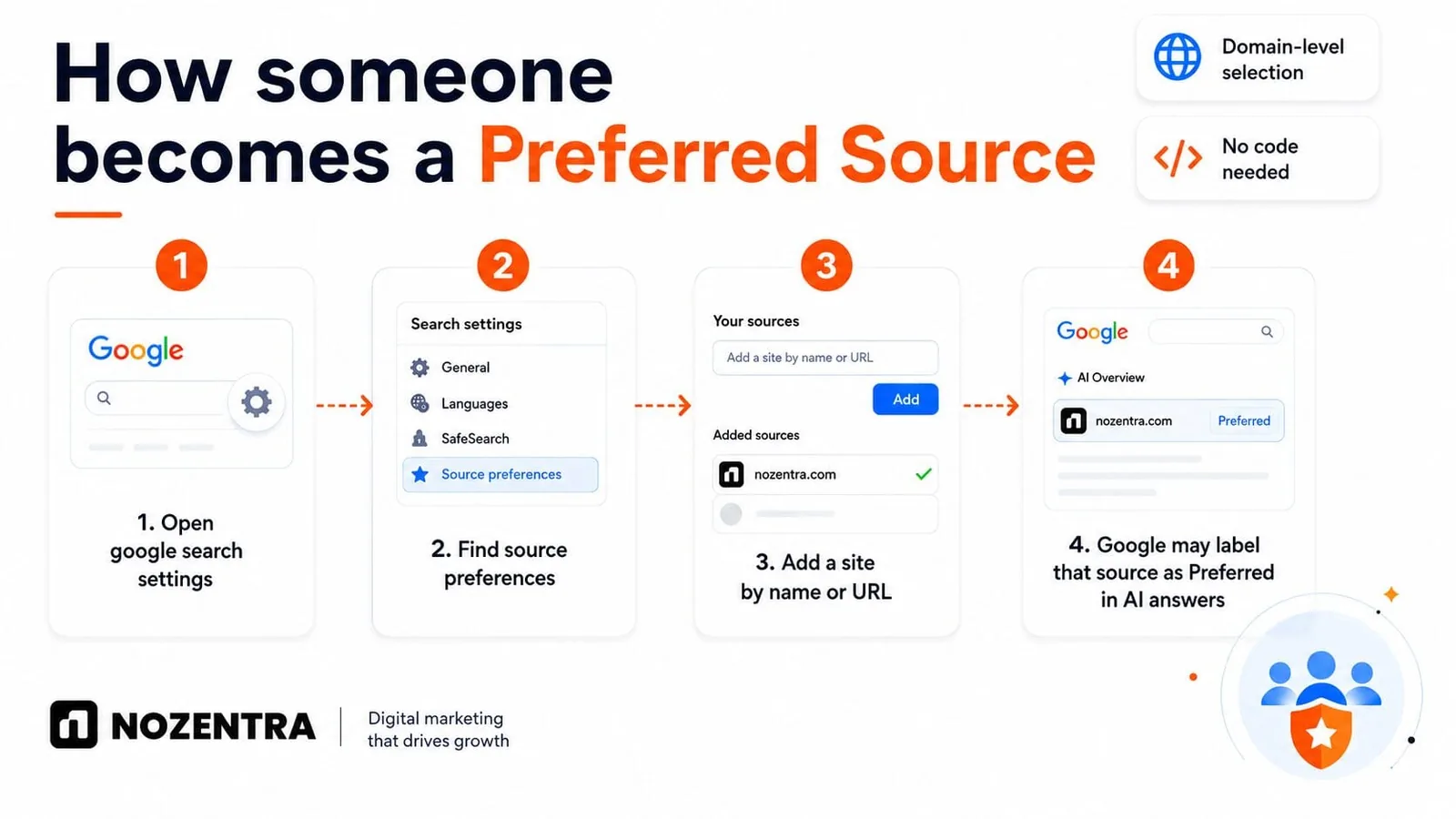
A person opens source preferences in their Google Search personalisation settings, searches for a site, and adds it. From then on, according to Google's guide for publishers:
| Where | What happens for someone who picked your site |
|---|---|
| Top Stories | Your content "is more likely to appear", with a "preferred" badge |
| AI Overviews and AI Mode | Your content "can be highlighted with a 'preferred' badge" |
The feature is available globally for Top Stories, and in AI Overviews and AI Mode wherever those features exist.
Eligibility is by domain. Google's example: https://www.example.com/ and https://code.example.com/ can be preferred sources, but https://www.example.com/blog cannot.
Why is this a branding question, not just an SEO one?
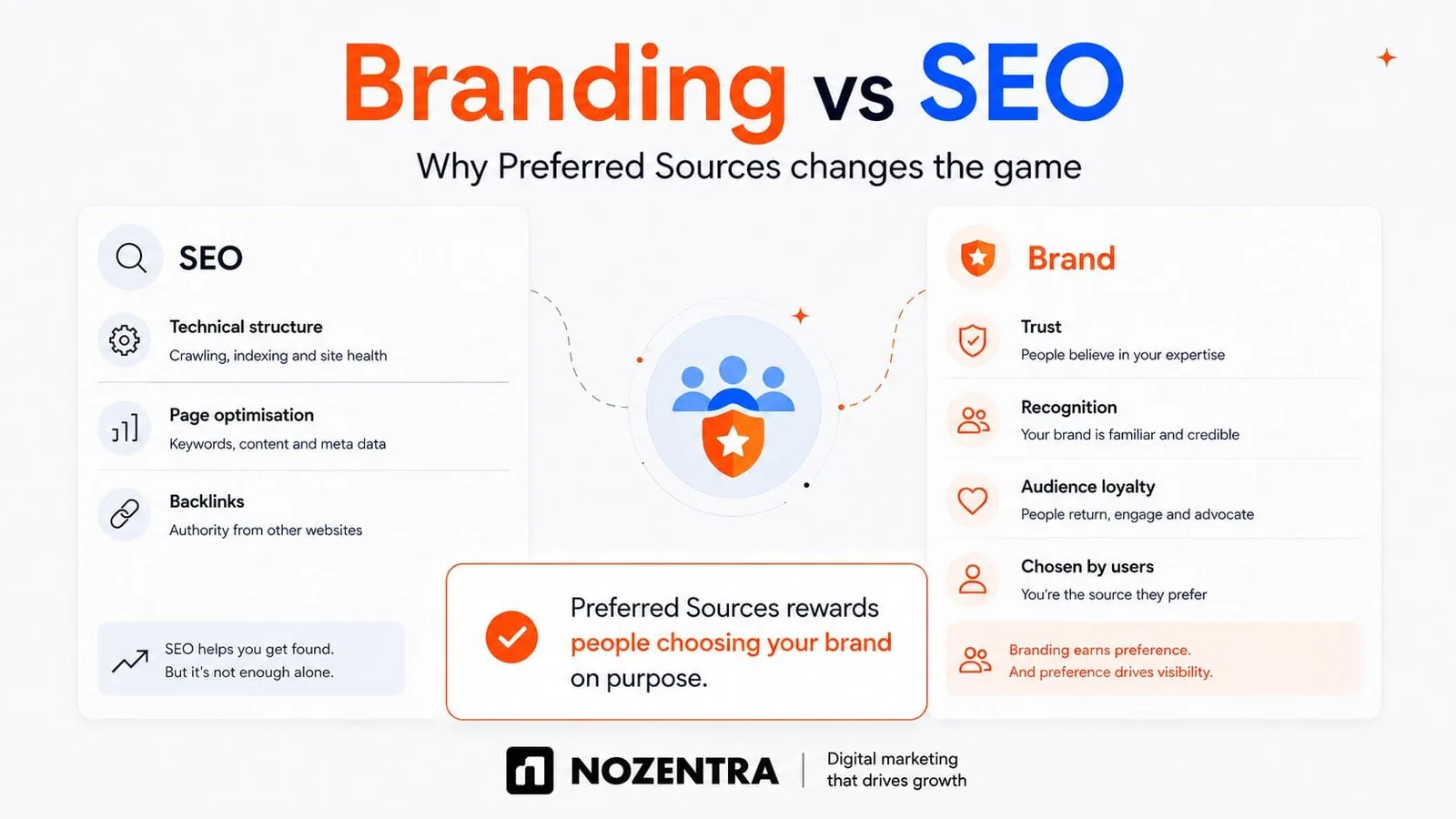
Most search work is something you do to your site: structure, speed, content, links. Preferred Sources happens before the search. A person must already trust you enough to take an extra step and choose you.
That is the same thing that drives repeat customers, referrals and word of mouth. It is why branding and marketing work best together. Technical SEO can bring someone to your site once. It cannot make them choose to see more of you in AI answers.
| What you control | What you do not control |
|---|---|
| Whether you ask your audience to add you | Whether they actually do |
| The trust and reputation that make people want to | Your normal search rankings |
| Making the request easy with Google's button or link | How often Google labels your links once chosen |
How can you make it easy for your audience to choose you?
First, check that your domain appears when you search for it in the source preferences tool. Then use one of the methods Google documents.
The button (Google's recommended option). Two lines of HTML add a Google-styled "Add to preferred sources" button that returns the reader to your page:
<!-- In the <head> of your page -->
<script async src="https://news.google.com/swg/js/v1/publisher.js"></script>

<!-- Wherever the button should appear. data-theme can be "light" or "dark" -->
<div google-add-preferred-source-btn data-theme="dark"></div>
A plain link. If your website builder does not allow scripts, link straight to your site in the preferences tool. This also works in newsletters, email signatures and social posts:
<a href="https://www.google.com/preferences/source?q=yourdomain.com">
  Add us as a Preferred Source on Google
</a>
Replace yourdomain.com with your own domain.
Google is clear that none of this is required to appear as a preferred source. It simply makes the choice easier for people who already know you.
What can a small business realistically expect?
Adoption is still early, so clicks from this one feature will be modest for most small businesses. The value is in what sits underneath it: a recognisable brand people actively choose.
The best places to ask are where trust already exists:
Your newsletter, especially after a genuinely useful issue
The end of your best-performing articles
Your email signature
A thank-you page after an enquiry or purchase
It works poorly as a cold tactic. Asking strangers to prefer a brand they have never heard of rarely lands.
What is our view?
We often see brand and SEO treated as separate budgets. Preferred Sources shows why that split no longer holds. Technical search visibility has a ceiling. Whether people actively choose you does not, and Google is now rewarding that directly in its AI answers.
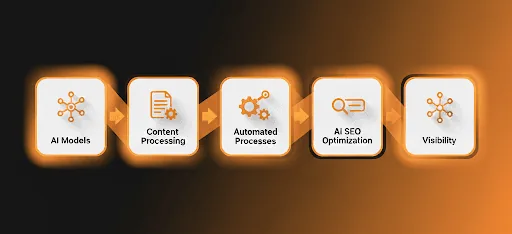
It is also worth knowing how AI systems currently describe your brand before asking people to prefer it. That is what our AI brand monitoring tracks. For how AI answers are assembled in the first place, read how AI models and AI SEO work together, or talk to us.
Frequently asked questions
Does this cost anything to set up?
No. There is no paid placement, and the button and link are optional and free.
Will this help if my audience is small?
It rewards existing trust, so a small but engaged audience can still benefit. It is not a substitute for building that audience.
Does it replace traditional SEO?
No. Preferred Sources does not change your normal rankings. It changes how visible you are to the specific people who chose you.
Can I make just my blog a Preferred Source?
Only if it lives on its own domain or subdomain. A subdirectory like yourdomain.com/blog is not eligible on its own.
Sources
Google: New ways to find your favorite sources and original content in AI Search (27 May 2026)
Google Search Central: Guide to Preferred Sources in Google Search for web publishers (updated 10 September 2026)
Google: How to select Preferred Sources in Google Search (12 August 2025)