
Choose a white-label SEO partner by checking three things before you commit to a retainer. Ask who will do and review the work, agree how the agency will retain control of the client relationship and accounts, and test delivery with a small paid pilot. A useful pilot gives your team work it can verify, present and take away.
Use the scorecard below to compare providers on the same brief. Agree the evidence and pass criteria before the pilot starts so you can make the decision without relying on a sales deck or a short-term ranking change.
What does a white-label SEO partner do for an agency?
A white-label SEO partner delivers agreed search work behind your agency’s brand. Your team can buy a defined service, such as a technical audit, content briefs or ongoing reporting, while keeping the client relationship. Agree separately whether the partner will recommend changes, prepare them in staging or implement them after approval.
For example, a web agency may sell an ecommerce SEO audit while asking a partner to inspect the public site, review approved Search Console data and document fixes. The agency still sets the brief, checks the findings and decides what to present. The quote should identify the expected outputs, review rounds, exclusions and who will handle implementation. Use the same approach if the scope includes AI search visibility. Ask what will be observed, what can be verified and what the client will receive.
What evidence should I ask for before hiring an SEO reseller?
Ask for an authorised redacted work sample, a walkthrough with the people assigned to your account, and a written scope showing how work is checked. A strong audit sample includes an affected URL, the evidence for the issue and a proposed fix you can follow. A useful reporting sample explains what changed and which decision the client needs to make.
If link acquisition is in scope, ask how sites are selected, whether placement costs are disclosed and which URLs appear in the activity log. Have the provider explain how it handles compensated placements and any link schemes. Google’s spam policies document which link practices can violate its policies.
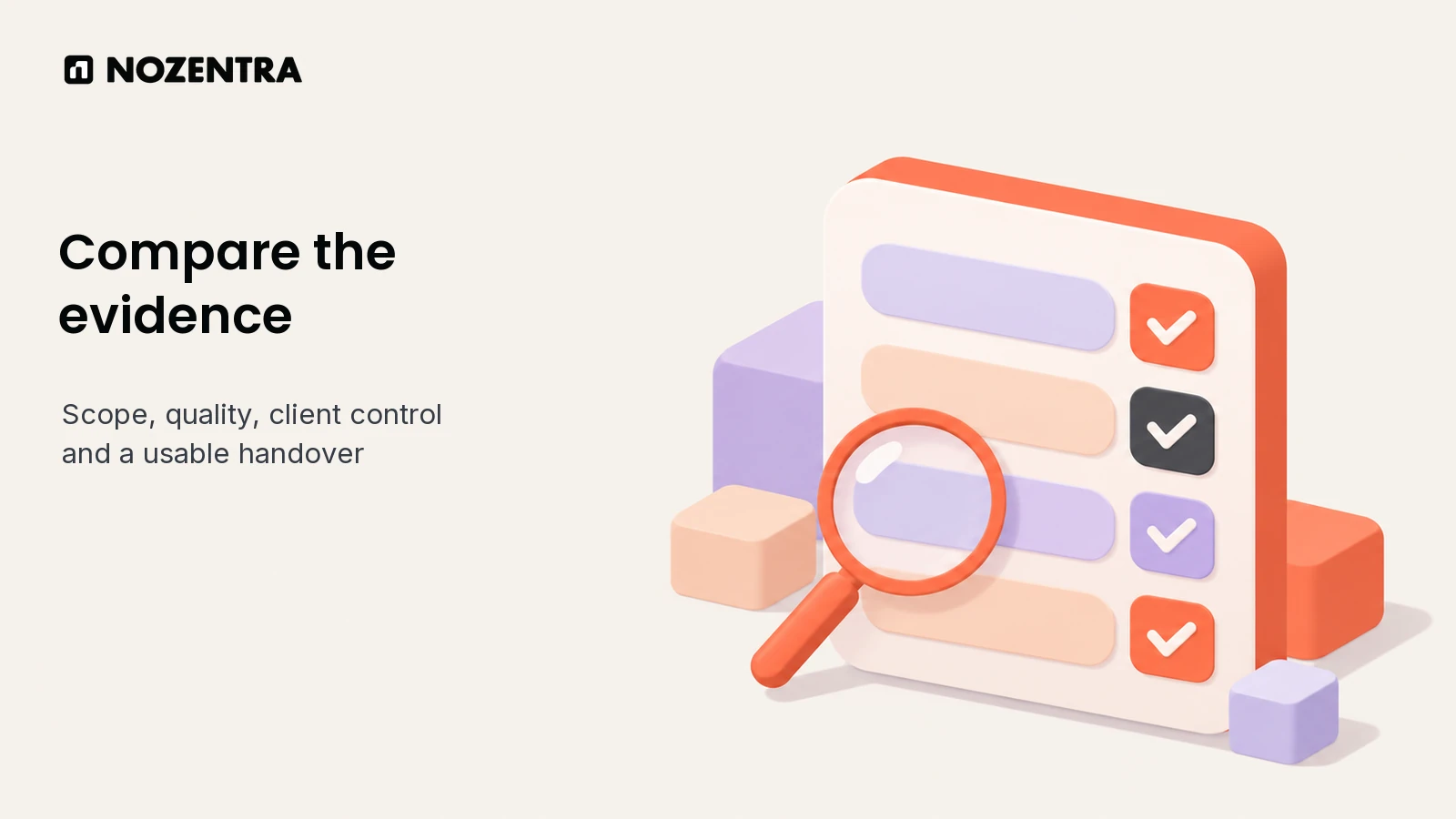
White-label SEO partner scorecard
Give each criterion 0 for missing evidence, 1 for an incomplete answer and 2 for evidence you can verify. Use the same test brief and weight for each provider. Put the supporting artefact or written commitment next to every score.
| Criterion | Evidence to ask for |
|---|---|
| Delivery and scope | A sample output and a statement of work that identifies deliverables, limits, deadlines and revisions. |
| QA and methods | The assigned reviewer, a completed QA check and the source evidence for one recommendation. |
| Communication and cover | The delivery lead, update cadence, response expectations and backup contact for delays. |
| Client boundaries | Written rules for client contact, subcontractor disclosure, data access, ownership and exit. |
| Reporting and handover | A client-ready report plus editable files, an export sample and the offboarding steps. |
Use the total to compare viable providers. Treat client boundaries as a separate pass condition. If access, client contact or exit rights are unresolved, settle them in writing before sharing live credentials, even when the overall score is high. A broader vendor decision may also need the questions in our guide to choosing an AI agency.
Who owns the client relationship, access and reporting?
The agency should retain the client relationship and control client communications. The client or an authorised owner should retain control of its website and analytics properties. Give the delivery partner named, scoped access for the tasks the client has approved. Confirm who reviews and sends reports, and where the editable files are stored.
For an audit, a restricted Search Console role may be sufficient. Check the Search Console permissions table against the specific tasks before assigning access. Use separate named accounts so the team can remove access when work ends. Ask who else will see the data, whether subcontractors are involved and how the agency will be told before anyone new is given access.
Write down who approves production changes, what happens if the client contacts the partner directly and what must be handed back on exit. Test whether you can open the report and supporting files from your own accounts. A branded PDF is useful for presentation, and editable exports make it easier for your agency to explain or continue the work.
What should a paid SEO pilot deliver?
A paid pilot should deliver one bounded piece of work, a usable report and a handover you can verify. Agree the fee, timeline, inputs, exclusions and acceptance criteria up front. Use the pilot to test delivery, communication and how the partner handles revisions.
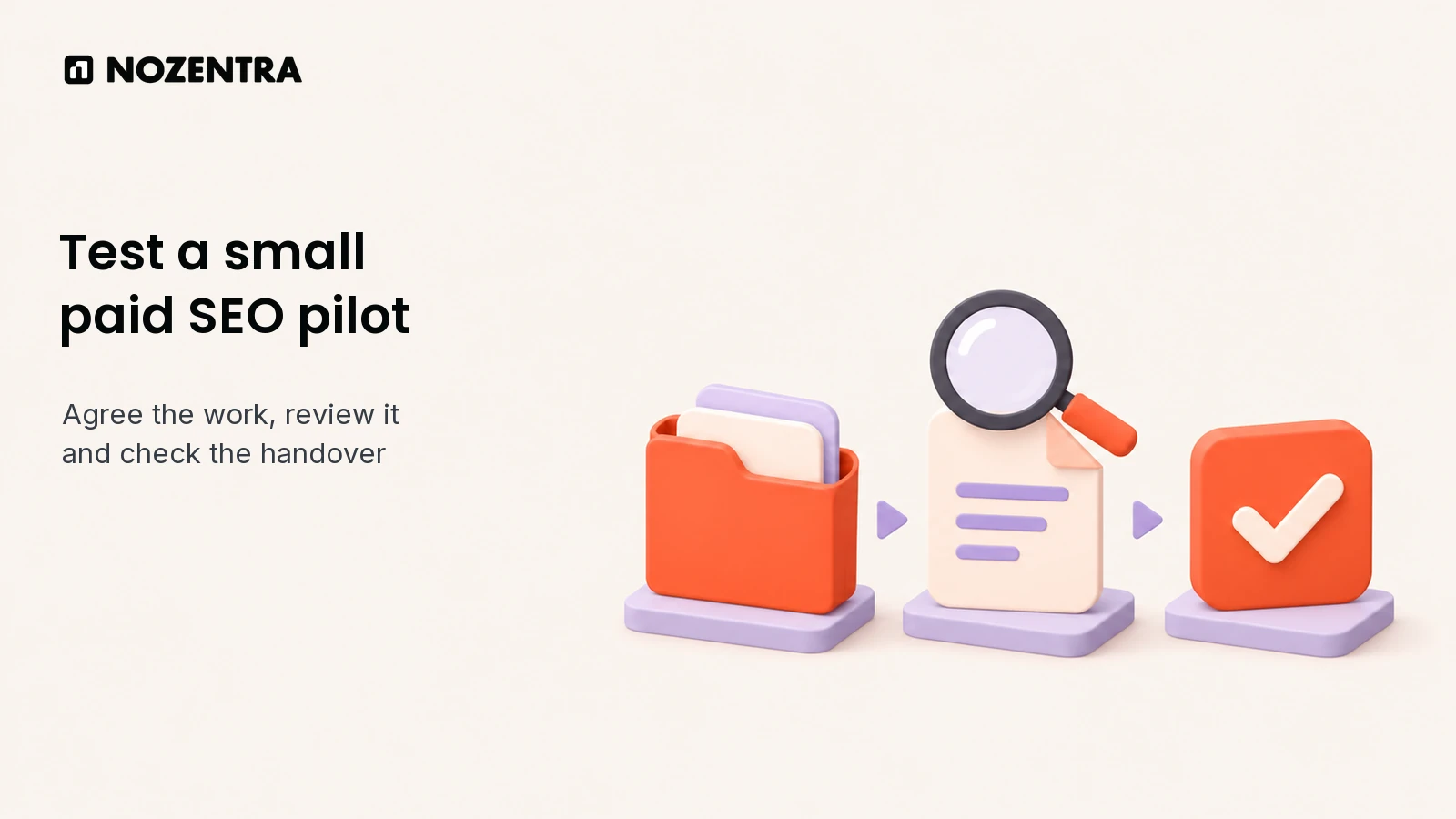
Hypothetical pilot for a web agency
Give the provider ten priority URLs from a lead-generation site and ten working days. Use public crawl evidence and an approved limited-access Search Console property only if it is needed. The agency handles client contact and approvals. The partner delivers recommendations, and the agency approves any subsequent production changes.
| Deliverable | Acceptance check |
|---|---|
| URL review | All ten URLs have a recorded status. Each actionable issue includes the URL, what was observed and how to reproduce it. |
| Prioritised recommendations | Every proposed fix has a priority, an owner and any dependency. An agency reviewer reproduces two sampled findings. |
| Client-ready summary | The report carries the agency brand, separates observations from hypotheses and explains what the client needs to decide. |
| Communication and revisions | The partner sends the agreed checkpoint update and resolves or explicitly accounts for the agency’s review comments. |
| Handover | The agency can open and edit the files in its own workspace. Any temporary access is recorded and removed at the end. |
Suppose the report marks a service page as blocked from indexing. Ask the partner to identify the exact URL, the directive and where they observed it. If inspection shows the issue on staging and the report lists the public page, return the finding for correction before acceptance. That check tells you how the partner handles evidence and QA on work you will present.
When should an agency keep SEO delivery in-house?
Keep delivery in-house when the work is predictable enough to staff and depends heavily on daily client context, rapid approvals or a workflow you already run well. Bring in a partner for work with clear boundaries, such as a migration audit or a temporary capacity gap. A hybrid model can keep strategy and client decisions with your team while another team delivers scoped work.
Before signing, compare the retainer with the time your team will spend reviewing, coordinating and rewriting outputs. If a pilot meets its scope but still leaves you rebuilding the report every week, change the scope or keep that part of delivery in-house. If the handover and review process works, expand the work one deliverable at a time.
See Nozentra’s published work for examples of how we describe scope and evidence. If you want to compare our delivery and client-contact boundaries with your scorecard, see the Agency Partner Program.