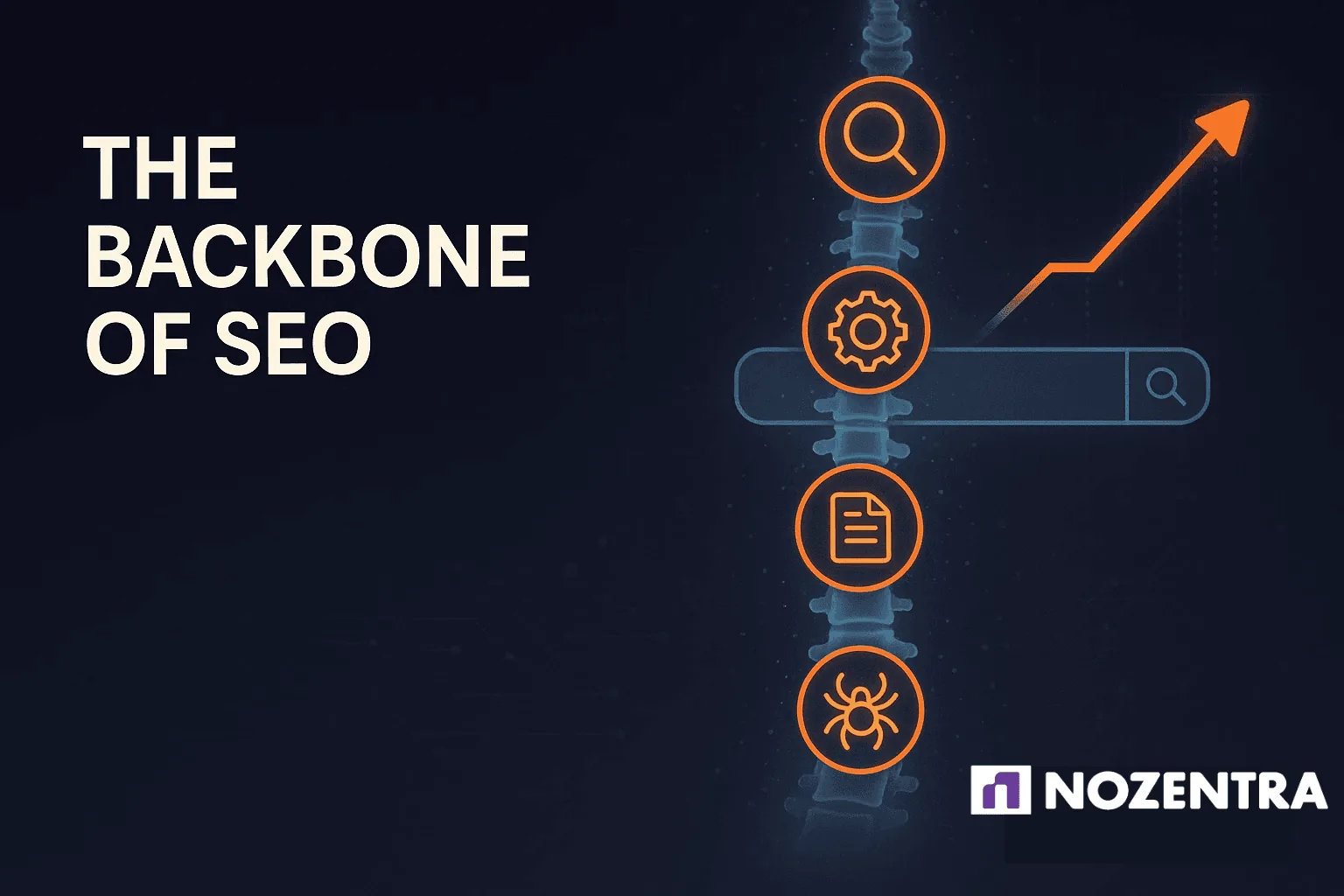
There is no single backbone of SEO. It works more like a spine: several connected parts that only hold up when each one does its job.
Those parts are search demand, crawling and indexing, content, technical health and links. Weakness in any one of them can cancel out strength in the others. A brilliant article that Google cannot index gets no traffic. A fast, perfectly indexed page about a topic nobody searches for gets none either.
Key takeaways
Most pages get no search traffic. Ahrefs found 96.55% of the roughly 14 billion pages it studied get zero traffic from Google.
The three most common reasons are no search demand, no backlinks, and not matching search intent.
Pages must be crawled and indexed before they can rank, and Google does not guarantee either.
Crawl budget is a large-site problem. Google's guidance targets sites with more than about 1 million pages, or 10,000 pages that change daily.
Fix in order: indexing first, then intent and content, then authority.
Why do most pages get no search traffic?
Ahrefs studied around 14 billion pages in its index and found 96.55% get no traffic from Google. Assuming a page is indexed, it identified three common reasons:
| Reason | What it looks like | Which part of SEO fixes it |
|---|---|---|
| The topic has no search demand | Nobody searches for what the page is about | Keyword and intent research |
| The page has no backlinks | Nobody else references or recommends it | Links and authority |
| The page does not match search intent | A product page competing where people want a guide, or the opposite | Content |
Add pages that never get indexed at all, and you have the five parts of SEO's backbone.
Part 1: How do you know people are searching for your topic?
Keyword research tells you what people type and, more importantly, what they expect to find. Every search has an intent behind it:
| Intent | Example search | What usually ranks |
|---|---|---|
| Informational | how does a heat pump work | Guides and explainers |
| Commercial | best heat pump for a cold climate | Comparisons and reviews |
| Transactional | heat pump installation quote | Service pages and product pages |
| Navigational | Nozentra contact | The brand's own page |
Look at what already ranks for your target search. If the top results are all guides, a sales page is unlikely to break in, however well optimised. Tools such as Google Keyword Planner, Search Console and paid SEO platforms help estimate demand. Questions from your own customers are often the best source of all.
Part 2: Can Google find and index your pages?
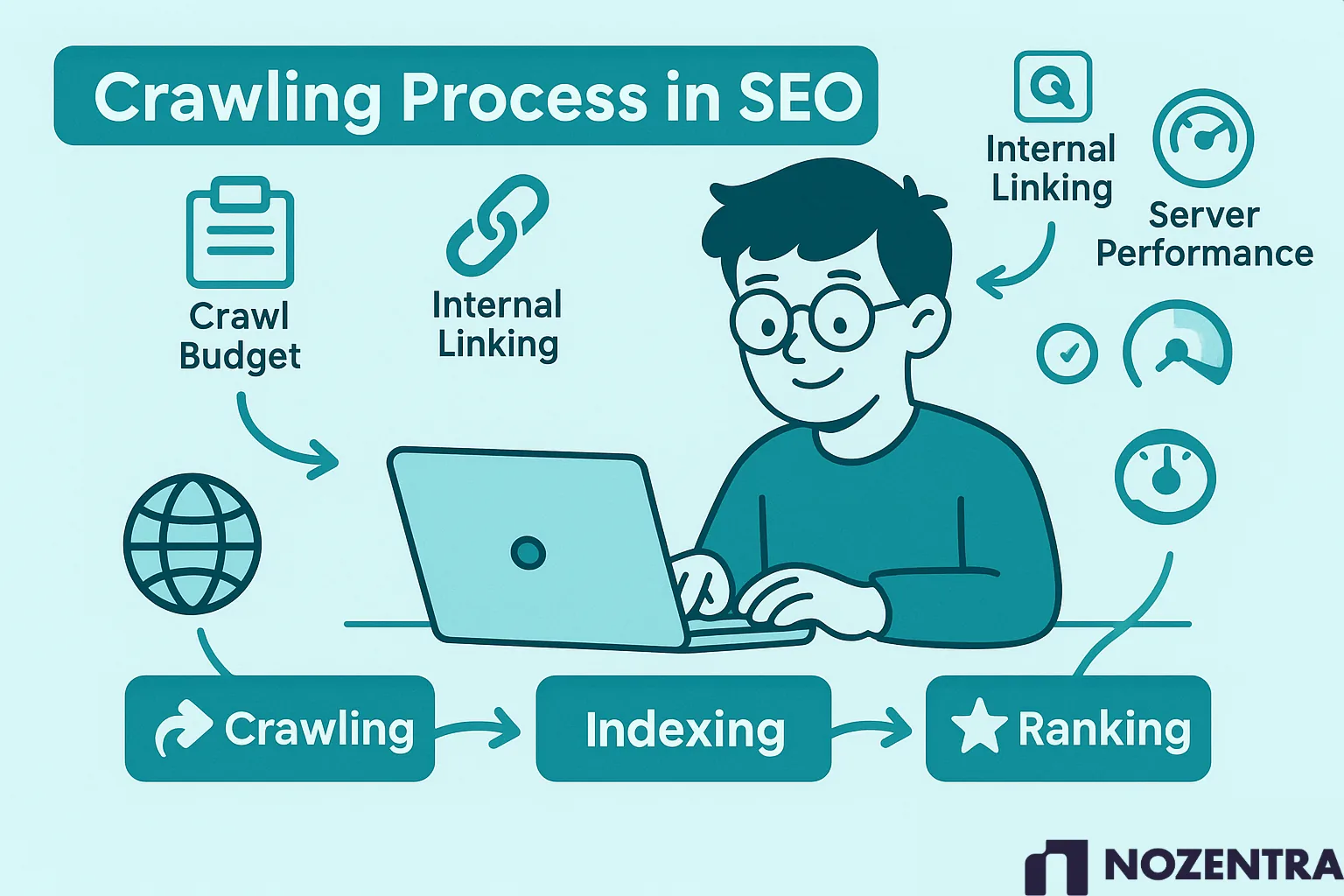
Google's guide to how Search works is blunt: "Google doesn't guarantee that it will crawl, index, or serve your page." Pages are discovered mainly through links and sitemaps, then analysed and stored before they can appear in results.
The basics that help most:
# robots.txt: let crawlers reach what matters, block what does not
User-agent: *
Disallow: /cart/
Disallow: /search?

Sitemap: https://www.example.com/sitemap.xml
<!-- On a duplicate or filtered version of a page, point to the main one -->
<link rel="canonical" href="https://www.example.com/services/heat-pump-installation" />Then check Search Console's Page indexing report for pages marked "Discovered, currently not indexed" or "Crawled, currently not indexed". Those tell you where the problem sits.
What about crawl budget? Most sites do not need to worry about it. Google's crawl budget guide is intended for large sites with more than 1 million unique pages, sites with more than 10,000 pages that change daily, and sites with many URLs stuck as "Discovered, currently not indexed". For smaller sites, Google says an up-to-date sitemap and regular index checks are adequate.
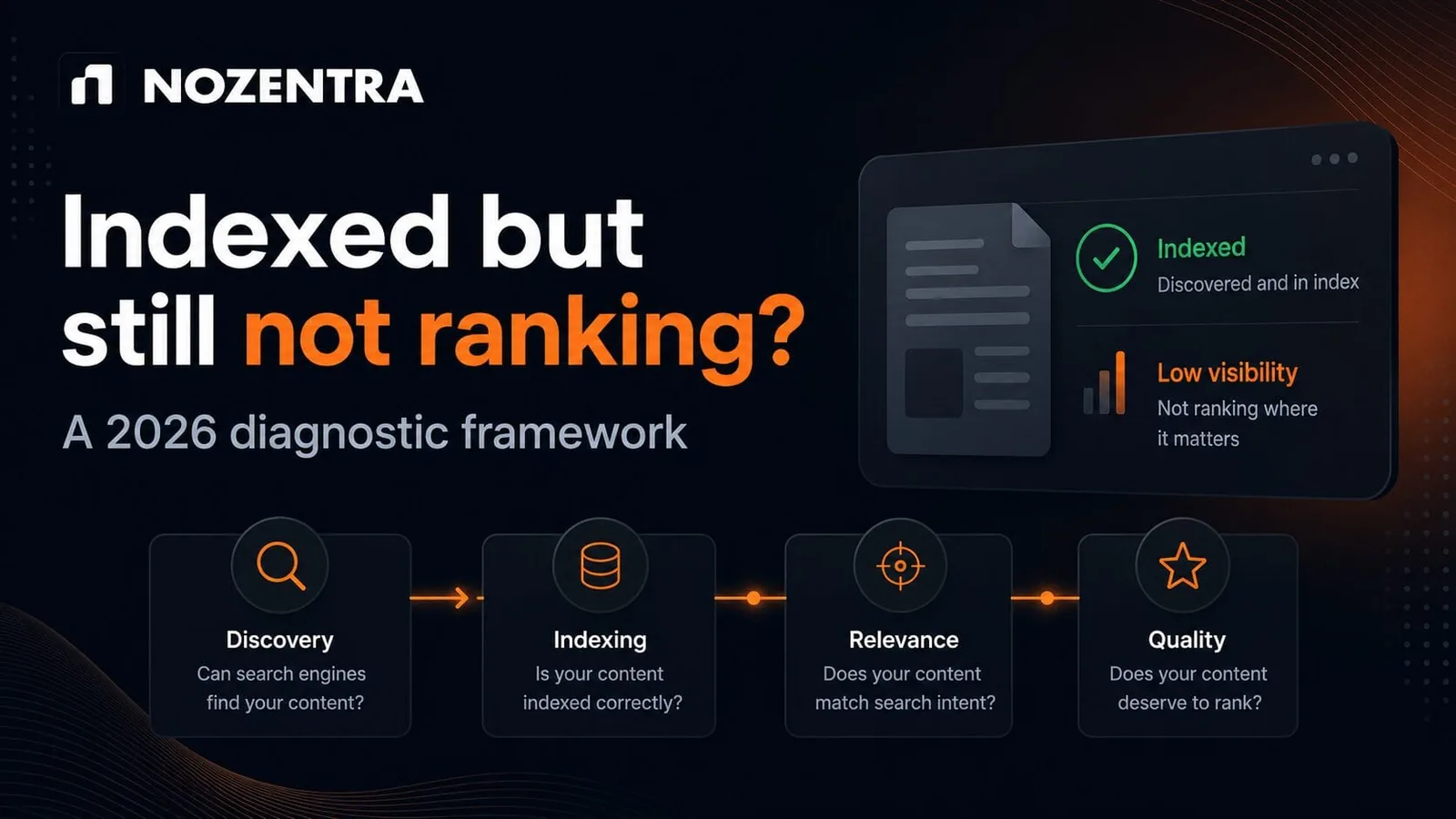
If your pages are indexed but not ranking, read why indexed pages do not rank.
Part 3: Does your content deserve to rank?
Content is where intent is met or missed. Strong pages tend to:
Answer the main question early, then add the detail people need to act.
Show real experience, such as examples, photos, data or results.
Cover the topic completely without padding.
Link to related pages on your site so people and crawlers can go deeper.
Stay current, with outdated facts and figures refreshed.
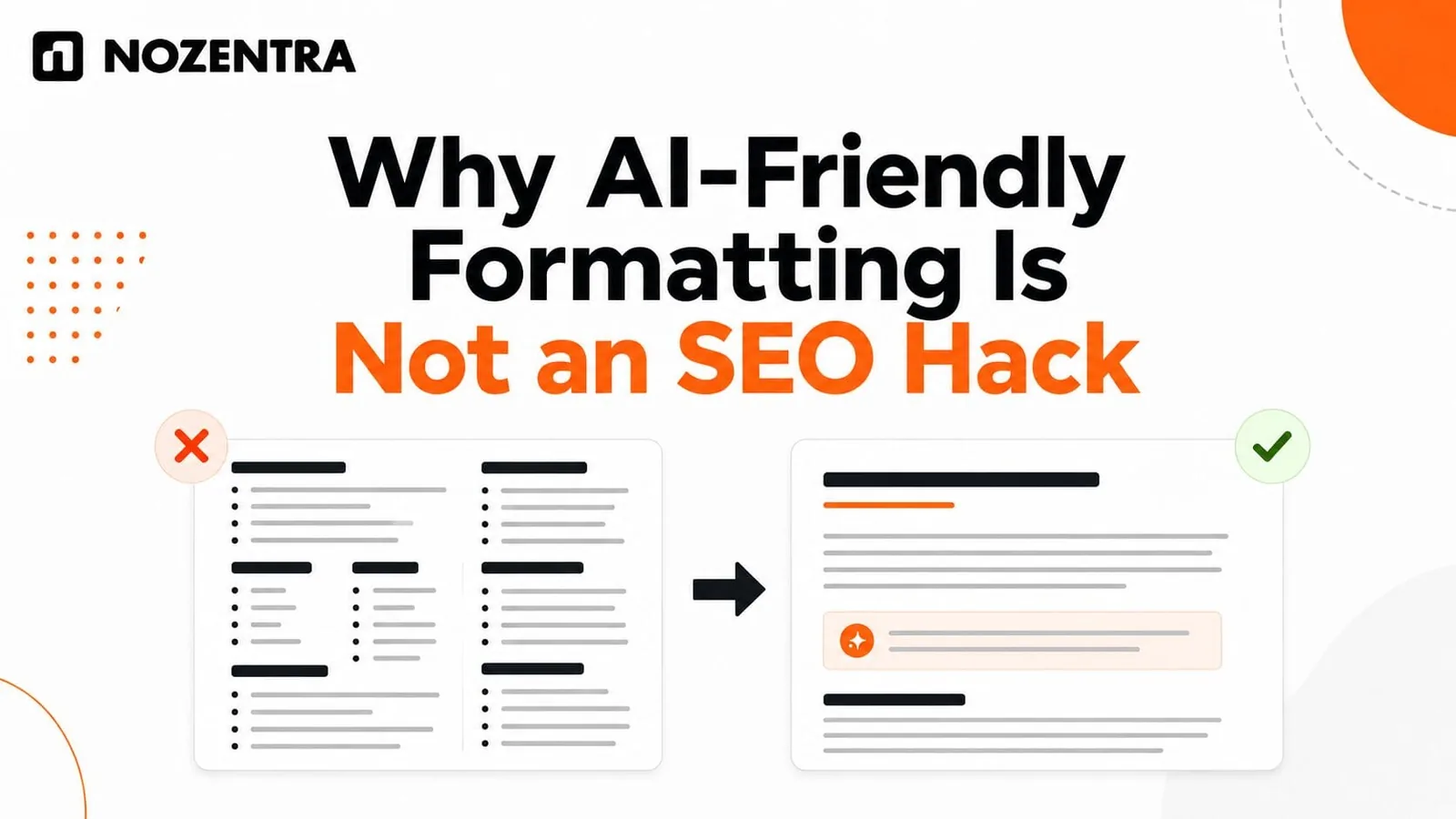
Google's guidance on helpful, people-first content is the best checklist here. We look at how the same principles apply to AI answers in why AI-friendly formatting is not an SEO hack.
Part 4: Is your site technically healthy?
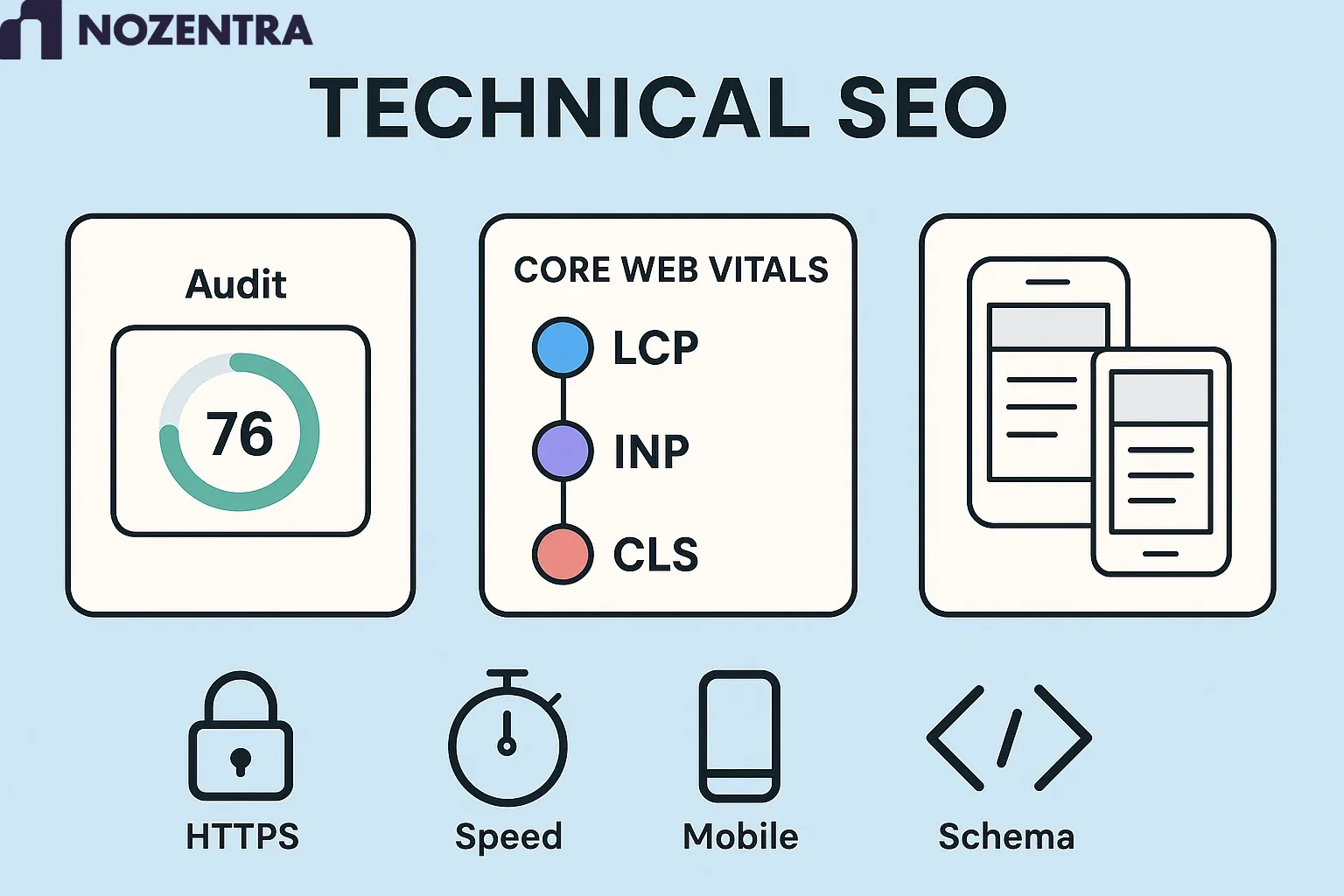
Technical SEO makes sure nothing gets in the way of the other parts. Google says it "highly recommend[s] site owners achieve good Core Web Vitals for success with Search", which aligns with what its core ranking systems seek to reward.
| Area | What to check | Good target or outcome |
|---|---|---|
| Loading (LCP) | How quickly the main content appears | 2.5 seconds or less |
| Responsiveness (INP) | How quickly the page reacts to taps and clicks | 200 milliseconds or less |
| Visual stability (CLS) | How much the layout jumps | 0.1 or less |
| Mobile | Layout, tap targets and content on phones | Same content and function as desktop |
| Security | HTTPS across the whole site | No mixed content warnings |
| Structured data | Schema that describes your business, products or articles | Valid markup that matches visible content |
| Errors | Broken links, redirect chains, server errors | Fixed or redirected to the right page |
This is usually where we start. For UK ecommerce brand Druids, we ran a technical audit covering crawl structure, site speed, Core Web Vitals and indexing before any keyword or link work. Over 12 months, ranked keywords grew from 12,800 to 52,300 and organic search became the brand's largest traffic channel.
Part 5: Do other sites vouch for you?
Links from relevant, credible sites work like recommendations. Ahrefs' study found a clear link between referring domains and search traffic, and "no backlinks" was one of its three main reasons pages get no traffic.
What matters is how links are earned. Google's spam policies treat buying links for ranking purposes as link spam. When a link is paid or user-generated, Google asks site owners to label it:
<!-- Paid placement or advertisement -->
<a rel="sponsored" href="https://example.com/">Partner offer</a>

<!-- Link inside a comment or forum post -->
<a rel="ugc" href="https://example.com/">Useful resource</a>

<!-- A link you do not want to endorse -->
<a rel="nofollow" href="https://example.com/">Example</a>
Good ways to earn links include original data, genuinely useful tools or guides, supplier and partner listings, local press, and industry associations.
Which part should you fix first?
Work from the bottom of the spine up:
Indexing. If key pages are not indexed, nothing else matters yet.
Technical blockers. Fix errors, slow templates and mobile problems on important pages.
Intent and demand. Make sure each important page targets a real search and matches what ranks.
Content quality. Improve the pages closest to page one before creating new ones.
Authority. Earn links and mentions to the pages that matter most.
If you want to know why SEO is worth this effort, read why SEO is still important for business in 2026. For a review of where your site stands, see our AI search visibility work or talk to us.
Frequently asked questions
What is the most important part of SEO?
It depends on what is broken. For a site with indexing problems, technical fixes matter most. For a healthy site with thin pages, content matters most. The most important part is whichever one is currently holding the others back.
Are backlinks still important in 2026?
Yes. Links remain an important signal of trust and authority, but only when they are earned from relevant sources. Buying links for rankings breaks Google's spam policies.
Do I need to worry about crawl budget?
Probably not. Google's crawl budget guidance is aimed at sites with around a million or more pages, or tens of thousands of pages that change daily. Most small and medium sites just need a current sitemap and regular index checks.
Are Core Web Vitals a ranking factor?
Google recommends good Core Web Vitals and says page experience aligns with what its core ranking systems reward. They will not make weak content rank, but poor experience can hold back good content.