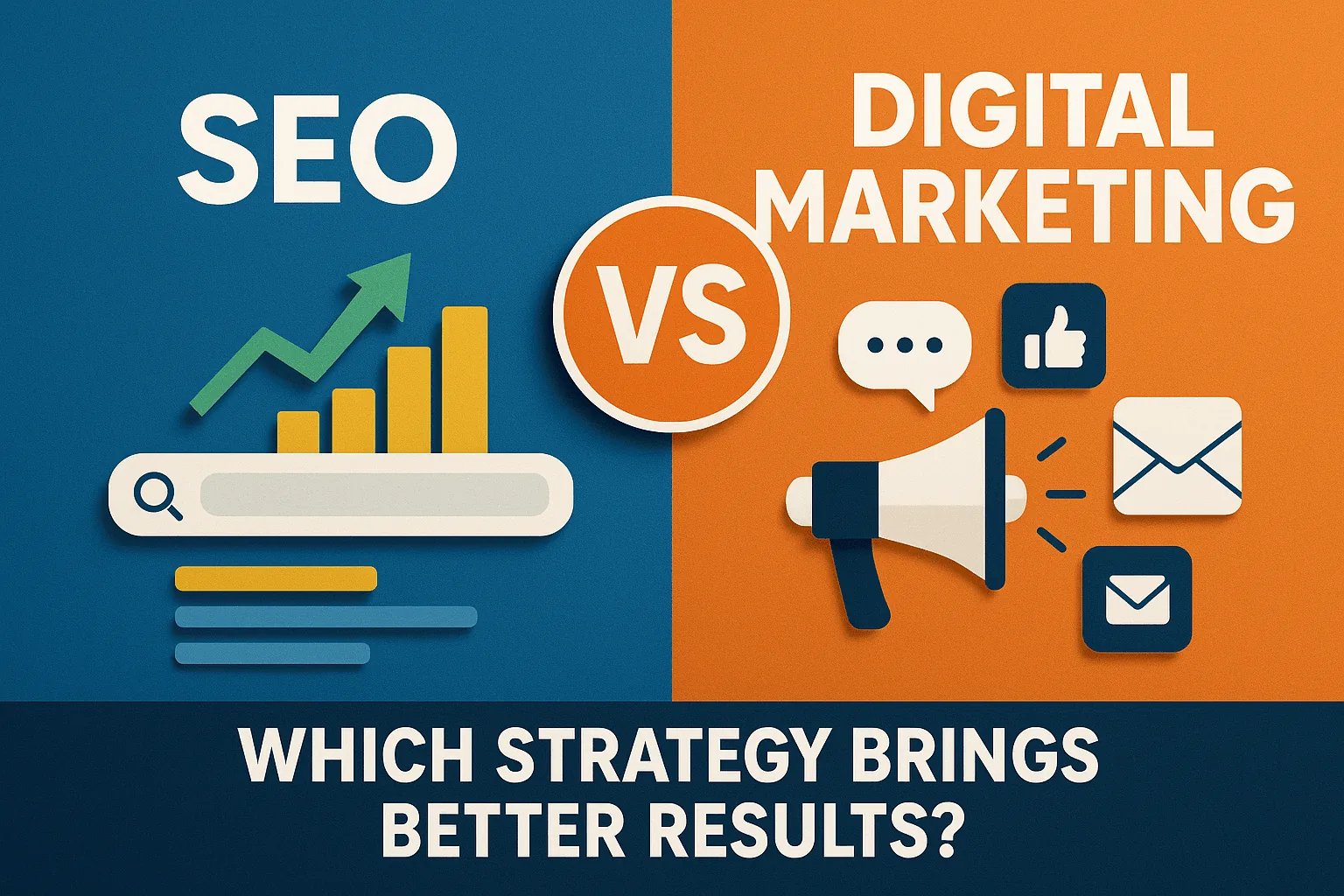
SEO is the work that helps your website show up when people search. Digital marketing is the wider set of online channels, including SEO, paid ads, social media and email.
So the real question is not "SEO or digital marketing". It is how much of your effort should go into search visibility that builds over time, and how much into channels that bring faster but rented attention. Most businesses get the best results from both, weighted to their situation.
Key takeaways
SEO is part of digital marketing, and usually the part that keeps paying back after the work is done.
Search is still the biggest traffic source. In June 2025, Google Search sent 191 billion referrals to the top 1,000 websites, against 1.13 billion from all AI platforms.
Clicks are harder to win. SparkToro found 68.01% of US Google searches ended without a click in early 2026.
Paid channels buy speed. Advertisers were projected to spend $352 billion on search ads in 2025.
Local SEO has its own rules. Google ranks local results mainly on relevance, distance and prominence, and you cannot pay for a better local ranking.
How do SEO and other digital channels compare?
| Question | SEO | Paid ads | Social media | |
|---|---|---|---|---|
| Speed to first results | Months | Hours to days | Days to weeks | Immediate, if you have a list |
| Cost pattern | Ongoing work, no cost per click | Pay for every click or impression | Content time plus optional ad spend | Low running cost |
| What happens when you stop | Traffic declines slowly | Traffic stops immediately | Reach drops quickly | List stays yours |
| Audience intent | Actively searching | Searching or browsing, depending on network | Browsing | Already interested |
| Who owns the asset | You own the pages | The platform | The platform | You own the list |
The trade-off is simple. SEO is slow to start but compounds. Paid channels are fast but stop the moment the budget does.
Is search still worth the effort in 2026?
Yes, but the rules have shifted. Search still dominates website traffic. Similarweb data reported by TechCrunch compared referrals to the top 1,000 websites in June 2025:
- Google Search191B
- All AI platforms combined1.13B
Source: Similarweb, via TechCrunch, 25 July 2025
At the same time, fewer searches produce a click. SparkToro measured 68.01% of US Google searches ending without a click in the first four months of 2026, up from 60.45% in 2024, with AI Overviews a major factor.
That changes what good SEO looks like. Ranking alone is not enough. Your pages need to be the ones cited in AI answers and the ones people choose to click. We explain how in how AI search engines decide which pages to use.
When do paid and social channels make more sense?
When you need results quickly, are testing a new offer, or sell something people do not yet search for.
Search advertising remains the largest single ad channel. DataReportal's Digital 2026 report cites Statista's projection of $352 billion in search ad spend for 2025, just below $1 billion a day. And for younger audiences, social ads are now the top source of brand discovery.
Use paid and social channels to:
Launch something new before search demand exists
Fill gaps while SEO builds
Retarget people who visited but did not convert
Test which messages work, then use the winners in your SEO pages
How does local SEO work?
For businesses serving a specific area, local SEO is often the fastest SEO win. Google's local ranking guidance says local results are based mainly on relevance, distance and popularity, which it explains under three headings:
| Factor | What Google means | What you can do |
|---|---|---|
| Relevance | How well your Business Profile matches the search | Complete every field, choose accurate categories, describe services clearly |
| Distance | How far the business is from the searcher | Set an accurate address or service area |
| Prominence | How well known the business is | Earn reviews, respond to them, get mentioned and linked by local sites |
Google is also clear on one point: "There's no way to request or pay for a better local ranking on Google." It adds that "More reviews and positive ratings can help your business's local ranking."
This is where SEO often outperforms paid channels for local businesses. For VIP Plumbing, we combined a new WordPress site with Google Business Profile optimisation, local citations and location-specific pages. Organic traffic grew by 500% and the business reached the top local position across multiple service areas.
How do links and content build visibility?
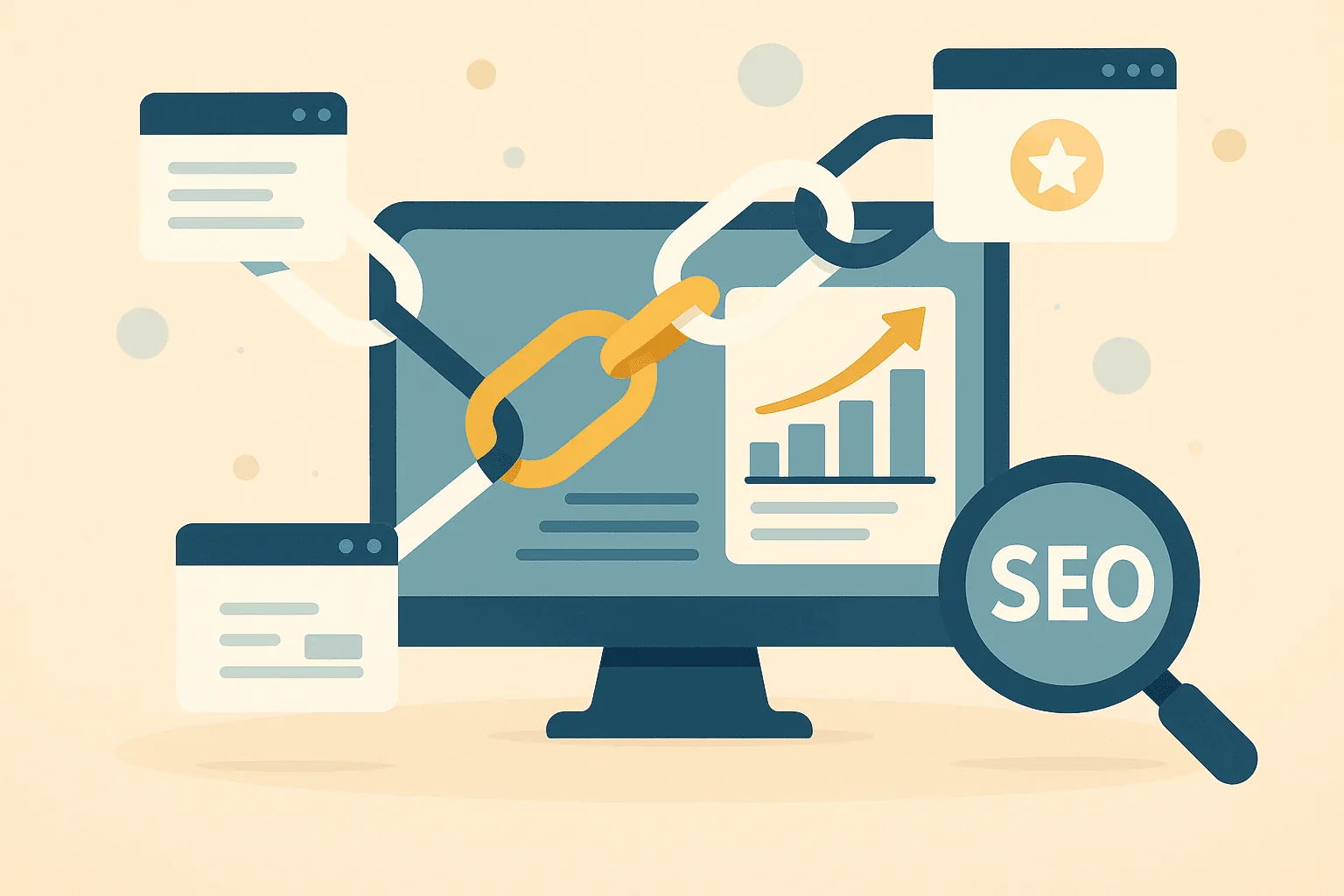
Links from other relevant websites act as recommendations. Content gives people and search engines a reason to link, cite and return.
What works differs by business:
| Business type | Content that tends to earn visibility | Link sources worth pursuing |
|---|---|---|
| Local service business | Service and location pages, answers to common questions | Local directories, suppliers, community organisations |
| Ecommerce store | Category pages, buying guides, comparisons | Product reviewers, niche publications, brand partners |
| B2B or software | In-depth guides, original data, case studies | Industry publications, partners, podcasts |
Avoid shortcuts. Buying links or mass-producing thin pages carries real risk under Google's spam policies.
How do you decide where to start?
Estimate what the same traffic would cost through ads, then compare it with what building organic visibility would cost. An illustrative calculation:
Monthly visits you want from search       2,000
Average cost per click in your market     $3.00   (check Google Ads Keyword Planner)

Paid search cost to buy those visits      2,000 x $3.00 = $6,000 every month
SEO                                       a fixed monthly investment, with traffic
                                          that keeps coming after the work is done
Then weigh it against your situation:
Need enquiries this month? Start with paid search while SEO builds.
Selling to a local area? Prioritise your Google Business Profile and local pages.
Buyers research before buying? Invest in content and SEO, supported by email.
Product people do not search for yet? Use social and paid channels to create demand.
Already running ads profitably? Use SEO to reduce your dependence on paid clicks over time.
For the social side of this decision, read the difference between digital marketing and social media marketing. For why SEO matters for business outcomes, see why SEO is important for business. If you want a plan built around your market, see our AI search visibility work or talk to us.
Frequently asked questions
Is SEO better than paid advertising?
Neither is better in general. SEO compounds and does not charge per click, but takes months. Paid ads work immediately but stop when you stop paying. Most businesses benefit from both.
How long does SEO take to work?
Usually months rather than weeks, depending on competition, your site's starting point and how much needs to change. Local SEO for a well-defined area can move faster.
Can I rank higher on Google Maps by paying?
No. Google says there is no way to request or pay for a better local ranking. Ads can appear above local results, but they are labelled as ads.